 Healers World













































 புதுப்பிக்கப்பட்டது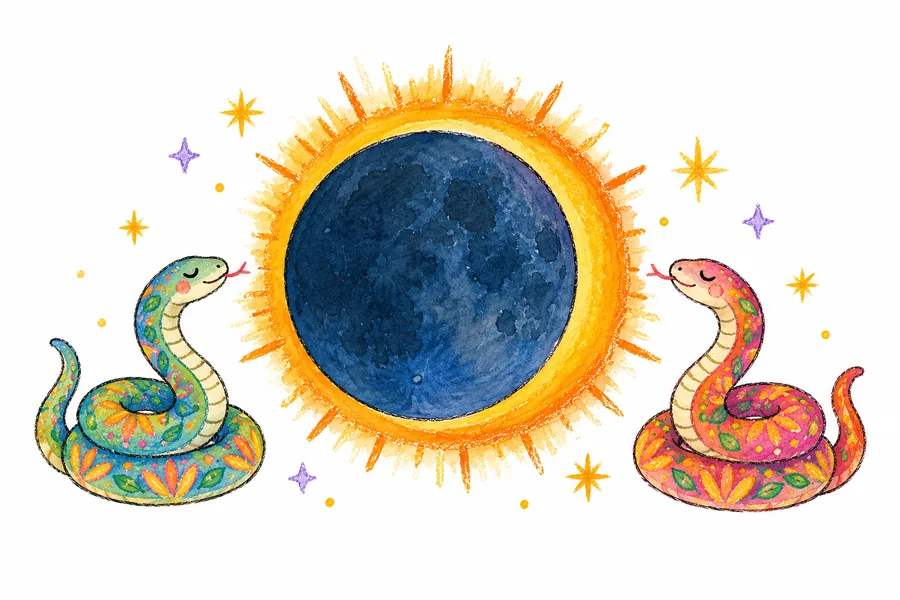
 விரைவான பதில்
ஜோதிடத்தில் சாயா கிரகங்களாக ராகு மற்றும் கேது பற்றிய அடிப்படை வழிகாட்டி — அவர்களின் சான்றோர வரையறை, கர்ம அச்சு, கணக்கீடு மற்றும் ஆன்மீக முக்கியத்துவம்.
- தலைப்பு
- ராகு மற்றும் கேது
- வாசிப்பு நேரம்
- 6 நிமிடங்கள்
- எழுதியவர்
- ஹீலர்ஸ் வேர்ல்ட் ஸ்டுடியோ
- கடைசியாகப் புதுப்பிக்கப்பட்டது
- 12 ஆகஸ்ட் 2026
Classical Definition of Rahu and Ketu as Chaya Grahas in Parashara's System
Brihat Parashara Hora Shastra, Chapter 3, introduces Rahu and Ketu as Chaya Grahas — shadow planets born from the mythological dismemberment of the asura Svarbhanu. The narrative, preserved across the Vishnu Purana and Bhagavata Purana, recounts that Svarbhanu disguised himself among the devatas during the distribution of Samudra Manthan's amrita. Surya and Chandra recognised the impostor and alerted Vishnu, whose Sudarshana Chakra severed the demon's head from its body. Because the asura had already swallowed the nectar of immortality, both parts survived: the head became Rahu, the north node, perpetually hungry because it can never swallow and digest; the tail became Ketu, the south node, perpetually headless because it can never consciously direct its accumulated wisdom. Astronomically, Rahu and Ketu mark the intersection points of the Moon's orbital path with the ecliptic — the ascending node (Rahu) and the descending node (Ketu). These are the precise points where solar eclipses (Surya Grahan) and lunar eclipses (Chandra Grahan) occur, which is why classical Jyotish understands Rahu and Ketu as the eternal adversaries of Surya and Chandra. Rahu and Ketu always occupy exactly opposite positions in the zodiac, forming a perpetual axis that rotates in retrograde motion through the rashis approximately once every 18 months, completing a full zodiacal circuit in approximately 18 years — the same duration as Rahu's Vimshottari Mahadasha.
 ராகு மற்றும் கேது