 Healers World














































VAASTU WORLD · ROOM
Vastu for Master Bedroom
South-West is the main-bedroom preference in the guide’s chapter-level room table. Check the bedroom’s location on the full plan, then assess bed access, ventilation and privacy separately. Start with movable furniture and record any fixed constraint. Room location and the direction of a sleeper’s head are different questions. Best direction: South-West (Nairutya corner).
Read the guide
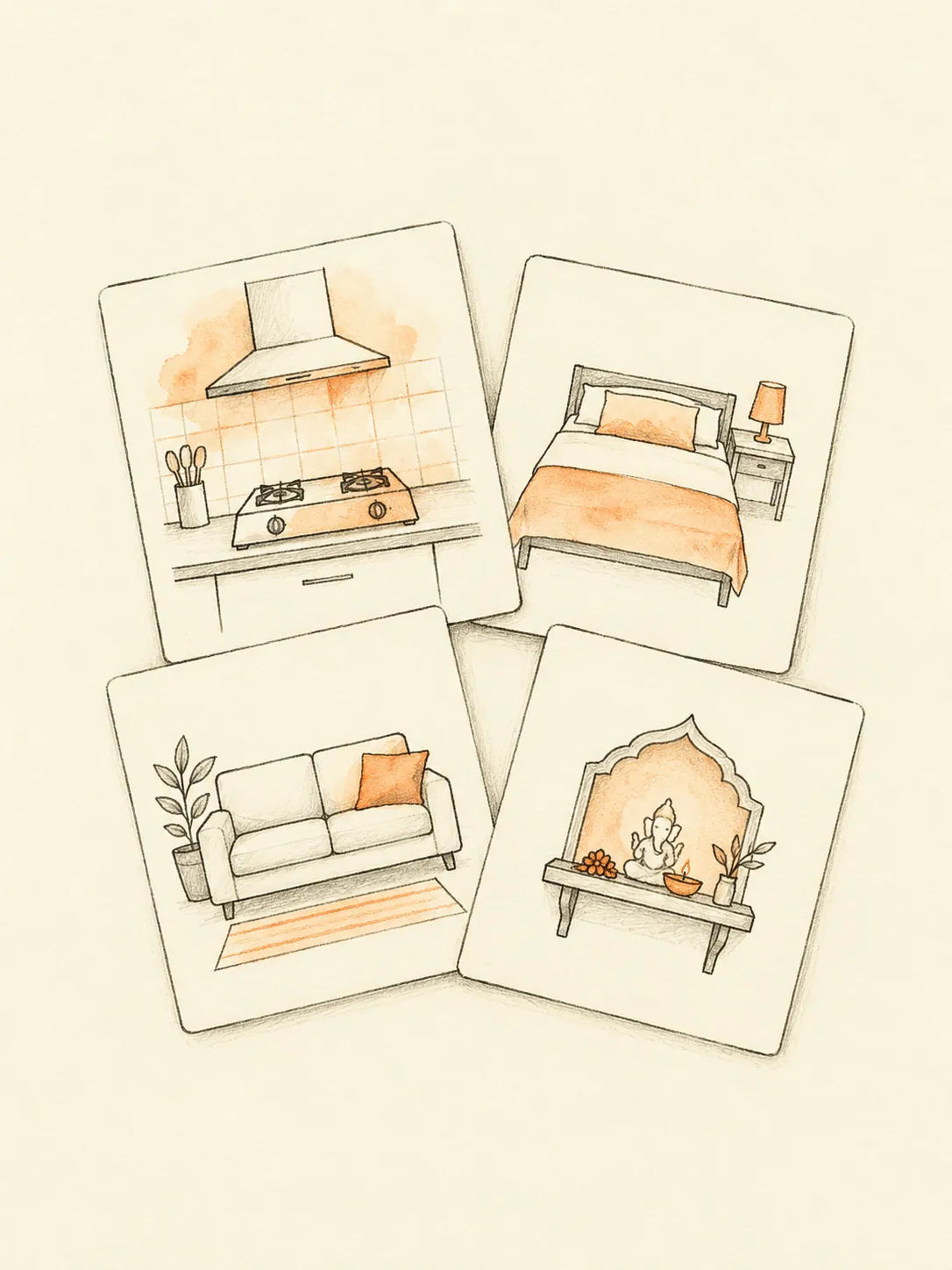
By the Vaastu World editorial team. Last updated 4 October 2026. No named expert has signed off this guide.
Key Vastu tips
01Common practice: The South-West pairing below belongs to the guide's chapter-level room interpretation. Its traditional association is with the heavier, settled part of the home. It does not mean placing every large cupboard in that corner without checking the floor or wall. Identify which room serves as the main bedroom and how much of it sits in the relevant zone. Then decide where a bed can stand with safe access, an unobstructed window and enough space for the people who use the room each day.
02Common practice: An existing West or South bedroom may offer a workable alternative when the South-West room is too small or used for another purpose. Keep the room choice and bed orientation as separate entries in your notes. Common practice is to compare noise, privacy, daylight and the route to the bathroom before swapping bedrooms. A quiet room with usable circulation may be preferable for the household to a nominally preferred zone with no space beside the bed. Consider the needs of an older occupant before making any move.
03Common practice: The North-East finding below concerns a heavy main suite occupying a zone the table treats as light. It is a modern application and should retain that qualification. Vastu tradition holds that a settled main bedroom supports rest and harmony. Practical layouts to avoid include a wardrobe that blocks the entrance, a bed trapping someone against a wall and loose storage above the pillows. Keep escape routes and ventilation clear. Do not remove a structural wall or close a window in order to make the bedroom feel heavier.
Dos and don'ts
Dos
- Common practice: Try reorganizing the wardrobe, reducing floor clutter and shifting the bed enough to create a clear walking route. If it is safe and practical, test another headboard wall before replacing furniture. Leave enough room to reach plugs and curtains without climbing over the bed. Mirrors can be moved if glare or reflections bother the occupants; that is a comfort choice, not a cited remedy here.
- Common practice: Use the Floor Plan Studio for room placement and the Bed Direction tool for the actual head bearing. Supply the information each asks for rather than assuming one result answers both questions. Sketch the bed, doors and wardrobe on the same scale to identify a reversible trial. Live with that arrangement through normal routines, including changing bedding and accessing storage. If the move creates an access problem, restore it and try another option. The useful outcome is a clearer plan and a manageable next step for your household.
Don'ts
- Common practice: The North-East finding below concerns a heavy main suite occupying a zone the table treats as light. It is a modern application and should retain that qualification. Vastu tradition holds that a settled main bedroom supports rest and harmony. Practical layouts to avoid include a wardrobe that blocks the entrance, a bed trapping someone against a wall and loose storage above the pillows. Keep escape routes and ventilation clear. Do not remove a structural wall or close a window in order to make the bedroom feel heavier.
- Common practice: One mistake is treating the wall behind the headboard as proof of the room's location. Another is applying the main-bedroom preference to every bed in the house, even a temporary guest bed. Measure both the whole home and the furniture arrangement. Count door swings when checking the available space; a bedside gap can disappear when a wardrobe opens. Do not label a room unsuitable solely because its decor looks light. The guide's room finding depends on the plan, not the bed linen or the occupants' horoscope.
Frequently asked questions
QIs bedroom location the same as head direction? — Common practice: record them separately. One describes where the room lies in the home; the other describes the bearing of the head while lying in bed.
QShould the largest room always be the main bedroom? — Common practice: compare access, privacy and the occupants’ needs. Floor area alone cannot show whether a room is a suitable place for the household’s main bed.
QMust a rented bedroom be rebuilt? — Common practice: start with the bed, storage and circulation. Keep fixed constraints in your notes and seek qualified advice before changing permanent construction or services.
QCan mirrors be used in a bedroom? — Common practice: place them where reflections and glare suit the occupants. This guide does not cite a classical mirror rule or prescribe removal of every mirror.
More Vastu guides
RoomVastu for Kitchen — रसोई के लिए वास्तुRoomVastu for Living Room — बैठक कक्ष के लिए वास्तुRoomVastu for Bathroom — स्नानघर के लिए वास्तुRoomVastu for Puja Room — पूजा कक्ष के लिए वास्तुRoomVastu for Study Room — अध्ययन कक्ष के लिए वास्तुRoomVastu for Children’s Bedroom — बच्चों के शयनकक्ष के लिए वास्तु
Get your personalised Vastu report
Use the Vastu scanner to analyse your home floor plan room by room and receive specific, classical remedies tailored to your space.