
Summary · Quick answer
Two Mesha Moons ignite extraordinary passion and shared drive, yet Koota Milap reveals the karmic friction that must be consciously transformed.
This is editorial context. Where no primary citation is shown, treat it as a guide, not as a verified claim, personal prediction or medical advice.
Mesha and Mesha: Twin Agni Rashis in the Cosmic Wheel
When both partners carry Chandra in Mesha Rashi, the elemental landscape is unmistakably singular: pure Agni Tattva meeting itself. Mesha, the first Rashi of the Kalachakra, is governed by Mangal and carries the Rajas Guna in its most concentrated expression. Rajas is the guna of movement, ambition, and ignition — and when two Rajas-dominant natures encounter each other, the result is simultaneously electric and combustible. In Jyotish cosmology, Mesha is classified as a Chara Rashi (movable sign), bestowing both individuals with restlessness, initiative, and a perpetual orientation toward new beginnings. The Tattva interaction here is not one of complementarity but of amplification: Agni plus Agni generates neither the steadying influence of Prithvi nor the cooling grace of Jala. Instead, the flame grows higher. Both natives are ruled by Mangal's qualities of courage, directness, and competitive instinct. The Nakshatra dimension adds nuance: a Mesha Chandra may fall in Ashwini (ruled by Ketu), Bharani (ruled by Shukra), or the early degrees of Krittika (ruled by Surya). Two Ashwini Moons share a horse-twin archetype of healing and speed; two Bharani Moons share Yamadeva's intensity around desire and endings. This Nakshatra-level differentiation determines whether the double-Mesha pairing leans toward synchronized drive or ego collision.
This plays out differently in every chart.
See it in yours →Chandra-Chandra Yoga: Emotional Mirroring and the War Within
In Vedic astrology, the emotional self is seated in Chandra, and the manner in which two Chandras relate defines the subtle texture of a partnership's feeling-life. Two Mesha Moons in the same Rashi form a Chandra-Chandra yoga of zero-degree separation — a powerful conjunction in the Navamsha of lived feeling. The gift is profound: both partners instinctively understand the other's need for autonomy, quick emotional processing, and forward-moving energy. Neither partner tends toward prolonged brooding; emotions in Mesha rise like fire and, if allowed, extinguish equally fast. The challenge emerges because Mangal, as karaka of both charts' Chandra Rashi, gives a temperament that can mistake emotional reactivity for emotional honesty. Anger arrives swiftly and is expressed directly — sometimes wounding the very partner who would otherwise be most understanding. The Mangal influence also creates a competitive undercurrent in the emotional sphere: who is more hurt, who recovers faster, who needs less. Paradoxically, both partners share a deep aversion to vulnerability, making genuine emotional intimacy an effortful practice rather than a natural default. The attachment style for Mesha Chandra tends toward anxious-activating under stress, characterized by pursuit followed by equally sudden withdrawal. Two such natures can create cycles of fiery engagement and cold retreat. Conscious awareness of Mangal's shadow — aggression masquerading as passion — is essential for this pairing to sustain depth.
Daily Rhythms and Dialogue: When Two Warriors Share a Household
In the daily theatre of life, two Mesha Moon natives bring remarkable energy, spontaneity, and a shared hatred of stagnation. Conversations are direct, often blunt, and refreshingly free of manipulation or prolonged passive-aggression — what Mesha feels, Mesha says. This shared communication style can feel like a liberation after years of navigating more indirect personalities. Decisions are made quickly, perhaps too quickly: neither partner naturally pauses for deep deliberation before acting, which can produce impulsive choices that both later regret. The household dynamic tends to be high-energy and stimulating, with both partners bringing Mangal's need for physical activity, fresh goals, and external engagement. Boredom is genuinely feared and mutually avoided. The friction surfaces in governance: two Chara Rashis rarely organise a stable domestic structure. Bills, routines, long-term planning, and the quiet administrative substrate of a shared life can become points of mutual abdication — neither partner particularly wants to manage what feels like restriction. Arguments, when they arise, are fierce and immediate but often short-lived; the Mesha native rarely holds grudges, preferring to clear the air and move forward. The operative danger is that repeated explosive conflicts erode trust even when individually resolved. The pairing thrives when both partners agree on a shared mission: a business venture, an adventure, a physical practice — Mangal energy needs a worthy opponent, and when that opponent is life itself rather than each other, this pairing flourishes.
Keep going
Find this in your free KundliCast your full Vedic birth chart — nakshatras, padas, dashas, yogas — free
Koota Milap Revealed: Where Harmony Hides and Dosham Dwells
Ashtakoota analysis for two Mesha Moon natives produces a distinctive scoring profile that rewards careful examination. Varna Koota assigns both partners to the Kshatriya varna — an equal pairing earning full Varna points, reflecting matched ambition and social orientation. Vashya Koota between two Mesha natives grants a reciprocal influence score, acknowledging the mutual pull and mutual resistance of same-sign Chandras. Tara Koota requires Nakshatra-specific calculation: two Ashwini Moons share identical Janma Tara placement, generating a Tara Dosham that warrants Nakshatra-level remediation. Yoni Koota for Ashwini is Ashwa (horse); two Ashwa Yonis of the same gender create a neutral outcome, neither the highest harmony nor active opposition. Graha Maitri Koota between two Mangal-ruled Chandras scores maximum points — natural planetary friendship with oneself, reflecting the deep recognition these partners feel upon meeting. Gana Koota for Mesha (Ashwini and Bharani specifically) places both in Manushya Gana, yielding a good but not exceptional Gana score. The most critical consideration is Nadi Koota: if both partners share the same Nadi — Aadi, Madhya, or Antya — a severe Nadi Dosham arises, traditionally associated with health challenges and karmic friction in progeny matters. Total Ashtakoota points for same-Nakshatra Mesha pairings typically range from 18 to 22 out of 36, indicating moderate compatibility requiring conscious effort.
Sadhana for the Double Mesha Pair: Channeling Fire Into Dharma
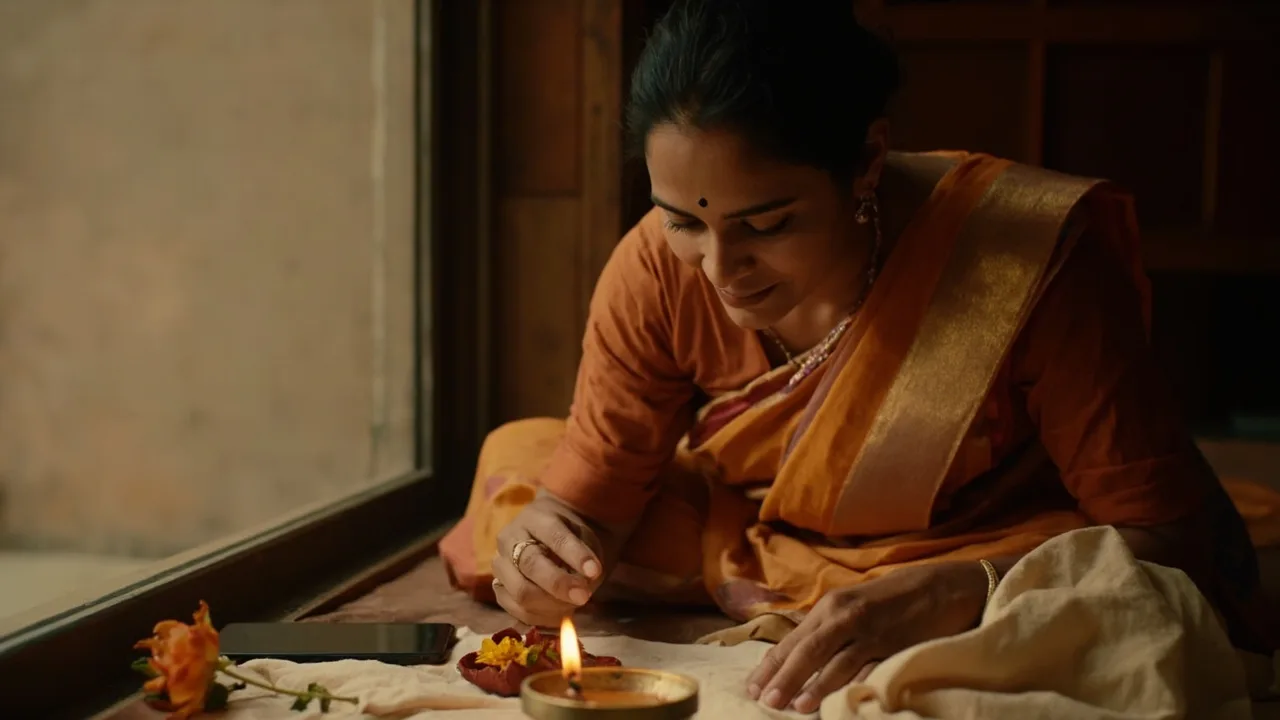
The highest expression of a double-Mesha Moon pairing is not the elimination of fire but its consecration. In the Tantrik and Puranic framework, Agni is not merely destructive — it is the sacred medium through which offerings reach the Devatas, the force that purifies and transforms. The presiding Devata for Mesha is Mangal, the Senapati of the celestial army; for Ashwini Nakshatra, the Ashwini Kumaras are the divine physicians, masters of swift healing. This pairing is advised to worship these Devatas together: Tuesday Mangal puja with red flowers, lighting a ghee lamp at sunrise, and recitation of the Mangal Stotra creates a shared ritual container that transmutes competitive energy into co-leadership. Practically, both partners benefit from establishing clear domains of authority within the relationship — not power-sharing by negotiation alone, but formal acknowledgment of each partner's sovereign sphere. A shared physical sadhana — morning running, martial arts, or vigorous yoga — channels Mangal's excess into the body rather than the relationship. The Jyotish remedy of wearing red coral (Moonga) set in copper on the right ring finger, after proper Graha-shanti puja, is classically prescribed for Mangal-dominated charts. The mantra "Om Angarakaya Namah" recited 108 times on Tuesdays by both partners aligns their Mangal energy toward shared dharma. When these two fiery souls agree to fight alongside each other rather than against each other, the Mesha-Mesha pairing becomes one of the most formidable duos in any realm of life.