

Summary · Quick answer
Griha Pravesh Muhurta aligns Jyotish and Vastu Shastra to sanctify the first entry into a new home. Learn the classical rules and modern application.
This is editorial context. Where no primary citation is shown, treat it as a guide, not as a verified claim, personal prediction or medical advice.
Classical Shastra Definition of Griha Pravesh and Its Vastu-Jyotish Foundation
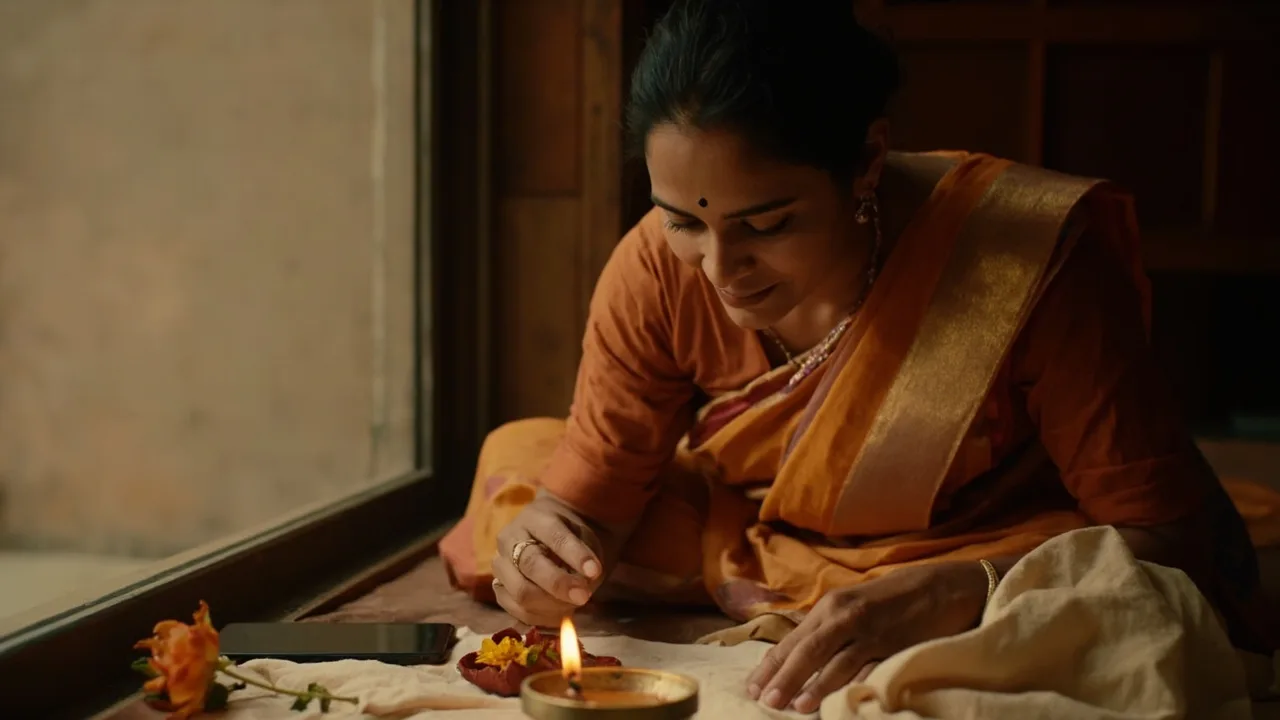
Griha Pravesh — the sacred rite of first entry into a new dwelling — is one of the sixteen Samskaras recognised in Dharmashastra, marking the home's consecration as a living space aligned with the householder's dharma. The Muhurta Chintamani dedicates a full chapter to Griha Pravesh, distinguishing three categories: Apurva Pravesh (entry into a newly built home), Sapurva Pravesh (re-entry after renovation or prolonged absence), and Dwandwah Pravesh (entry after calamity, such as fire or flood). Each category has distinct Muhurta criteria. The cosmic principle underlying Griha Pravesh is that the home — the Griha — becomes a living entity at the moment of first consecrated entry. Vastu Shastra views the dwelling as a Purusha lying in the cardinal directions, with the Brahmasthana (central energetic core) corresponding to the navel. The planetary forces present at the moment of Pravesh enter the home's subtle field (Vastu Mandala) and shape the family's experience of health, prosperity, and harmony within that space. Muhurta Chintamani explicitly warns that entering a home under a malefic configuration — especially with the Moon afflicted in the 4th house from the Muhurta Lagna — risks persistent domestic discord. Jyotish and Vastu thus act as complementary sciences: Vastu designs the spatial energy, and Muhurta selects the temporal energy that activates it.
This plays out differently in every chart.
See it in yours →Key Criteria — Auspicious Nakshatras, Tithis, Varas, and Strict Prohibitions
Muhurta Chintamani specifies the auspicious Nakshatras for Griha Pravesh as Rohini, Mrigashira, Punarvasu, Pushya, Hasta, Chitra, Swati, Anuradha, Uttara Phalguni, Uttara Ashadha, Uttara Bhadrapada, Revati, and Shravana. These Nakshatras are classified as Sthira (fixed) or Mridu (soft) — qualities that bring stability and gentleness to the home's vibration. The Sthira Nakshatras (Rohini, Uttara Phalguni, Uttara Ashadha, Uttara Bhadrapada) are particularly favoured for Griha Pravesh because they impart permanence and rootedness. For Tithis, the 2nd, 3rd, 5th, 7th, 10th, 11th, and 13th of the Shukla Paksha are auspicious. Rikta Tithis (4th, 9th, 14th) and Amavasya are strictly prohibited. Among Varas, Wednesday, Thursday, Friday, and Monday are recommended. The Lagna should ideally be a fixed sign — Vrishabha, Simha, Vrischika, or Kumbha — since fixed Lagnas confer permanence to the home. The 4th house from the Muhurta Lagna (the house signifying the home) must be free from malefic planets, and its lord must be strong. Prohibitions include Gandanta zones, Panchaka Dosha (Dhanishtha to Revati in certain traditions), Bhadra, and the month of Ashada through Bhadrapada in many North Indian traditions.
Computing the Griha Pravesh Window — Panchanga Method and Planetary Overrides
The computation begins by identifying the appropriate season. Griha Pravesh is ideally performed in the Uttarayana period — when the Sun is in the northern hemisphere's ascent (Makara through Mithuna), roughly mid-January through mid-July. This cosmic directional movement is considered auspicious for establishing new phases of life. During Dakshinayana (the Sun's southward movement), Griha Pravesh is performed only under compelling necessity and with additional remedial rites. Within the Uttarayana window, the Jyotishi plots candidate days meeting Tithi-Vara-Nakshatra criteria, then identifies specific hora windows within each day where the Lagna meets fixed-sign criteria and the 4th house is clean. A critical override is the position of Saturn (Shani). If Shani occupies the 4th, 7th, or 10th from the Muhurta Lagna, it is considered a significant Dosha even when other factors are excellent. When Mars (Mangala) aspects the Lagna or 4th house with its 4th, 7th, or 8th aspect, the Muhurta Chintamani recommends a purificatory Vastu Havan alongside the Pravesh rite. The Moon should be in a Shubha Nakshatra and waxing (Shukla Paksha) — a waning Moon on the day of Griha Pravesh is one of the most common oversights in casual calendar selection. Once the window is identified, the ritual sequence — Vastu Puja, Ganapati Puja, entering with the right foot first, boiling milk until it overflows — is performed within the Muhurta window.
Keep going
Find this in your free KundliCast your full Vedic birth chart — nakshatras, padas, dashas, yogas — free
Regional Traditions in Griha Pravesh — Variations Across India's Jyotish Lineages
Regional traditions show marked variation in Griha Pravesh customs while adhering to the Shastric core. North Indian tradition, particularly in Rajasthan, Uttar Pradesh, and Punjab, places the Griha Pravesh Muhurta during Shukla Paksha and requires the home's Vastu Dosh to be formally neutralised through a Navagriha Havan (nine-planet fire ritual) before the family enters. Vastu corrections — such as placing copper Vastu Yantras at specific directions — are completed before the Muhurta is fixed. In South India, especially Maharashtra and Karnataka, the Griha Pravesh is integrated with the Gruha Shanti puja, a day-long ritual led by the family purohita. The South Indian Panchanga (Drik or Thirukanitam) is consulted, and the Nalla Neram (Tamil auspicious period) supplements the Jyotish Muhurta. Gujarati tradition aligns Griha Pravesh with the completion of the Ganesh Chaturthi puja and avoids the entire month of Ashwin through Kartik for new home entries. Bengali tradition uniquely requires the entry to be made by the senior-most female member of the family (the Grihalakshmi, or household goddess embodied), symbolising the arrival of Lakshmi into the home before the household head enters. In Kerala, a Vastu Vidwan — a specialist in Thachu Shastra (traditional architecture) — formally certifies the home's Vastu alignment before the Jyotish Muhurta is fixed.
Practical Guide — Panchanga Apps, Questions for Your Jyotishi, and Real Priorities
For Griha Pravesh planning, begin by checking a Panchanga app for your specific city, since sunrise times and therefore Tithi transitions vary significantly across India's geography. Filter the calendar for months in the Uttarayana period and identify days marked as Shubha for Griha Pravesh — most quality apps now include this category filter. Verify manually that the listed Nakshatra is on the auspicious list and that no Ashubha Yoga (Vyatipata, Vaidhriti, or Panchaka) is active. When consulting a Jyotishi, ask these specific questions: Is the 4th house in the Muhurta chart free from malefic influence? Is the Moon waxing and in a Sthira or Mridu Nakshatra? Is the Lagna lord strong and unafflicted? Is Saturn in a neutral position relative to the Muhurta Lagna? These four questions expose whether the Muhurta has been genuinely calculated or simply drawn from a generic published list. Griha Pravesh Muhurta matters most when the family is moving into a home that has had troubled prior occupants, has structural Vastu defects that cannot be corrected, or when the move coincides with the householder's Sade Sati or Ashtama Shani transit. In these cases, a powerful Muhurta serves as a significant counterbalance. For a home with good Vastu and a family in a positive natal transit period, avoiding only the clearly inauspicious conditions is sufficient — the quest for perfect Muhurta should not delay a practical move indefinitely.