
Summary · Quick answer
Namakaran Samskara is the sacred naming ceremony in Vedic tradition. Learn how Jyotish selects the auspicious Muhurta and Nakshatra-based name syllable.
This is editorial context. Where no primary citation is shown, treat it as a guide, not as a verified claim, personal prediction or medical advice.
Namakaran as a Vedic Samskara — Classical Texts and Cosmic Purpose of Naming
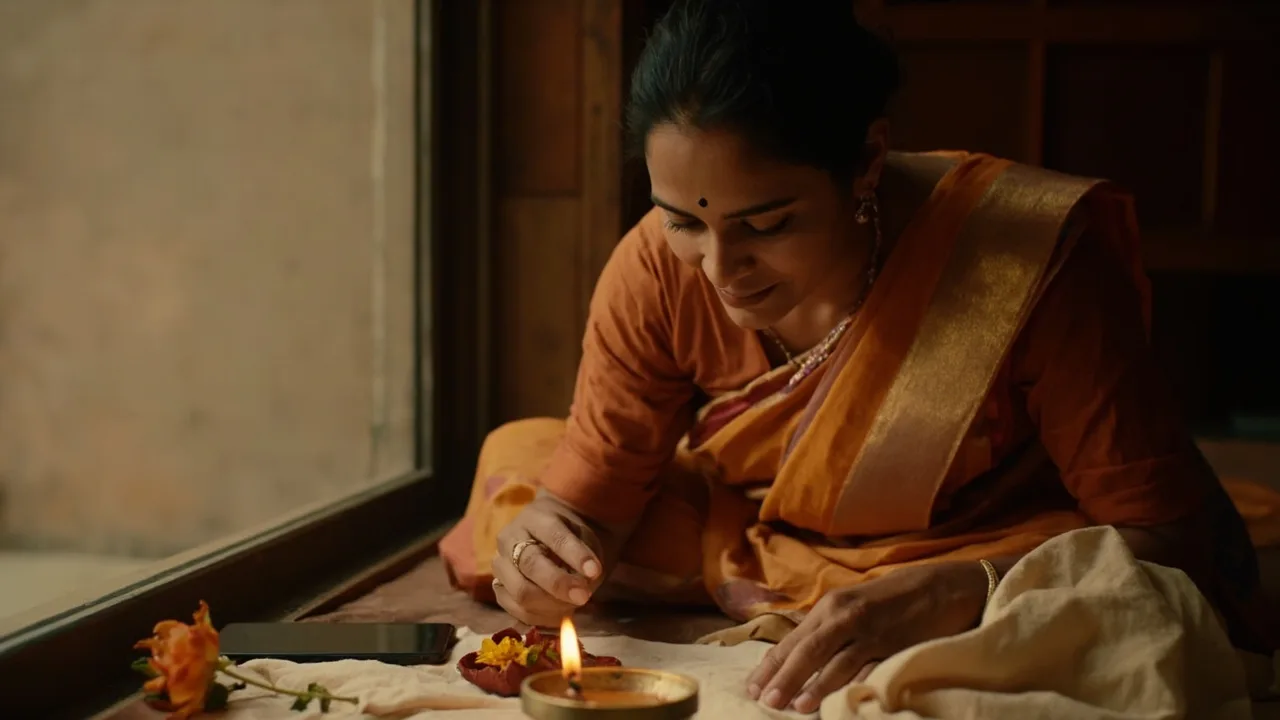
Namakaran — the ceremony of bestowing a name upon a newborn — is the fifth of the sixteen Samskaras (sacramental rites of passage) described in Dharmashastra texts including the Grihyasutras of Ashvalayana, Paraskara, and Gobhila. The Muhurta Chintamani and Muhurta Tattva both devote sections to Namakaran Muhurta, recognising that a name is not merely a social label but a Nada (sound vibration) that the child will embody throughout life. The Vedic worldview holds that sound and form (Nama-Rupa) are inseparable — the name chosen at this ceremony enters the child's subtle energy field and aligns with or against the natal chart's dominant energies. The ceremony is traditionally performed on the 10th or 12th day after birth, avoiding the lunar month's inauspicious periods. The name is whispered into the child's right ear by the father during the Muhurta, ideally while the child is held near the sacred fire (Agni). The cosmic principle is that Agni is the witness-god (Sakshi Devata) who registers the name into the universal Akasha (cosmic record). The Jyotish dimension adds specificity: the name's first syllable is determined by the child's Janma Nakshatra (birth Nakshatra), ensuring the name's inherent Nada resonates with the Nakshatra energy that is most prominent in the child's soul — the Moon's position at birth.
This plays out differently in every chart.
See it in yours →Rules for Nakshatra-Based Name Selection, Auspicious Tithis, and Varas
The Vedic system assigns specific syllables to each of the 27 Nakshatras, divided into their four Padas (quarters). The Moon's Nakshatra and Pada at the child's birth determines the appropriate first syllable of the name. For example, a child born with Moon in Ashwini's first Pada receives the syllable 'Chu', second Pada receives 'Che', third Pada 'Cho', and fourth Pada 'La'. This Nakshatra-syllable mapping covers all 27 × 4 = 108 Padas, corresponding to the 108 beads of a Japa Mala. For the Namakaran ceremony itself, the Muhurta should fall on an auspicious Tithi — the 2nd, 3rd, 5th, 7th, 10th, 11th, or 13th of either Paksha, with the Shukla Paksha preferred. Rikta Tithis (4th, 9th, 14th) and Amavasya are prohibited. Among Varas, Monday, Wednesday, Thursday, and Friday are favoured — they carry the energies of Chandra (nurturing), Budha (intelligence), Guru (wisdom), and Shukra (beauty and grace), all highly appropriate for a child's naming. The Nakshatra on the day of the ceremony should ideally be Mridu (soft) or Laghu (light) — categories including Mrigashira, Chitra, Anuradha, Revati, Ashwini, Pushya, and Hasta. Gandanta Nakshatras are strictly avoided for this gentle ceremony.
Computing the Namakaran Muhurta — Moon's Role and Lagna Assessment
Computing the Namakaran Muhurta requires the child's precise birth time and location to generate the Janma Kundali. The Jyotishi first extracts the Janma Nakshatra and Pada, derives the auspicious name syllable, and then turns to the question of which upcoming day between the 10th and 12th day offers the strongest Muhurta. If neither the 10th nor 12th day offers a viable window, Dharmashastra allows extension to the 16th day or the first auspicious day in the following month (Matsya Purana reference). The Lagna of the Namakaran chart should ideally be strong and free from malefic influence. The first house represents the child's identity and body; the 5th house represents intelligence and Poorvapunya (accumulated merit). A benefic planet in the 1st or 5th of the ceremony chart is considered highly auspicious for the child's intellectual development and overall fortune. The Moon should not be in Ashtama (8th from Janma Rashi) on the day of the ceremony — this Chandrashtama condition is considered a stress on the child's subtle body at such a sensitive developmental stage. Venus should not be combust. Jupiter's aspect on the Lagna of the Namakaran chart is the single most protective configuration, associated with the child receiving Guru-Kripa (the grace of wisdom) throughout life.
Keep going
Find this in your free KundliCast your full Vedic birth chart — nakshatras, padas, dashas, yogas — free
Regional Variations — Name Traditions in North India, South India, and Bengal
Namakaran traditions vary richly across India while sharing the Nakshatra-syllable core. In North Indian tradition, the Namakaran ceremony is often a family event with the Kula Purohita (family priest) presiding. Two names are typically given: the Nakshatra-based name (Rashi name or Nakshatra name, used in all ritual contexts including marriage horoscope matching) and a social name used in daily life. The ritual name's syllable strictly follows the Nakshatra-Pada mapping, while the social name may be chosen freely. South Indian tradition — particularly Brahmin families in Tamil Nadu, Karnataka, and Andhra — performs Namakaran as part of the Ayushya Homa (longevity fire ritual) on the child's completion of one month. The Tamil Jyotishi prepares a detailed Jatakam (natal chart) and recommends the Nakshatra-based syllable alongside a name from the Divya Prabandha (Vaishnava) or Stotras (Shaiva). Bengali tradition performs Anustanik (ritual naming) on the 21st day, guided by the family astrologer who prepares the Ghataka (natal chart in Bengali system). Gujarati tradition often holds the naming ceremony in the temple during morning puja, combining the Namakaran with the offering of the child to the Kuldevata (family deity). In all traditions, the Nakshatra name recorded in the natal chart serves as the canonical astrological identity used in all Muhurta, Prashna, and matching calculations throughout the person's life.
Modern Application — Naming Apps, Online Panchang, and When the Syllable Truly Matters
In the modern context, many parents use online tools to find the Nakshatra-based name syllable. Quality tools — including Drik Panchang, AstroSage, and various regional language apps — allow you to input the child's birth date, time, and location to instantly compute the Janma Nakshatra, Pada, and recommended syllable. This digital access has democratised a process that once required a family Jyotishi and has expanded the ceremony's reach to diaspora families worldwide. However, a reliable Jyotishi remains valuable for one specific reason: accurate birth time rectification. Hospitals record birth times on the minute, but Nakshatra Padas transition every six to seven hours, so a birth recorded near a Pada boundary may genuinely fall in either Pada — and thus could have two valid syllable choices. A Jyotishi can rectify the chart using known life events (the parents' own) and the child's earliest observable characteristics to determine the precise Pada with confidence. The Nakshatra name syllable matters most for future astrological purposes: all Muhurta calculations for the person — Vivah, Griha Pravesh, business — will use this name in the Sankalpa (ritual declaration of intent). A name that correctly reflects the Janma Nakshatra ensures ritual potency in every subsequent Muhurta the person undertakes. For daily social life, parents should feel free to choose a name that resonates with family tradition and personal meaning, provided the Nakshatra-based name is preserved in the Jyotish record.