

Summary · Quick answer
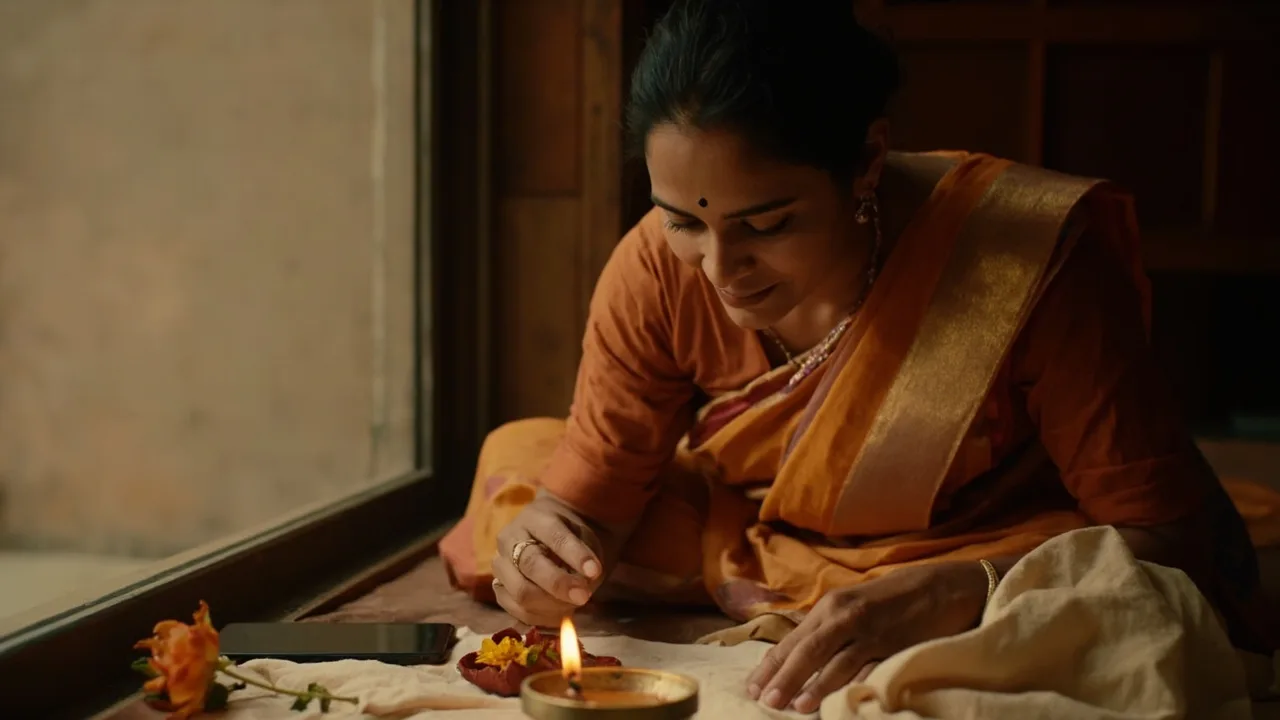
Shukra in Karka Rashi transforms love into a devotional act of nurturing — here the heart becomes a sanctuary and the home its sacred altar.
This is editorial context. Where no primary citation is shown, treat it as a guide, not as a verified claim, personal prediction or medical advice.
Shukra in Karka: When Love Becomes Protective Devotion
Karka Rashi — the sign of the Crab, ruled by Chandra, the Moon — is the cardinal water sign of Jyotisha, governing the emotional body, the maternal principle, the ancestral home, and the deep instinctual currents that shape the inner life. When Shukra, the Graha of love, beauty, desire, and relational harmony, occupies Karka, the Venusian faculty is absorbed entirely into the emotional and nurturing dimension of experience. Love for these natives is not a thing of the mind, nor primarily a thing of the body — it is a profound, sheltering, protective force that expresses itself through care. The native loves by feeding, by holding, by creating safe enclosures against the world's harshness. The beloved is cherished with an almost maternal intensity that has nothing to do with the gender of the native — it is Karka's fundamental instinct to protect the tender and the vulnerable, and Shukra here directs that instinct fully into the domain of intimate relationship. In classical Jyotisha, Chandra governs Manas — the feeling mind, the seat of emotional experience. Shukra in Chandra's Rashi means the aesthetic and relational faculties of Venus are filtered through deep feeling rather than thought or sensation. These natives love with their entire emotional being. They remember what their partner loves to eat, the anniversary of a difficult day, the name of a childhood friend mentioned once in passing. Devotion is their love language, and that devotion is thorough, sustained, and genuine.
This plays out differently in every chart.
See it in yours →The Home as Sacred Space: Aesthetic of Sanctuary and Belonging
One of the most beautiful expressions of Shukra in Karka Rashi is the extraordinary gift these natives bring to the creation of home as sacred space. In Jyotisha, the fourth Bhava governs home, the domestic environment, the mother, and all that provides psychological shelter and rootedness. Karka itself is the natural significator of this fourth-house domain. When Shukra occupies this Rashi, the Venusian aesthetic impulse is channeled into homemaking in the deepest possible sense — not mere decoration, but the genuine transformation of physical space into an environment that nourishes the soul. Shukra in Karka natives are those whose homes feel immediately like sanctuaries the moment you enter. They have an instinctive understanding of how light, texture, scent, and arrangement work together to create emotional safety and beauty simultaneously. They cook with care and feed guests as an act of love. They curate their domestic spaces with the same attention a sacred temple receives — every object placed with intention, every corner softened, every threshold made welcoming. In the broader aesthetic sense, their taste tends toward the nourishing and the emotionally resonant over the merely clever or technically impressive. They are drawn to art that evokes longing and belonging, to music that opens the emotional body, to spaces and objects that carry the warmth of human history. The home they create is their most complete artistic statement.
Romantic Attachment That Is Deeply Loyal and Emotionally Invested
Shukra in Karka produces some of the most genuinely loyal romantic partners in the entire zodiac. These natives do not love lightly or experimentally — when they commit, they commit with the full emotional depth of Chandra's water sign behind them, and that depth is considerable. In Jyotisha terms, Karka is the Rashi of the deep sea — its emotions are not surface phenomena but structural, running to the bedrock of the psyche. A Shukra-Karka native's love is not a feeling that fluctuates with circumstances or convenience; it is a state of being that organizes their entire inner life around the welfare of the beloved. They remember not merely the facts of their partner's history but the emotional texture of it — the particular sadness behind a certain silence, the specific pride that accompanies a particular achievement. They mark time by the milestones of their relationships in the way others mark it by professional accomplishments. In traditional Hindu domestic life, this placement produces the ideal householder partner — devoted, reliable, emotionally present, and genuinely invested in the happiness and spiritual progress of those they love. Their romantic investment is total, and they expect a comparable level of emotional seriousness in return. Superficiality in relationship is genuinely painful for them — they cannot sustain connections that do not permit genuine emotional depth, and they will not long remain in partnerships where their devotion is received carelessly.
Keep going
See this in your chartFree Kundli — planets, houses and yogas from your exact birth details
The Shadow: Clinging Love That Struggles With Beloved's Independence
Every planetary placement carries both its gift and its shadow, and for Shukra in Karka the shadow is one of the most recognizable in Jyotisha: the tendency toward clinging attachment, toward a love so thoroughly invested in the beloved's presence and well-being that it can tip into the control that masquerades as care. Karka's instinct is to protect and shelter, and when Shukra's romantic energy amplifies that instinct, the result can be a love that holds too tightly. The Shukra-Karka native may struggle profoundly to honor the beloved's need for autonomy, for periods of solitude, for independent friendships and pursuits that exist outside the couple's shared orbit. Separation — even temporary, even healthy — is experienced by the nervous system as a form of loss rather than a natural rhythm of intimate life. The classical Jyotisha understanding of this dynamic frames it through Chandra's own nature: the Moon is the most rapidly changing of all Grahas, and its fear of abandonment can produce, in its shadow expression, the behaviors that most reliably cause the abandonment it dreads. The remedy lies in the cultivation of Atma-Vishwas — self-trust — and in developing an inner emotional richness that does not depend entirely on the constant presence of the beloved for its sustenance. Spiritual practice, particularly devotional Bhakti disciplines associated with Chandra and Shukra, supports this integration.
Working With Shukra in Karka: Honoring Devotion Without Losing Self
For those with Shukra in Karka natally, or experiencing Shukra's transit through this Rashi, the Jyotisha counsel centers on a precise and important distinction: the difference between devotion and dependency. The devotional capacity of this placement is a genuine spiritual gift. In the Bhakti tradition, the love of a devoted partner for the beloved mirrors, in miniature, the soul's love for the Divine — it is total, unconditional, and transformative. Shukra in Karka at its highest expression is capable of precisely this quality of love. The spiritual work of this placement is to bring that same intensity of devotion to one's own inner life — to become the devoted caretaker of one's own soul with the same care one lavishes on others. When the native develops this inner sanctuary, the relationship loses the quality of desperate need and gains the quality of genuine offering — love given freely because the giver is full, rather than love given anxiously because the giver is empty and afraid. In practical terms, this means maintaining independent creative and spiritual practices, sustaining friendships outside the primary relationship, and developing the emotional vocabulary to communicate needs directly rather than through the indirect language of hurt withdrawal. Shukra's gemstone Heera and the mantra Om Shukraya Namah, practiced during Shukra Hora on Fridays, supports the higher expression of this placement's formidable capacity for love.