Summary · Quick answer
Classical Jyotisha remedies for Venus debilitation, Saturn and Rahu affliction, and relational suffering — Friday practices, Lakshmi puja, and Diamond guidance.
This is editorial context. Where no primary citation is shown, treat it as a guide, not as a verified claim, personal prediction or medical advice.
When Venus Remedies Are Needed: Diagnosing Shukra's Weakness
Shukra (Venus) is the Guru of the Asura Loka in classical cosmology — the planet of refined desire, relational grace, aesthetic beauty, and material prosperity. Venus is the Karaka for marriage, partnership, artistic creativity, luxury, and the pleasures of embodied life. In Jyotisha, Venus is debilitated in Kanya (Virgo), where the planet of sensual refinement is constrained by Mercury's discriminating and analytical energy — producing a native who overthinks the heart's natural responses and struggles with perfectionist interference in relationships. Venus afflicted by Saturn creates delay and restriction in marriage and relational joy — the signature of this combination is the native who is deeply capable of love but encounters structured obstacle and loneliness in their relational life. Venus afflicted by Rahu creates distorted desire: craving for unavailable or unsuitable partners, compulsive and self-defeating relationship patterns, and confusion between genuine love and addictive attachment. Venus placed in the 6th Bhava brings conflict into relationships; in the 8th, hidden relationship complications and emotional upheaval; in the 12th, either spiritual devotion or self-undoing through relationships. The Dashas that make Venus affliction most acute are Venus Mahadasha (20 years — the longest in the Vimshottari system) and the Shukra Antardasha within other Mahadashas.
This plays out differently in every chart.
See it in yours →Friday Practices for Shukra: The Weekly Venus Remedy Protocol
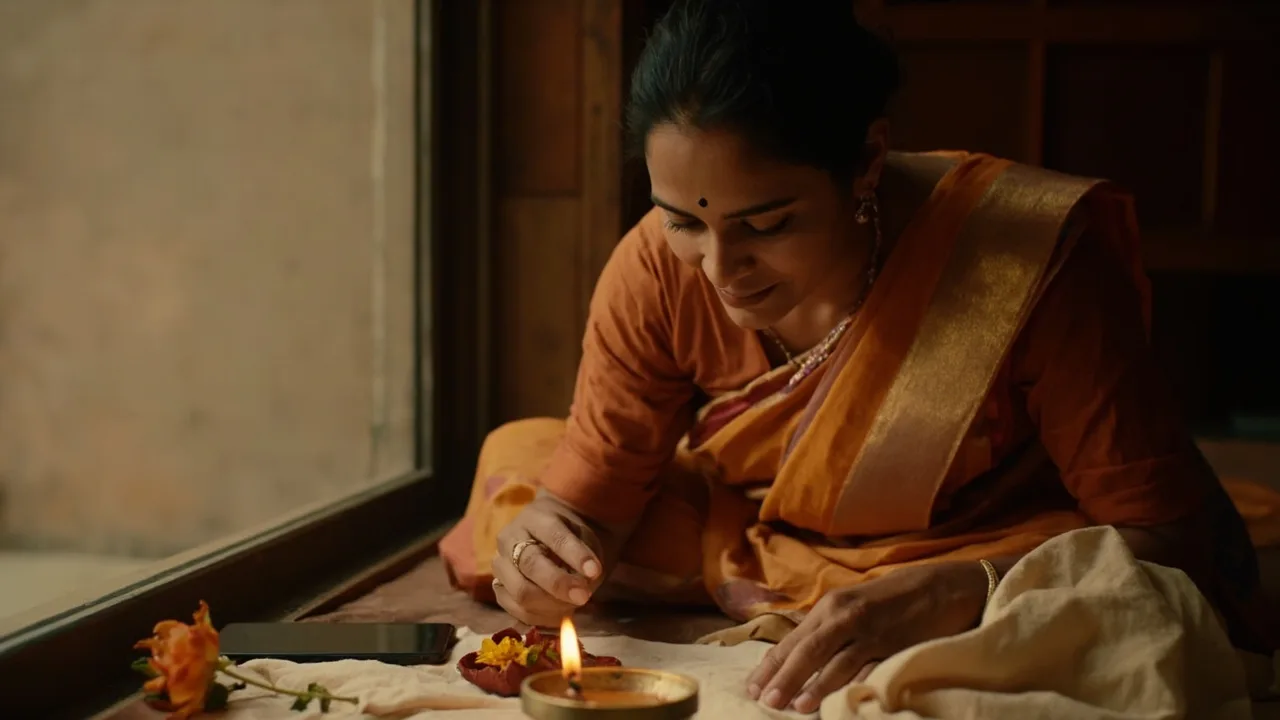
Shukravar (Friday) is Venus's Vara. The classical Friday morning practice begins with bathing before sunrise — ideally with rose water or fragrant water — establishing Venus's connection to purity, beauty, and sensory refinement. White or light pink flowers are Venus's primary floral offering: jasmine (Chameli), rose (Gulab), and tuberose (Rajnigandha) are all specifically identified as Shukra's flowers in the classical correspondence system, and offering these to Lakshmi on Friday mornings while reciting the Sri Sukta (the Rig Vedic hymn to Lakshmi) is the foundational Friday devotional practice. Wearing white or light pastel colors on Fridays aligns the subtle body with Venus's color frequency — white (Shukla) is Venus's primary color in the Graha-color correspondence system, with pale pink and cream as secondary associations. The dietary practice for Friday: eating Sattvic food (dairy products, sweet fruits, sugar-based sweets, rice pudding) and avoiding meat grounds the Friday practice in the subtle-body level at which Shukra operates. Fasting on Fridays — either partial (eating only sweets and milk) or complete until evening — is one of the most widely practiced traditional Venus remedies, considered particularly effective for relational difficulties and for women seeking to strengthen their connection to Venus's feminine grace.
Lakshmi and Uma Worship: The Devata Remedies for Shukra
Lakshmi is Venus's primary Devata in the classical Jyotisha Devata correspondence system, representing the feminine principle of beauty, grace, abundance, and relational harmony that Shukra embodies at the cosmic level. Lakshmi Puja on Fridays — offering lotus flowers (Shukra's sacred flower), turmeric paste, saffron, and fragrant offerings to a Lakshmi murti or yantra while chanting the Sri Sukta from the Rig Veda's fifth Mandala — is the most authoritative and consistently recommended Venus remedy across all major Jyotisha schools. The Sri Sukta is not a later sectarian composition but a Vedic hymn embedded in the Khila sections of the Rig Veda; its recitation is considered among the most powerful available remedies for Venus affliction, particularly when financial or relational prosperity is blocked. Lalita Sahasranama — the thousand names of the Goddess in the Brahmanda Purana's Lalitopakhyana section — is specifically recommended for Venus afflicted in or ruling the 7th Bhava, as Lalita Devi embodies Venus's qualities of beauty, sacred marriage, and divine love in their most elevated form. Durga Puja is appropriate when Venus-Mars conflicts create aggressive or combative relational dynamics. Uma (Parvati) worship — honoring Shiva's consort as the embodiment of devoted, patient, spiritually mature love — addresses the deepest relational qualities that Venus at its highest expresses.
Keep going
Find this in your free KundliCast your full Vedic birth chart — nakshatras, padas, dashas, yogas — free
Diamond and White Sapphire: Venus Gemstones and Their Contraindications
Heera (Diamond) is Venus's gemstone in the Navaratna system — the most expensive and, in terms of prescription restrictions, among the most carefully governed of all planetary gemstones. The classification challenge with Diamond is that it is simultaneously the most powerful Venus amplifier and the most Lagna-dependent in its effects. For Taurus (Vrishabha) and Libra (Tula) Lagnas, where Venus is the Lagna lord, Diamond prescription is generally favorable and can produce significant enhancement of Venus's benefic qualities. For Aries (Mesha) and Scorpio (Vrischika) Lagnas, where Venus rules the 7th and 12th or 7th and 2nd Bhavas respectively, the assessment becomes nuanced. A qualified Jyotishi must assess both functional lordship and the position of natal Venus before recommending Diamond. White Sapphire (Safed Pukhraj) is the classical substitute for Diamond — less expensive and considered nearly equivalent in its Venus-amplifying capacity by most traditional authorities, though modern Jyotishis sometimes rank it below Diamond in effectiveness. Opal is another substitute, particularly recommended in some South Indian and Sri Lankan Jyotisha lineages. Quartz crystal (Sphatik) is the only Venus-supportive stone that traditional authorities consistently consider safe for all Lagnas without detailed chart assessment — it gently supports Venus's frequency without the amplification risk that Diamond and White Sapphire carry.
Artistic Seva and the Inner Venus Remedy That Transforms Relationships
The Venus mantra practices include the Shukra Beej mantra (Om Draam Dreem Draum Sah Shukraya Namah) recited 108 times on Fridays, and the Shukra Gayatri (Om Rajadabaaya Vidmahe, Brighusunaaya Dhimahi, Tanno Shukra Prachodayat). The Shukra Stotra from the Navagraha Stotras is the formalized prayer for direct Venus pacification and invocation. But the inner remedy that classical Jyotisha identifies as the most genuinely transformative for Venus affliction is the cultivation of authentic beauty in the world through disinterested creative service. Creating art — visual, musical, literary, or spatial — without attachment to recognition or commercial outcome is the purest expression of Venus's Dharma. Supporting artists financially: the native whose Venus is afflicted often has a Karmic thread connecting to the neglect or exploitation of creative capacity, and materially supporting artists addresses this directly. Beautifying shared spaces through Seva — cleaning and adorning temples, gardens, or community spaces — channels Venus's energy into collective benefit. Music practice as a daily spiritual discipline, treating the instrument as a devotional object and the practice as an offering, is among the deepest Venus remedies in the classical Bhakti tradition. The attitudinal core: treating every significant relationship as an opportunity to embody the highest Venus qualities — refined, patient, generous, genuinely selfless love — rather than primarily as a source of personal fulfillment.