 Healers World











































 अद्यतनित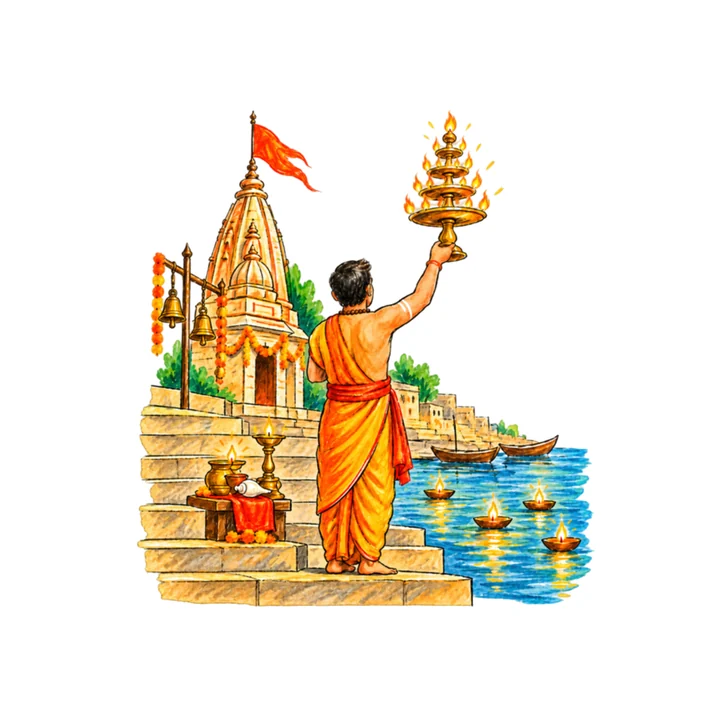
 त्वरित उत्तर
तर्पण जीवित और परलोकगतों के मध्य शाश्वत बंधन है — एक दैनिक या ऋतुजन्य कृतज्ञता का कार्य जो पूर्वज को उनके आगे के यात्रा में और भक्त को उनके वर्तमान जीवन में सहारा देता है। यहाँ संपूर्ण मार्गदर्शिका है।
- विषय
- अनुष्ठान मार्गदर्शिका
- पढ़ने का समय
- 9 मिनट
- लेखक
- हीलर्स वर्ल्ड स्टूडियो
- अंतिम अद्यतन
- 12 August 2026
The Meaning of Tarpan: Why We Feed the Ancestors
Tarpan (तर्पण) comes from the Sanskrit root 'tarp' — to satisfy, to nourish, to please. It is the ancient Vedic practice of offering water, sesame seeds, and sacred grass to the departed souls of one's ancestors — the Pitrs — as well as to the gods, the sages, and all beings. The Garuda Purana and the Dharmasindhu both explain that after death, a soul may pass through various subtle realms before attaining liberation. In these realms, the soul is dependent, to a degree, on the love and ritual energy offered by its living descendants. When a child offers Tarpan with devotion and recites the names of the ancestors, it is said to reach the Pitrs like water reaching thirsty roots. The Mahabharata recounts how even Bhishma, lying on his bed of arrows, was comforted when Arjuna brought water to him using his divine bow as a conduit — an act considered equivalent to Tarpan. This practice is not superstition; it is the Vedic science of subtle energy, of love transcending the boundary between the visible and invisible worlds. To perform Tarpan is to acknowledge that we stand upon the shoulders of those who came before us, and to repay the cosmic debt called Pitri Rin.
 अनुष्ठान मार्गदर्शिका