 Healers World









































 புதுப்பிக்கப்பட்டது

 விரைவான பதில்
சங்கல்ப்பம் ஒரு ஆசை அல்லது இலக்கு அல்ல — அது தெய்வத்தின் முன் செய்யப்படும் உறுதிமொழி, பிரபஞ்ச காலத்தில் நங்கூரமிடப்பட்டது, இதயத்தின் ஆழத்திலிருந்து உச்சரிக்கப்படுவது. உண்மையான சங்கல்ப்பத்தை நிர்ணயிக்கும் பண்டைய முறையை அறிக.
- தலைப்பு
- பூஜை வழிகாட்டி
- வாசிப்பு நேரம்
- 8 நிமிடங்கள்
- எழுதியவர்
- ஹீலர்ஸ் வேர்ல்ட் ஸ்டுடியோ
- கடைசியாகப் புதுப்பிக்கப்பட்டது
- 12 ஆகஸ்ட் 2026
What Is Sankalpa and Why It Is Sacred
In the Vedic tradition, Sankalpa (सङ्कल्प) is a solemn resolve — a declaration of intent made in full consciousness before the forces of the universe. Unlike a modern goal or affirmation, a Sankalpa is not rooted in ego-desire. It emerges from the deepest layer of the self, what the Upanishads call the Anandamaya Kosha, the bliss-sheath, where individual will meets cosmic will. The Taittiriya Upanishad teaches that all creation springs from Sankalpa: 'Sankalpaad eva sambhavati' — from intention alone does the world arise. When a devotee forms a Sankalpa, they are aligning their finite personal will with the infinite will of the Divine. This is why Sankalpa is recited at the beginning of every puja, every yajna, every pilgrimage, and every sacred vow. Without Sankalpa, a ritual is an empty form. With a true Sankalpa, even the simplest act of worship becomes a world-transforming event. The moment of Sankalpa is the moment when the invisible thread between the devotee and the Divine is pulled taut and made unbreakable.
The Traditional Sankalpa Formula: Time, Place, and Self
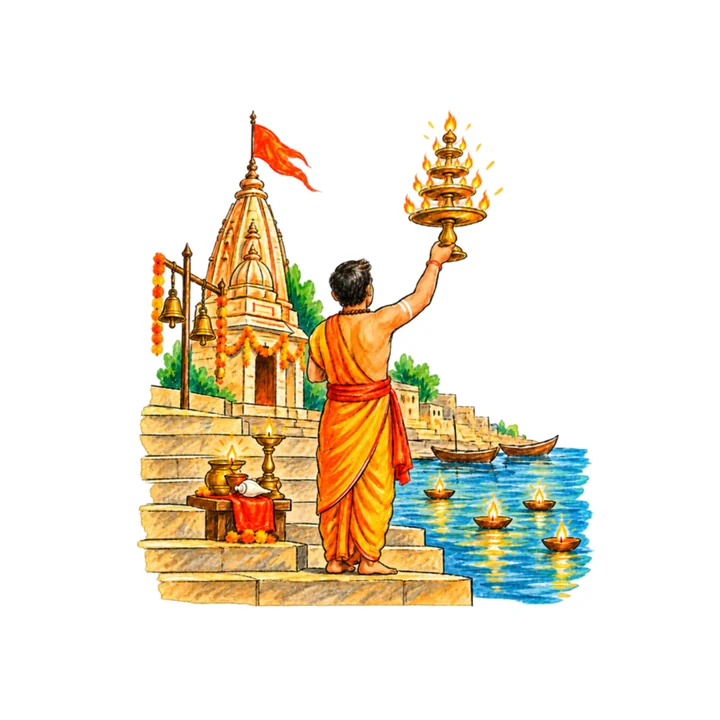
The classical Sankalpa begins with a precise anchoring in cosmic time and sacred geography. The priest or devotee recites the Panchanga — the five limbs of time — to locate the ritual in the living body of Kala (time) itself. The formula includes: the current Kalpa (Shweta Varaha Kalpa), the Manvantara (Vaivasvata Manvantara), the Yuga (Kali Yuga), the year in Vikram Samvat, the Ayana (Uttarayana or Dakshinayana), the season (Ritu), the month (masa), the fortnight (paksha), the , the day (vara), and the Nakshatra of the day. This is followed by identifying the sacred location: the continent (Jambudwipa), the subcontinent (Bharatavarsha), the regional name, and the name of the river or tirtha nearest to the place of practice. Finally, the devotee names their Gotra (lineage), their own name, and the name of the person for whose benefit the ritual is being performed. This elaborate placement is not mere formality — it is a declaration that the devotee stands at a precise crossroads of time and space, fully present, fully accountable, and fully surrendered.
 பூஜை வழிகாட்டி