Summary · Quick answer
Sankalpa is not a wish or a goal — it is a vow made before the Divine, anchored in cosmic time, spoken from the depths of the heart. Learn the ancient method of setting a true Sankalpa.
This is editorial context. Where no primary citation is shown, treat it as a guide, not as a verified claim, personal prediction or medical advice.
What Is Sankalpa and Why It Is Sacred
In the Vedic tradition, Sankalpa (सङ्कल्प) is a solemn resolve — a declaration of intent made in full consciousness before the forces of the universe. Unlike a modern goal or affirmation, a Sankalpa is not rooted in ego-desire. It emerges from the deepest layer of the self, what the Upanishads call the Anandamaya Kosha, the bliss-sheath, where individual will meets cosmic will. The Taittiriya Upanishad teaches that all creation springs from Sankalpa: 'Sankalpaad eva sambhavati' — from intention alone does the world arise. When a devotee forms a Sankalpa, they are aligning their finite personal will with the infinite will of the Divine. This is why Sankalpa is recited at the beginning of every puja, every yajna, every pilgrimage, and every sacred vow. Without Sankalpa, a ritual is an empty form. With a true Sankalpa, even the simplest act of worship becomes a world-transforming event. The moment of Sankalpa is the moment when the invisible thread between the devotee and the Divine is pulled taut and made unbreakable.
This plays out differently in every chart.
See it in yours →The Traditional Sankalpa Formula: Time, Place, and Self
The classical Sankalpa begins with a precise anchoring in cosmic time and sacred geography. The priest or devotee recites the Panchanga — the five limbs of time — to locate the ritual in the living body of Kala (time) itself. The formula includes: the current Kalpa (Shweta Varaha Kalpa), the Manvantara (Vaivasvata Manvantara), the Yuga (Kali Yuga), the year in Vikram Samvat, the Ayana (Uttarayana or Dakshinayana), the season (Ritu), the month (masa), the fortnight (paksha), the tithi, the day (vara), and the Nakshatra of the day. This is followed by identifying the sacred location: the continent (Jambudwipa), the subcontinent (Bharatavarsha), the regional name, and the name of the river or tirtha nearest to the place of practice. Finally, the devotee names their Gotra (lineage), their own name, and the name of the person for whose benefit the ritual is being performed. This elaborate placement is not mere formality — it is a declaration that the devotee stands at a precise crossroads of time and space, fully present, fully accountable, and fully surrendered.
Preparing Yourself and the Space for Sankalpa
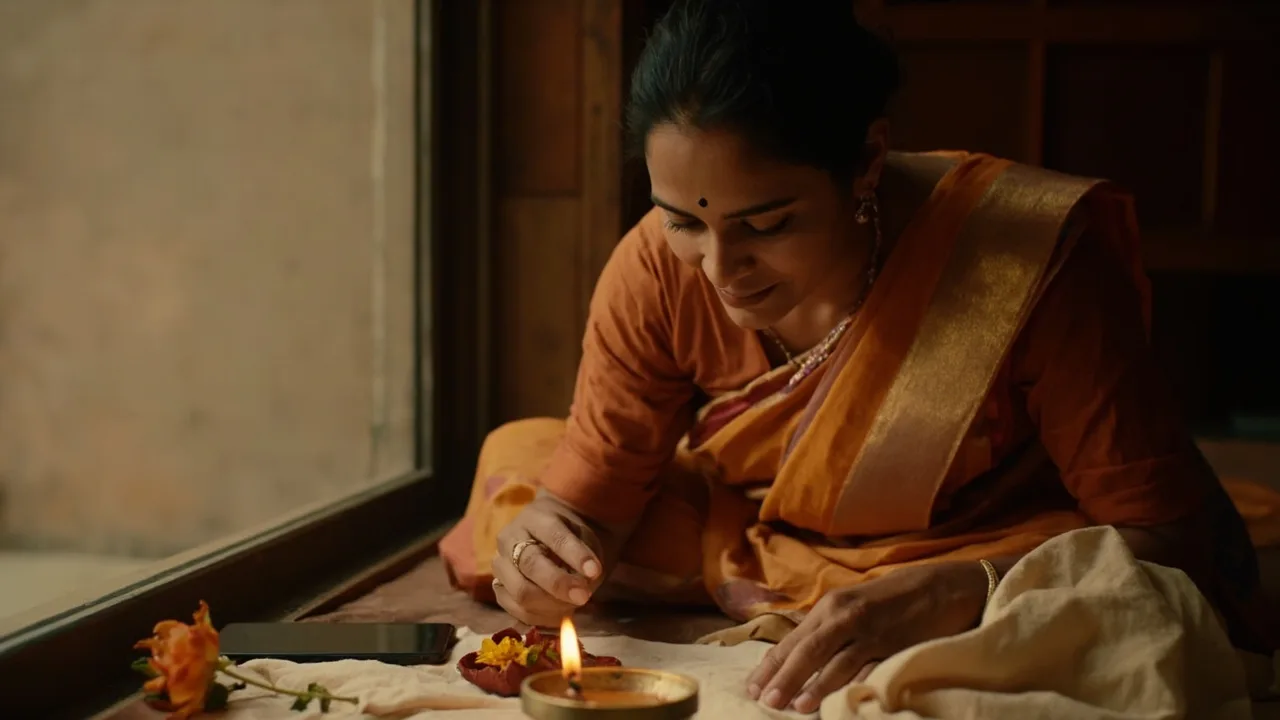
Before forming a Sankalpa, purification of body and mind is essential. Begin with a bath or at minimum wash your hands, feet, and face. Wear clean, preferably white or yellow clothing. Sit on a wooden plank, a kushasana (seat made of kusha grass), or a pure woolen mat — never directly on the floor, and never on leather. The space should be clean and fragrant; light a ghee lamp and a stick of sandalwood or pure camphor incense. Sprinkle water from a Panchapatra (sacred copper vessel) on yourself, chanting 'Om Apavitrah Pavitro Va' to purify your aura. Hold a few drops of water in your right palm, along with a flower, akshat (unbroken rice grains), and a coin or a piece of gold if available. This combination of water, flower, grain, and gold represents the offering of the five elements — Prithvi, Jal, Tejas, Vayu, and Akasha — to the Divine witness. Close your eyes, take three slow breaths, and allow the mind to become quiet. The Sankalpa spoken in a scattered, distracted state will not carry the force of a Sankalpa spoken from stillness.
Speaking and Holding Your Sankalpa
After reciting the Panchanga anchoring formula — which may be learned from a priest or from a reliable Vedic almanac — state your Sankalpa clearly and briefly in Sanskrit or your mother tongue. The Sankalpa should be positive (what you are doing, not what you are avoiding), specific (naming the deity, the ritual, and the purpose), and selfless in spirit (for the welfare of the family, the community, or all beings). An example: 'I take this Sankalpa to perform the Satyanarayan Puja for the well-being, health, and spiritual elevation of my entire family, with full devotion and surrender to Sri Hari.' After speaking it, release the water and flowers from your palm into the Panchapatra or onto the ground, symbolising that the intention has been released to the Divine. From this moment, the Sankalpa is a living force. Breaking a Sankalpa is considered spiritually costly — the Dharma Shastra texts advise that if circumstances prevent completion, one should perform a Prayaschitta (expiation) before the presiding deity.
Sankalpa in Daily Life and Japa Practice
The power of Sankalpa extends beyond formal rituals into everyday spiritual life. Before your morning japa or meditation, take a moment to form a brief Sankalpa — not a wish list, but a single, pure resolve: to deepen your surrender, to serve your family with an open heart, to overcome a specific negative tendency. The Yoga Vasishtha, one of the greatest texts on the nature of mind, teaches that the universe is made of Chit-Sankalpa — divine consciousness vibrating as intention. Every thought you hold with sustained devotion and clarity becomes a Sankalpa in the cosmic sense, reshaping your inner world and, through it, your outer circumstances. Devotees who maintain a year-long Sankalpa — such as daily Surya namaskar for 365 days, or the chanting of a particular mantra for 48 days without break — report profound inner transformations that no casual practice can bring about. The Sankalpa is the spine of spiritual discipline. Without it, all practices are leaves scattered by the wind. With it, every practice becomes a root growing deeper into the divine soil.