 Healers World







































 the short answer
What does this yoga mean in a birth chart?
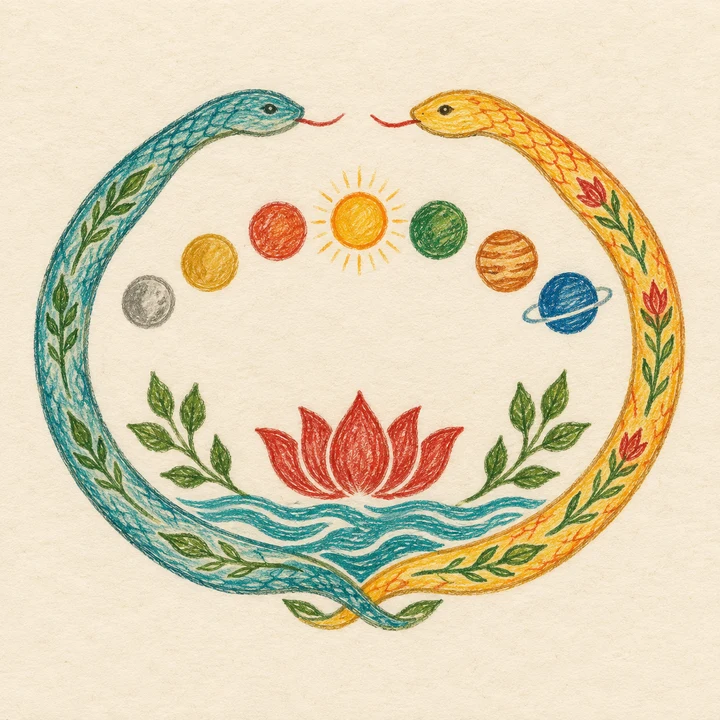
Kaal Sarp Yoga (also Kaal Sarp Dosha) forms when all 7 classical planets (Sun, Moon, Mars, Mercury, Jupiter, Venus, Saturn) are positioned between Rahu (north node) and Ketu (south node) — all on one side of the nodal axis, with the other half of the chart empty. This creates an energetic 'snake trap' in the birth chart where the soul's experience is funnelled through the intense karmic lens of the nodes. There are 12 types of Kaal Sarp Yoga, named for the starting point of Rahu: Anant (Rahu in 1st), Kulik (2nd), Vasuki (3rd), Shankhpal (4th), Padma (5th), Mahapadma (6th), Takshak (7th), Karkotak (8th), Shankhchud (9th), Ghatak (10th), Vishadhar (11th), Sheshnag (12th). While feared by many, Kaal Sarp Yoga is not uniformly negative — it intensifies all experiences (positive and negative) and many people with this yoga achieve extraordinary things BECAUSE of the intense focus it creates. Famous people with Kaal Sarp Yoga include major political leaders and artists.
How is this yoga formed?
- 1Formation rule 1
ALL 7 classical planets (Sun, Moon, Mars, Mercury, Jupiter, Venus, Saturn) must be within the 180° arc from Rahu to Ketu
- 2Formation rule 2
No planet should be on the other side of the Rahu-Ketu axis
- 3Formation rule 3
If even one planet falls outside the arc, Kaal Sarp Yoga does NOT form
- 4Formation rule 4
A planet outside the occupied nodal semicircle fails this enclosure rule. Kemadruma is a separate Moon-based yoga
What can this yoga indicate?
 Traditional indication 1
Intense karmic experiences — both challenges and breakthroughs amplified
Traditional indication 2Recurring dreams involving snakes or water (classic Rahu/Ketu symbolism)
Traditional indication 3Late blooming — achievements often come after struggle and in the second half of life
Traditional indication 4Extraordinary focus and ability to achieve singular goals
Traditional indication 5Ancestral karma (Pitru dosha) may be active — benefit from ancestor remedies
Traditional indication 6Health challenges in areas governed by the houses occupied by Rahu and Ketu
Health-related indications are traditional Jyotisha readings, not a diagnosis. Keep prescribed treatment and consult a qualified health professional for symptoms.
What could this combination look like?
These are teaching examples only. Your own result requires your exact birth chart and timing periods.
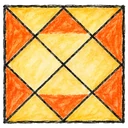 Example 1
Rahu in 1st, Ketu in 7th with all planets between = Anant Kaal Sarp Yoga — intense self-transformation through relationships
Example 2Rahu in 10th, Ketu in 4th = Ghatak Kaal Sarp Yoga — career brings intense karmic experience
Example 3Partial Kaal Sarp (one planet on the opposite side) significantly reduces the intensity
How do you judge this yoga correctly?
- 1
Cast the birth chart
Use the exact birth date, local time and birthplace to calculate the Lagna, planetary degrees and house positions.
- 2
Test the formation rule
ALL 7 classical planets (Sun, Moon, Mars, Mercury, Jupiter, Venus, Saturn) must be within the 180° arc from Rahu to Ketu No planet should be on the other side of the Rahu-Ketu axis
- 3
Judge strength and cancellation
Read sign dignity, combustion, aspects, house lordship and Navamsa support. A named yoga is a beginning, not the whole judgment.
- 4
Read the supported timing indications
Use the mahadasha and antardasha of the yoga-forming planets, then check supportive transits to the houses they rule and occupy.
Which texts guide this reading?
The sources are read together; no isolated verse replaces the complete chart judgment.
 Brihat Parashara Hora Shastra (BPHS)
The Parashari foundation for houses, planetary lordship, dignity, aspects and dasha timing used to judge whether a yoga can bear fruit.
PhaladeepikaA classical guide to named yogas and their traditional results, read together with the condition of the planets that form them.
Jataka ParijataUsed to compare formation, cancellation and strengthening rules so that one combination is never read apart from the whole horoscope.
SaravaliSupports the reading of planetary placements and conjunctions, including how sign, house and planetary condition change an indicated result.