

Summary · Quick answer
Shayana Kaksha Vastu governs rest, health, and marital harmony. Classical texts prescribe exact head directions and bed placements.
This is editorial context. Where no primary citation is shown, treat it as a guide, not as a verified claim, personal prediction or medical advice.
Shayana Kaksha Vastu in Classical Texts and the Five-Element Sleeping Framework
The Shayana Kaksha — sleeping chamber — receives dedicated attention in the Manasara's Chapter 36, which classifies bedroom types by occupant: Griha Swami (head of household), Dampati (married couple), Yuva (youth), and Prasuta (postpartum). The Mayamata correlates bedroom zones with longevity, fertility, and marital harmony outcomes. The Vishwakarma Prakash prescribes specific ceiling heights and door placements to optimize the bedroom's energetic quality. The Panchabhutas analysis of the bedroom reveals: Prithvi governs the physical body during sleep, Vayu governs the dream-mind (Svapna Manas), Akasha governs the Prajna — deep sleep consciousness — and Jala governs fluid body rhythms including hormonal cycles. For restorative sleep, the Prithvi and Jala elements must be stable and undisturbed in the bedroom zone. This is why the Southwest and South zones are traditionally favored for the master bedroom: the Southwest is the Nairrita Kona of Prithvi — heaviness, groundedness, stability — and placing the primary sleeping space here anchors the householder's energy. The Northeast and East, being Akasha-Vayu zones of active prana, are unsuitable for sleeping as they stimulate rather than quieten the Manas. The Manasara explicitly warns against sleeping in the Northeast corner, classifying it as Ishana Sthanabhanga — desecration of the divine zone.
This plays out differently in every chart.
See it in yours →Shayana Disha Rules — Head Direction, Bed Placement, and Proportional Norms
The classical texts are unambiguous on Shayana Disha — sleeping direction. Head toward South (Dakshina) is the highest recommendation: Yama, the lord of the South, is also the lord of dharmic order and longevity — sleeping with one's crown toward his direction aligns the body's magnetic field with Earth's magnetic flux, promoting deep Prajna sleep. Head toward East is second-best, welcoming Surya's rejuvenating dawn prana. Head toward West, governed by Varuna, is acceptable but associated with restless dreams. Head toward North — pointing toward the magnetic North pole — is explicitly prohibited in the Manasara: the body's own bio-magnetic field conflicts with Earth's field in this orientation, producing Vayu disturbance, headaches, and disturbed Vata Dosha. Bed placement rules: the bed must not be pushed against the South or West wall. A minimum gap of 4 inches between bed and wall allows Vayu circulation. The bed must not be placed under a beam — Vrika Shayana Dosha — as the beam concentrates downward pressure and creates Manasic heaviness. The bedroom door should not be directly visible from the bed — Muhana Dosha creates sleep disturbance from Vayu currents. Mirrors must not reflect the sleeping body: Pratibimba in the bedroom is classified as Preta Dosha in some commentaries, disturbing the Sukshma Sharira during sleep.
Bedroom Vastu Doshas and Their Effects on Health and Marital Harmony
The Mayamata categorizes bedroom Doshas into three streams: Arogya Dosha (health afflictions), Dampati Kalaha (marital discord), and Santana Vighna (progeny obstruction). A bedroom in the Northeast creates Agni-Vayu conflict with the Jala zone: couples report chronic fatigue, poor immunity, and a persistent feeling of unrest. This is Ishanya Shayana Dosha. A bedroom in the Southeast — the Agni Kona — creates excessive heat in the sleeping environment, manifesting as arguments, excessive passion without emotional bonding, hormonal disruption, and Pitta Dosha aggravation. The Vishwakarma Prakash calls this Agni Shayana — fire sleep — and warns it destabilizes the Dampati relationship. A beam directly over the bed creates Chaya Dosha — shadow affliction — linked to recurring illness and suppressed prana in whichever body part lies beneath. Sleeping with one's feet pointing toward the bedroom door creates Mrityu Pada Dosha — the corpse position, named for how the dead are carried out feet-first. This is explicitly prohibited in every major text. A cluttered bedroom floor obstructs Bhu-Prana — Earth energy — rising through the feet during sleep, weakening the Prithvi element in the body. Electronic devices near the bed disturb Vayu and Akasha energy, creating the modern manifestation of Chanchala Manas — restless mind — classified as Vastu-compatible with Visha Vayu in contemporary commentaries.
Practical Vastu Corrections for the Bedroom Without Structural Changes
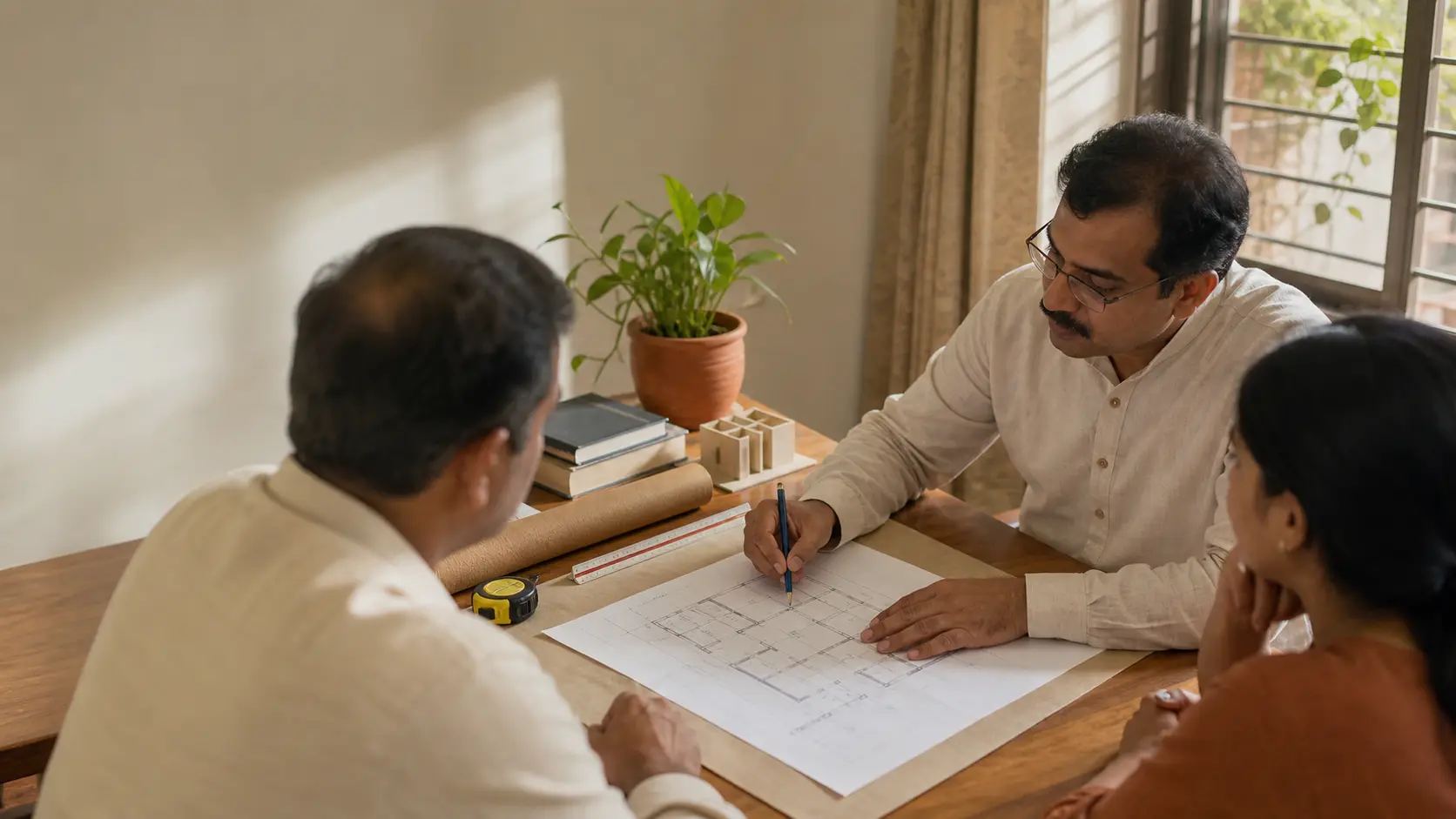
Assessment begins with a compass at the bedroom's geometric center. Identify which Ashtadisha zone the bedroom occupies and which direction the bed's headboard faces. If the bedroom is in the Northeast, relocate sleeping to another room first — this is a priority Dosha. For beds under beams, use a false ceiling of fabric directly below the beam to break the concentrated Vayu. For North-oriented headboards, physically rotate the bed: this single change addressing Shayana Disha is the highest-impact Vastu correction available. Heavy curtains in earthy tones — terracotta, deep green, warm brown — on the South and West walls enhance Prithvi stability. Rose quartz crystals placed in the Southwest corner of the bedroom activate relationship harmony and the Shukra energy governing marital love. Avoid cacti and sharp-leafed plants in the bedroom — Tikshna Patra plants carry aggressive Vayu. A bowl of sea salt in the Southeast corner neutralizes Agni excess. For rooms with mirrors facing the bed, use a curtain to cover the mirror during sleeping hours. Lavender essential oil diffused in the bedroom purifies Vayu and quietens Vata disturbance. Decluttering the area under the bed allows Bhu-Prana circulation — storage here is classified as Adhara Dosha — a heavy burden below the resting body that presses on the Prithvi element.
Shayan Pooja, Couple's Puja, and Navagraha Remedies for Bedroom Harmony
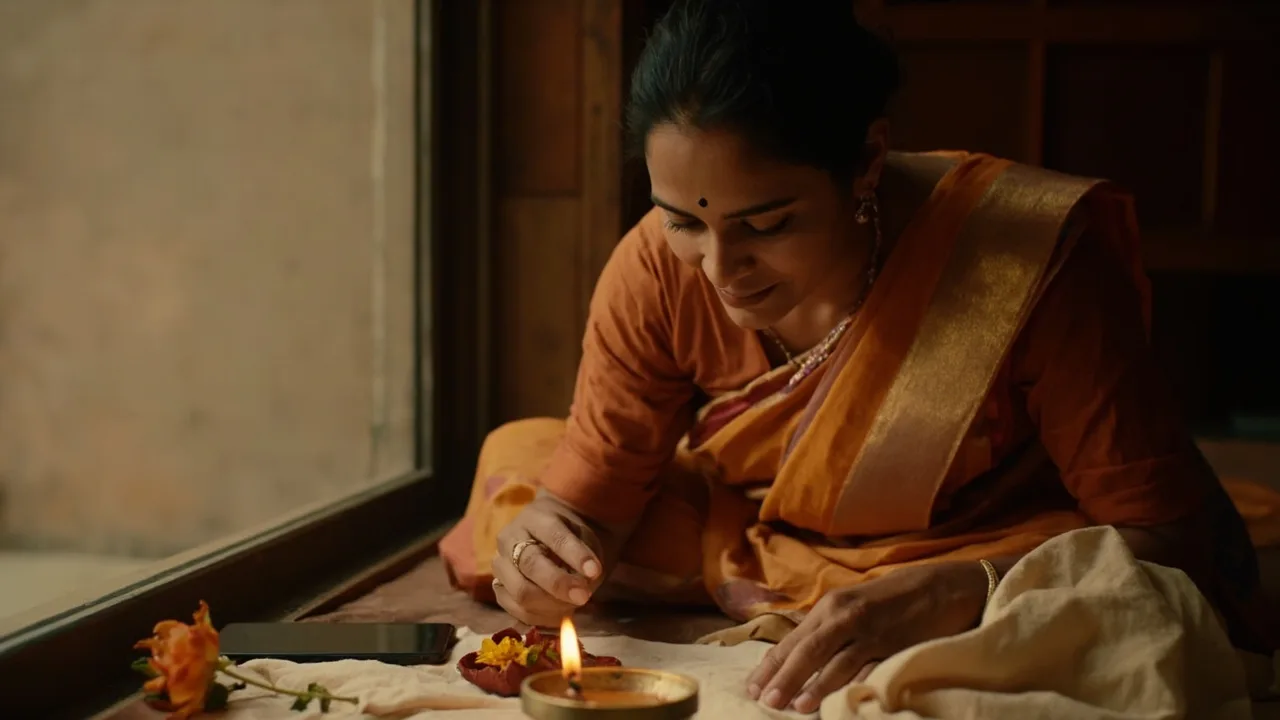
The Shayana Kaksha is consecrated through Shayana Puja — a simple but powerful evening ritual. A small silver or copper Lakshmi-Narayana idol is placed in the Southwest corner at an elevated position, never at floor level. Daily invocation with camphor, kumkum, and fresh flowers maintains the bedroom's Sattvic field. For Dampati harmony specifically, the Manasara recommends placing paired objects in the Southwest: two rose quartz stones, two matching lamps, a picture of Radha-Krishna or Shiva-Parvati — symbols of the divine Dampati archetype. The Shukra Yantra — a copper yantra of Venus — installed on the Southwest wall on a Friday during Shukla Paksha amplifies marital love energy in the room. Navagraha remedies for bedroom afflictions target the specific Graha governing the problem: Chandra governs sleep quality — Chandra Bija Mantra (Om Shram Shrim Shraum Sah Chandraya Namah) recited 108 times before sleep on Purnima nights stabilizes lunar-emotional fluctuations. Mangal governs marital energy — a Mangal Yantra in the South of the bedroom reduces Mangal Dosha's disruptive effect on couples. A Vastu Shanti Havan performed in the bedroom using specific Havisya (sesame+ghee) on a Pushya Nakshatra night recalibrates the entire room's prana field. The Havan's Agni purifies accumulated Tamoguna and installs a lasting Sattvic energy matrix.