

Summary · Quick answer
The Pakashaala is governed by Agni Deva. Correct stove direction, sink placement, and Agni Kona alignment determine family vitality.
This is editorial context. Where no primary citation is shown, treat it as a guide, not as a verified claim, personal prediction or medical advice.
Pakashaala Vastu in Manasara, Mayamata, and the Agni-Jala Elemental Opposition
The kitchen — Pakashaala or Annapurna Griha — is the zone of Agni, the divine fire that transforms raw matter into nourishment. The Manasara, in Chapter 30, designates the Agni Kona — the Southeast direction — as the only classically sanctioned location for the kitchen in a dwelling. This is not arbitrary: the Southeast is governed by Agni Deva, whose energy naturally amplifies, sustains, and regulates fire. Placing the kitchen here aligns the human act of cooking with the cosmic Agni principle, resulting in food that the texts describe as Sattvic and health-giving — Arogyadayaka Anna. The Mayamata reinforces this in its dwelling-zone classification, noting that Agni in its proper corner creates abundant Tejas — vital energy — in all food prepared there. The Vishwakarma Prakash provides practical dimensions: the Pakashaala should be elevated slightly above the average floor level to honor Agni's ascending nature. The Panchabhutas tension at the heart of kitchen Vastu is the Agni-Jala conflict. Agni and Jala are naturally opposed elements: fire and water cannot coexist without one suppressing the other. Therefore the sink (Jala) and the stove (Agni) must never be placed adjacent to each other or directly opposite each other. This elemental opposition governs every major rule of kitchen Vastu and explains the specific spatial separation requirements between cooking and washing zones described in all three classical texts.
This plays out differently in every chart.
See it in yours →Classical Kitchen Direction Rules, Stove Placement, and Cook-Facing Orientation
The Manasara's directional rules for the kitchen are precise. The stove or cooking hearth — Chulha — must be placed in the Southeast corner of the kitchen itself, even if the kitchen as a room occupies the Southeast zone of the home. The cook must face East while cooking — Purva Mukha Paka — aligned with Surya's direction, ensuring the cook receives morning prana through the Ajna chakra while preparing food. This rule appears in both the Manasara and the Apastamba Dharma Sutras' household codes. Never cook facing South: Yama's direction draws vital energy downward during the vulnerable cooking act. Never cook facing West: Varuna's water energy conflicts with Agni. The refrigerator — a modern Jala-Prithvi appliance — must be placed in the Southwest or West zones of the kitchen, far from the Agni corner. The water source and sink occupy the Northeast corner of the kitchen — the Ishanya Kona, governed by Jala — but must be separated from the stove by at least one counter-length of Prithvi space. The storage of grains and food provisions falls under Prithvi governance and is correctly placed in the South or West. The exhaust or window in the kitchen must be in the East or South wall to allow Vayu to carry smoke away from the cooking zone without creating Vayu Stagnation Dosha — Vata Vriddhi — in the kitchen environment. Colors: Southeast-zone kitchens are enhanced by orange, red, and deep yellow — Agni Varnas.
Kitchen Vastu Doshas and Their Impact on Family Health and Wealth
The Mayamata classifies kitchen Doshas with particular severity because Pakashaala afflictions affect Anna — food — which in turn affects the body, mind, and Prana of every household member. Kitchen in the Northeast is the most damaging Dosha: it places Agni in Jala's sacred zone, extinguishing Ishanya's divine energy and creating chronic digestive ailments — Agni Mandya — in family members. The classical texts link this specifically to children's health issues and poor absorption. A kitchen in the Southwest creates Nairrita Agni Dosha — fire in the earth-stability zone — which the Vishwakarma Prakash connects to financial instability that appears mysteriously despite adequate income. A kitchen directly above or below a pooja room creates Agni-Divya Sanghata — fire-divine collision — a severe Dosha that disrupts worship and creates obstacles in spiritual practice for the entire household. When the stove and sink are adjacent — the Agni-Jala Pratighat — the texts describe recurring conflict in the family: the cook suffers health deterioration, and marital arguments peak around meal times. A stove in the North creates Agni-Kubera Virodhana — fire conflicting with the wealth direction — systematically eroding financial accumulation. Cooking while facing South — Yama Mukha Paka — is said to draw prana from the cook, causing chronic fatigue, reduced vitality in the food, and weakening of the cook's constitution over years.
Compass-Based Assessment and Remedies for Kitchen Vastu Correction
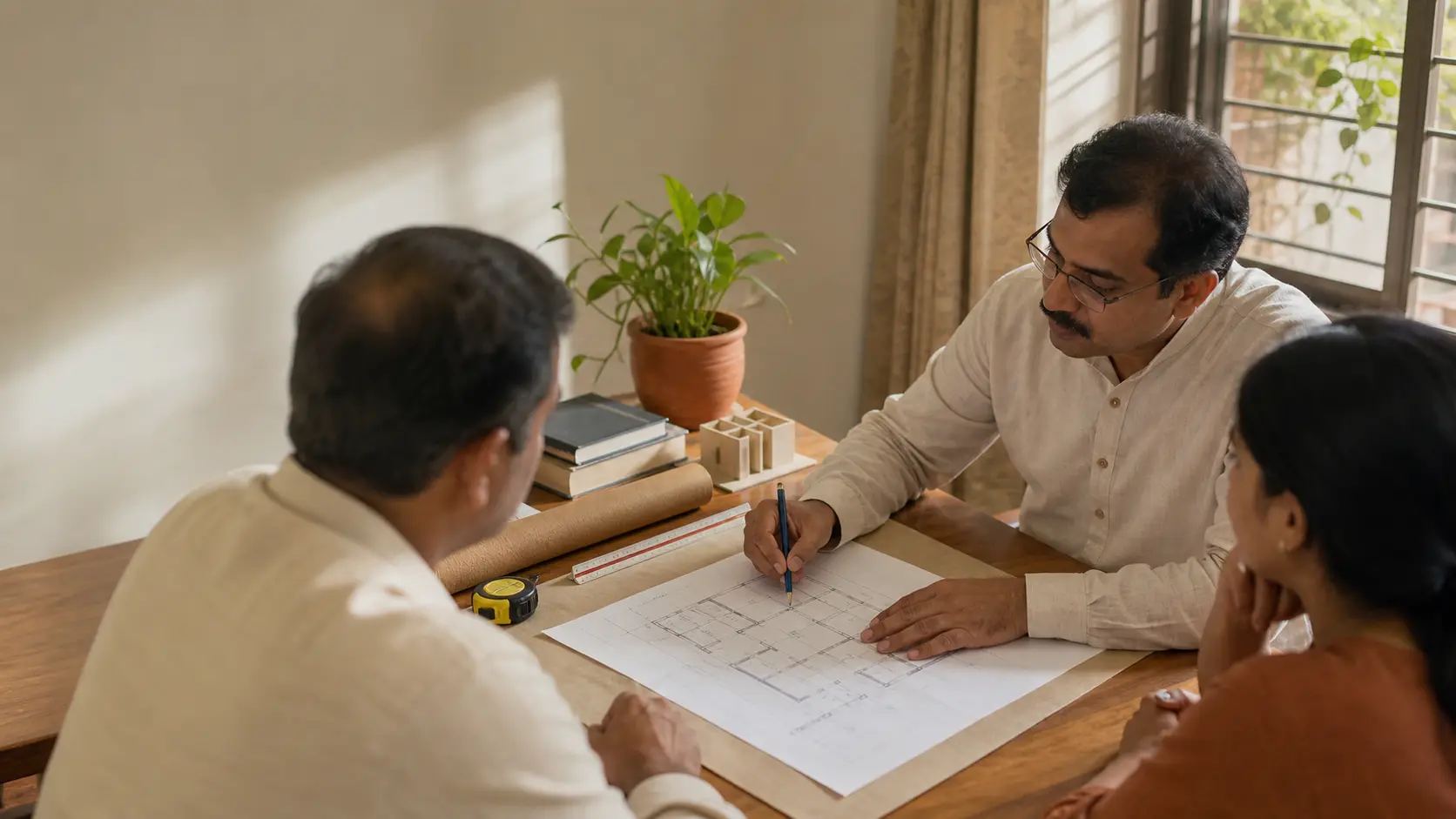
Take a compass reading at the kitchen's geometric center to confirm its directional zone within the home. Overlay this on your floor plan to assess whether it occupies the Southeast, and note the stove's orientation within the kitchen. If the kitchen is misplaced — in the Northeast or North — immediate remedies focus on fire energy management since structural relocation may not be possible. Install a Agni Yantra — a copper plate engraved with the Agni Beeja Mantra 'Ram' — below the stove to concentrate and sanctify the Agni element. Red and orange are mandatory: use these colors in kitchen tiles, curtains, or paint on the Southeast-facing wall to reinforce Agni Varnas even in a misplaced kitchen. If the sink and stove are adjacent, place a Prithvi separator: a potted basil plant (Tulsi), a wooden cutting board stand, or a small stone slab between them creates elemental separation without demolition. Yellow Aventurine or Carnelian crystals at the stove corner amplify Agni's nourishing — rather than destructive — expression. A Vastu-grade copper Swastika mounted on the kitchen's East wall activates Surya-Agni alignment. For Northeast kitchens, a salt water bowl in the Southwest corner of the kitchen and daily Agni Deepa — lamp — lighting in the Southeast helps partially rebalance the elemental disruption. Declutter the area around the stove: accumulated clutter creates Tamo Agni — dark, polluted fire — that reduces the Sattvic quality of food.
Annapurna Puja, Kitchen Consecration, and Fire-Related Upayas and Mantras
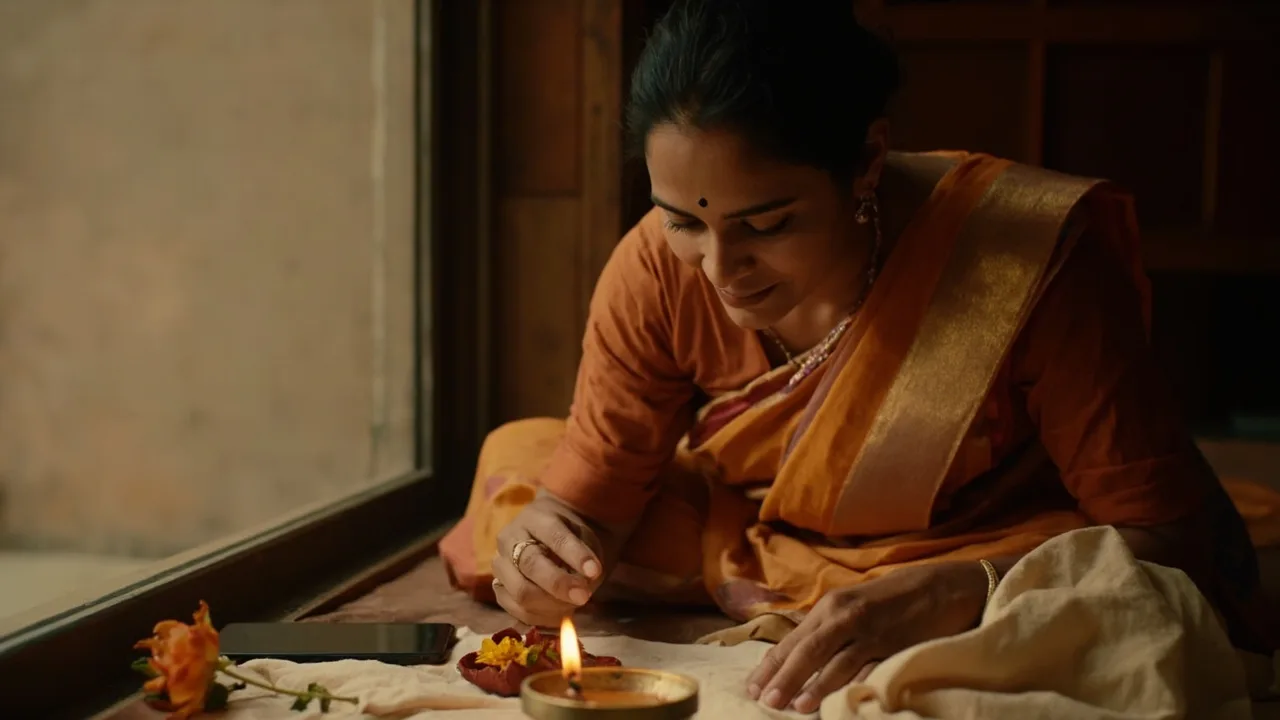
The kitchen is consecrated through Annapurna Puja — worship of the goddess Annapurna, the divine mother of nourishment. A small Annapurna Yantra or idol is installed in the Southeast corner of the kitchen at eye level. Daily Puja involves offering fresh cooked rice, flowers, and lighting a ghee lamp. The Annapurna Mantra — Om Annapurnayai Namah — is recited 108 times while lighting the first cooking fire of the day. On Fridays — Shukravara — a Lakshmi Puja in the kitchen with kumkum and a lit sesame oil lamp in the Southeast attracts Shri into the food and thereby into the entire household. The annual Vastu Homa for the kitchen is performed on Dhanteras or Akshaya Tritiya: the Agni Havan uses Sami wood (Prosopis spicigera), which the classical texts designate as the tree of Agni purification. Ahutis of ghee, sesame, and Panchameva (five dried fruits) are offered with the Agni Mantra: Om Agnaye Swaha. For Agni-Jala Dosha remedies, the Navagraha invocation targets both Surya (governing Agni) and Chandra (governing Jala) on alternate Sundays and Mondays. The Surya Mantra — Om Ghrinih Suryaya Namah — recited 108 times while facing East at the stove before first cooking of the day is described in the Vishwakarma Prakash as the most direct method of energizing the Pakashaala with divine Agni.