
Summary · Quick answer
The Devagriha or Mandir Kaksha is the home's spiritual nucleus. Classical texts prescribe exact directions, deity orientation, and daily ritual for maximum Shakti.
This is editorial context. Where no primary citation is shown, treat it as a guide, not as a verified claim, personal prediction or medical advice.
Devagriha Vastu in Classical Texts and the Akasha-Prithvi Sacred Space Framework
The home's prayer and worship room — Devagriha, Puja Kaksha, or Mandir Kaksha — is classified in the Manasara as a Sacra Zona, a space deliberately designed to amplify the Akasha and Sattvic Vayu elements while grounding divine energy through Prithvi. Chapter 8 of the Manasara details the Devagriha's dimensions, proportions, and directional rules, specifying that it must be treated as a scaled-down Deva Mandir — a temple — following all the same elemental and directional laws. The Mayamata classifies the Devagriha among the Uttama Kaksha — highest-grade rooms — and warns that its misplacement has compounding effects because spiritual practice performed in an incorrectly placed sacred space does not generate the Shakti accumulation intended. The Vishwakarma Prakash goes furthest: it says that a home with a correctly positioned and consecrated Devagriha has, in effect, installed a protective Kavach — energetic shield — around the entire property. The Panchabhutas framework for the sacred space prioritizes Akasha — infinite space, the medium through which divine consciousness travels — and Jala — the purifying element that sustains sacred intention. This is why the Northeast zone (Ishanya Kona), governed by Ishana-Shiva and carrying the Akasha-Jala convergence, is the singular classically sanctioned location for the Devagriha. No other direction carries this dual Akasha-Jala purity essential for divine contact.
This plays out differently in every chart.
See it in yours →Direction, Deity Placement, and Altar Proportions From Classical Shastra
The Manasara is explicit: the Devagriha must occupy the Northeast — Ishanya Kona — of the home. Within the room itself, the deities must be placed on the West or South wall so that the worshipper faces East or North during Puja — aligning with Surya (East) or Kubera-Ishana (North). Never must one face South while worshipping: Yama's direction is inauspicious for devotional surrender. The Mayamata specifies the height at which idols must be installed: the central murti's base must be at the worshipper's navel level, ensuring the deity's eyes meet the worshipper's eyes in a direct Divya Drishti — divine gaze — contact. Idol proportions follow the Talamana system from Vishwakarma Prakash: a 9-Tala figure for Vishnu and Shiva aspects, a 7-Tala figure for Shakti forms, a 5-Tala for Ganapati. The Brahmasthana of the Devagriha — its center — must remain absolutely unobstructed: no idols, no furniture. The altar surface must be of natural stone, copper, or wood — never synthetic materials. A Deepa Sthamba — permanent lamp stand — in the Southeast of the Devagriha honors Agni's role in sanctifying the space. No toilet or bathroom must share a wall with the Devagriha — Ashuchi Sparsha Dosha — classified as among the most serious desecrations in Manasara.
Vastu Doshas in the Sacred Room and Their Consequences for Spiritual Progress
A misplaced Devagriha creates what the Manasara calls Devagriha Dosha — sacred space affliction — whose consequences extend beyond the spiritual domain into health and material life. The most severe is a pooja room in the South or Southwest: placing divine worship in Yama or Nairrita's zone is described as Adhishapatha — divine curse inversion — where the devotional effort generates Tamas rather than Sattva, creating heaviness, depression, and feeling of spiritual disconnection despite regular practice. A pooja room sharing a wall with the kitchen — Agni-Divya Sparsha — creates elemental pollution of the sacred space with cooking odors, steam, and Agni vibrations that disturb the meditative Vayu of the puja environment. The Mayamata specifically prohibits this adjacency. Broken or chipped idols in the puja room constitute Khanda Murti Dosha: classical texts are unanimous that fractured divine images accumulate negative Prana and must be respectfully immersed in a river rather than repaired or retained. A dark Devagriha — one without adequate natural or lamp light — creates Tamas accumulation that the Vishwakarma Prakash calls Andha Mandira — the blind temple — where worship becomes ritually inert. A cluttered altar overwhelmed with too many deities or objects creates Devata Sanghata — divine collision — where the energies of different deities interfere rather than harmonize.
Practical Vastu Assessment and Non-Structural Corrections for the Sacred Room
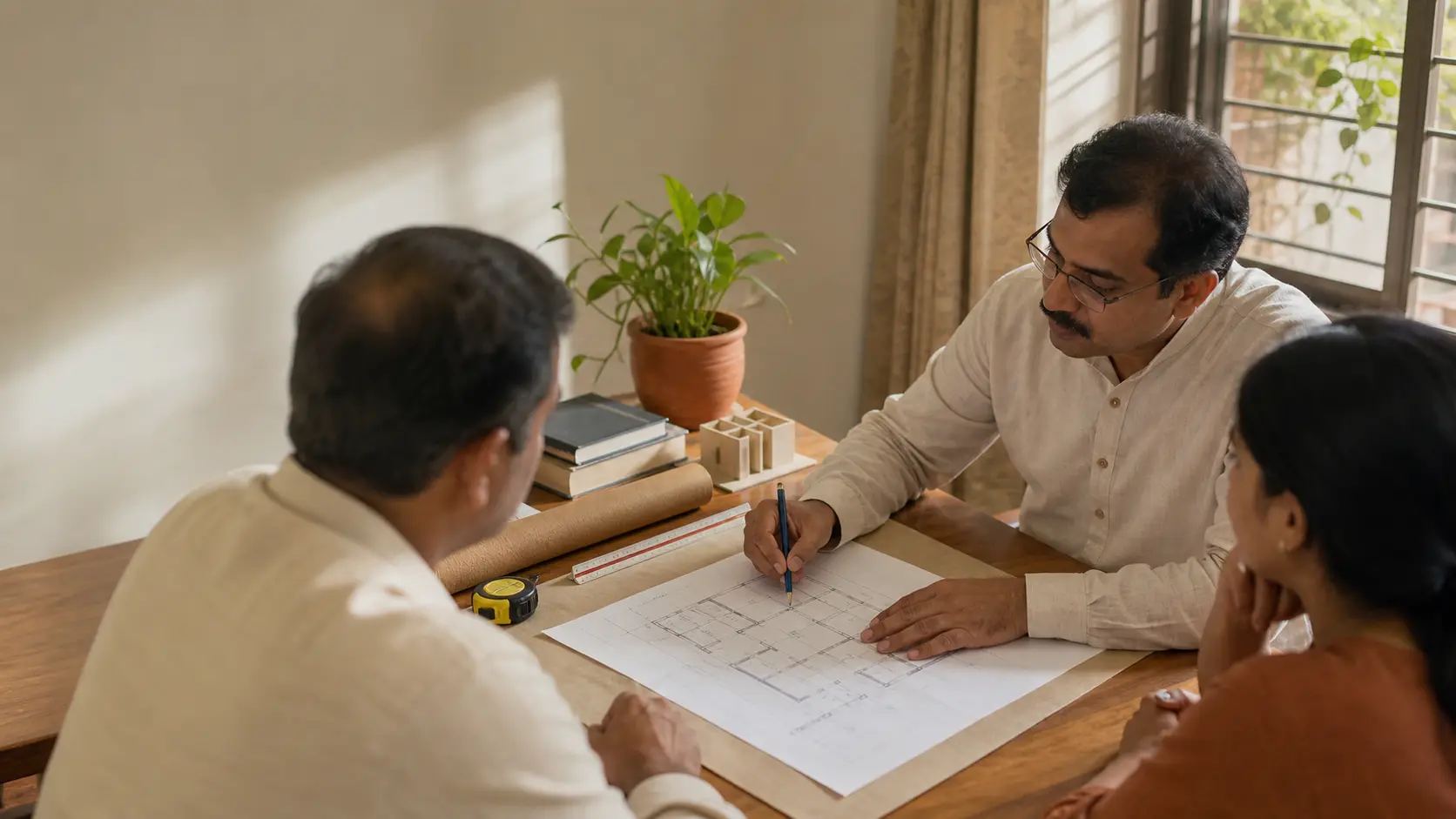
First assessment step: confirm the Devagriha occupies the Northeast quadrant of your home using a compass at the property's geometric center. If it does not, immediate energetic compensation is essential. In the Northeast corner of the home — even if it is currently a different room — install a small Shri Yantra, Parad Lingam, or copper Ganapati with daily Puja to energize the Ishanya Kona regardless of the room's function. For the actual pooja room wherever it is located, maintain absolute cleanliness: Shuchitvam — purity — is the foundational Vastu correction for any Devagriha Dosha. Repaint walls in white, pale yellow, or light blue — Sattvic Varnas that amplify Akasha. Remove clocks, phones, and electronic devices from the sacred space; these carry Rajasic Vayu incompatible with worship. A crystal singing bowl or small wind chimes in the Northeast corner of the room activate Akasha-Nada — the sound of space. Place a Tulsi plant in the Northeast of the home if possible — Tulsi is described in the Vishwakarma Prakash as a living Vastu remedy that purifies the Jala-Akasha axis. Camphor — Karpura — burning in the puja room is the single most effective daily air purification tool recognized in classical texts: it oxidizes Tamoguna air into Sattvic Vayu instantaneously. A copper Kalasha of water in the Northeast corner of the room, changed daily, maintains the Jala element's purity.
Devapratishtha, Vastu Puja for Sacred Rooms, and Daily Ritual Protocol
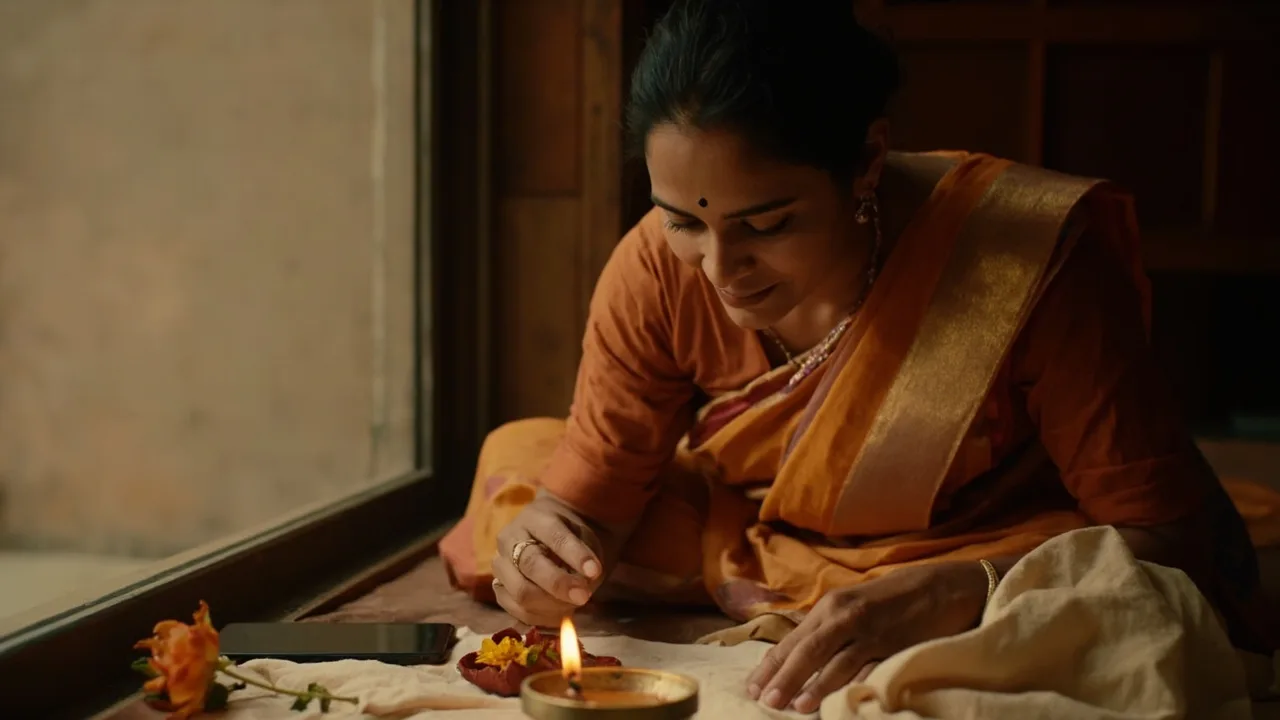
Installing new deities or formally consecrating the Devagriha requires Devapratishtha — the ritual installation ceremony. According to the Vishwakarma Prakash, this begins with Prana Pratishtha: infusing the divine image with cosmic consciousness through Vedic Mantras including the Mula Mantra of the presiding deity, while a learned Pujari invokes the deity's presence through Avahana (inviting), Asana (seating), Padya (foot washing), Arghya (water offering), Achamana (sipping water), Snana (bath), and Vastra (clothing). The Navagraha Mandala is drawn in the Brahmasthana of the Devagriha on the day of Pratishtha, and all nine Grahas are propitiated with their Naivedya (food offerings) and individual Mantras. Vastu Shanti Havan specific to the sacred room uses Brahmi wood and Rose petals as primary Ahuti materials — Brahmi for mental clarity and Rose for Bhakti. Daily Puja protocol from the Manasara: morning Puja at Brahma Muhurta (96 minutes before sunrise) is optimal. The Deepa — lamp — must be lit first, invoking Agni in the Southeast corner. Incense — Dhupa — follows. Flowers and Naivedya — fresh food offering — complete the ritual. Evening Puja at Pradosha Kala (twilight) with camphor Aarati seals the day's divine accumulation. Weekly Abhisheka of Shiva Lingam if present on Mondays, and Lakshmi Puja on Fridays, maintain the Devagriha's Shakti field at peak Sattvic resonance.