Varanasi — also called Kashi and Banaras — sits on the western bank of the Ganga and is among the oldest cities on Earth to have been lived in without interruption. At its devotional heart is the Kashi Vishwanath temple, where Shiva is worshipped as Vishweshwara, the lord of the universe. The site is counted among the twelve jyotirlingas, the shrines where Shiva is said to be present as a pillar of light.
The temple's physical history is a story of destruction and renewal. The structure standing today was built in 1780 under the patronage of Maharani Ahilyabai Holkar, the Maratha queen of Indore renowned for restoring and endowing temples across India after earlier shrines on the spot had been demolished. The famous gold plating of the spires was a later gift attributed to Maharaja Ranjit Singh of the Sikh empire.
To pilgrims, what matters is less the architecture than the continuity of devotion. Kashi is the city where many Hindus hope to die, in the belief that ending one's life within its boundaries grants liberation. The lanes around the temple, the riverfront ghats, and the evening aarti on the Ganga form a single living ritual landscape that has drawn seekers for more than two thousand years.
Recent decades have seen the temple precinct expanded with a corridor connecting it directly to the river. If you wish to participate in worship there without travelling, a facilitated darshan or puja can be arranged through the temple as a verified partner.

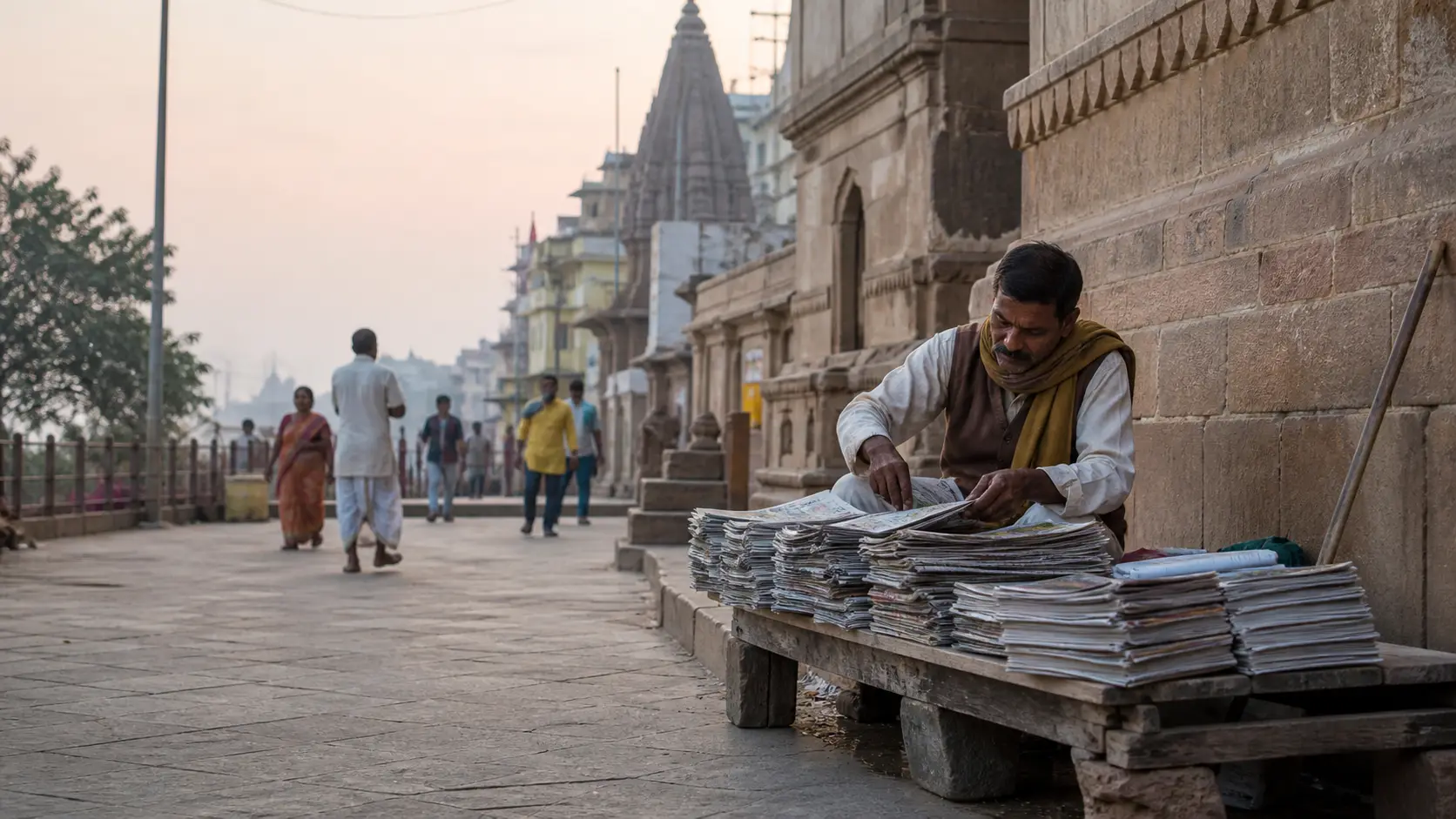

 Chart readings are calculated by the Vedika engine from the birth details you save.