Vedic Astrology
Nazar Dosha
नजर दोष / बुरी नजर · Also called Drishti Dosha, Evil Eye, or Buri Nazar
Nazar Dosha (Buri Nazar or Evil Eye) is one of the most widely held beliefs in Indian folk astrology and Hindu tradition. It occurs when an intense gaze — conscious or unconscious — from a person with strong eyes (Nazar) transfers negative energy to a child, person, animal, home, or business. The concept appears across Hindu, Islamic, and folk traditions in India and is taken seriously in most Indian households. It is distinct from formal Jyotish chart-based doshas but deeply embedded in Hindu practice.
Causes
- ◆A powerful gaze from someone who is intensely envious or jealous
- ◆Excessive praise of a child, business, or new venture (especially from someone with 'heavy eyes')
- ◆Staring from certain individuals considered to have 'Nazar lagna' — whose gaze affects others
- ◆A person with Saturn, Rahu, or Mars prominently afflicting the 2nd house (the house of eyes and sight)
- ◆In some traditions: a single eye dominant without the other (one-eyed focus)
Effects
- ◆Unexplained crying and restlessness in infants and children
- ◆Sudden unexplained illness after someone praised the child
- ◆Business suddenly declining after previously thriving
- ◆Domestic conflicts arising after a visitor's gaze or praise
- ◆Animals becoming sick or behaving strangely
- ◆A feeling of heaviness, lethargy, or disorientation without medical cause
Remedies
- Nazar Utarna — rotating a fistful of red chillies and mustard seeds around the affected person and burning them; a distinctive smell indicates the Nazar has been absorbed
- Black dot (Kala Teeka) behind a child's ear or on the cheek — disrupts the completeness that draws the evil eye
- Nimbu Mirchi (lemon and chillies) hung at the door to absorb negative energy
- Peacock feathers in the home — peacocks neutralise snake (Rahu) energy associated with evil eye
- Recite the Hanuman Chalisa or Bajrang Baan for protection
- Burn camphor (kapoor) in the home to purify the space
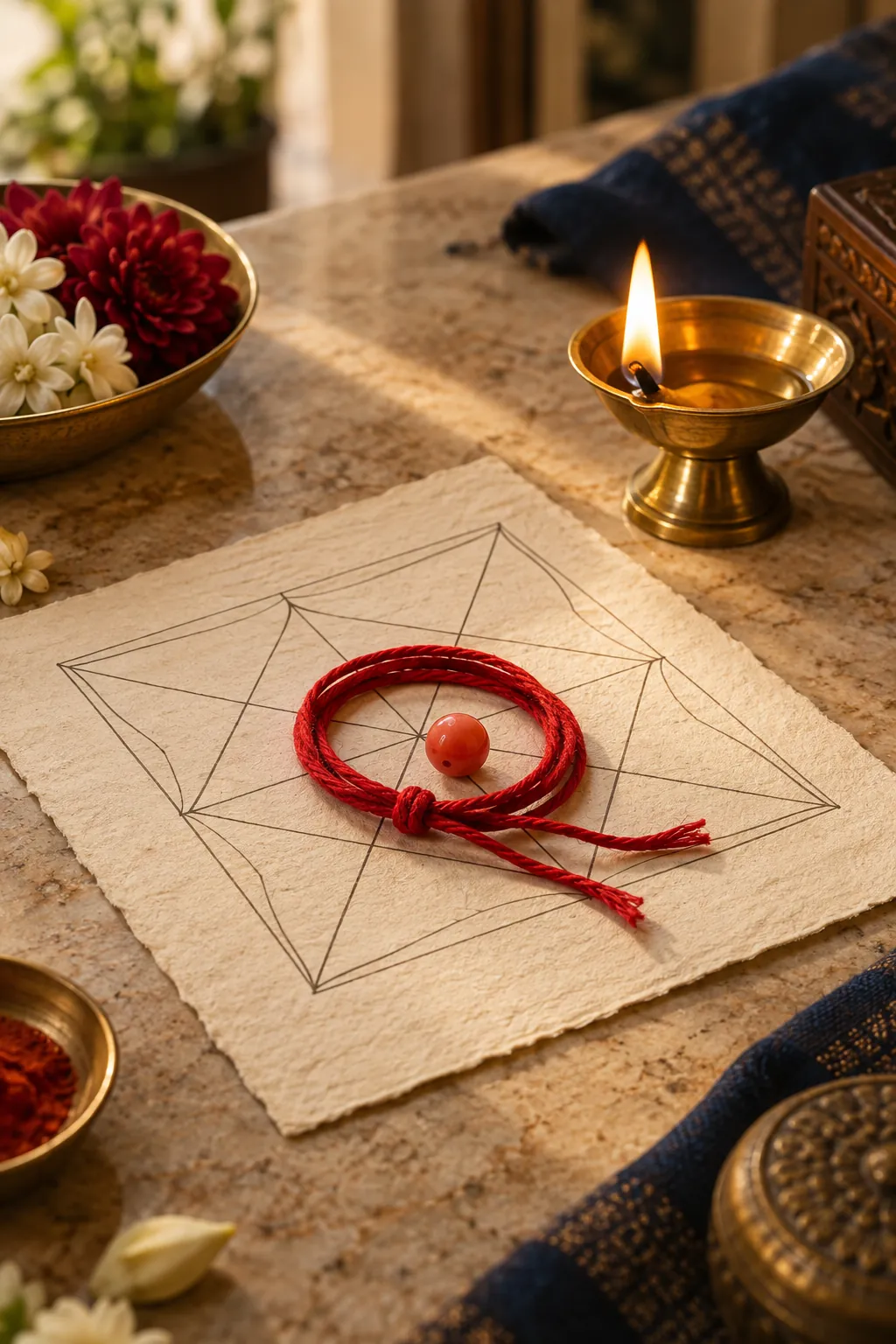
- The 'Nazar Kavach' — a black thread tied around the child's wrist with a blue bead
Frequently Asked Questions
What is Nazar Dosha?
Nazar Dosha (Buri Nazar) refers to the negative effect of an intense or envious gaze on a person, child, animal, home, or business. It is a deeply held belief across Indian households and Hindu tradition. The affected person may experience unexplained illness, behavioural changes, or sudden reversal of luck. Remedies include Nazar Utarna (rotating chillies and salt), Kala Teeka, Nimbu Mirchi, and reciting protective mantras like Hanuman Chalisa.
How do you remove Nazar Dosha?
Common remedies include: (1) Nazar Utarna — rotating rock salt and red chillies around the affected person clockwise 7 times and burning them; (2) applying a black Kala Teeka behind a child's ear; (3) hanging Nimbu Mirchi at the main door; (4) reciting the Hanuman Chalisa or Mahamrityunjaya Mantra; (5) performing Kali Nazar Puja or Rahu Shanti at a temple on Saturdays.
Is Nazar Dosha real?
Nazar Dosha (evil eye) is not a formal part of classical Sanskrit Jyotish — it does not appear as a planetary combination (yoga) in texts like Brihat Parashara Hora Shastra. However, the concept appears in folk traditions, Atharva Veda charms, and the lived experience of millions of Indian families. Whether one interprets it as psychic energy transfer, the nocebo effect, or cultural wisdom, the remedies are benign and the belief is widespread. The psychological impact of believing one is protected is real and valuable.
Who is most vulnerable to Nazar Dosha?
In traditional belief, infants and young children are most vulnerable. New businesses at their peak of success, newlyweds, a new home, a newly delivered vehicle, or any venture at a high point of visible success are considered vulnerable. Individuals with a weak Moon (emotional sensitivity) or afflicted 1st house (self) in their natal chart may be more affected by negative energetic influences.
Other Doshas
Check your chart for Doshas
Get a personalised report that shows exactly which doshas are present in your birth chart with remedies tailored to your chart.