
Summary · Quick answer
Diwali 2026 falls on October 20, the Amavasya of Kartik month. Discover Lakshmi Puja muhurat, Kali Puja traditions, and the astrological forces that make this the most auspicious night of the year.
This is editorial context. Where no primary citation is shown, treat it as a guide, not as a verified claim, personal prediction or medical advice.
When Is Diwali 2026? Date, Tithi and Amavasya Timing
Diwali 2026 falls on Tuesday, October 20, corresponding to the Amavasya tithi of the Krishna Paksha in the Hindu month of Kartik. The Amavasya tithi begins on October 20 in the late morning hours and extends through the night, making the evening of October 20 the primary celebration window. Diwali is always observed on Kartik Amavasya, the darkest night of the autumn cycle, which is precisely why the lighting of lamps holds such deep spiritual power — every flame becomes an act of cosmic defiance against darkness. In 2026, the Pradosh Kaal, which is the period after sunset considered most auspicious for Lakshmi Puja, begins around 6:10 PM local time and extends for approximately two and a half hours. The Nishita Kaal, the midnight window preferred for Kali Puja, falls around 11:40 PM to 12:30 AM. Families across India should consult local panchang timings to confirm exact muhurat windows based on their geographic location, as these shift by region. The five-day festival of Diwali — from Dhanteras through Bhai Dooj — centers on this Amavasya night as its peak.
This plays out differently in every chart.
See it in yours →Lakshmi Puja: Timing, Rituals and the Meaning of the Main Night
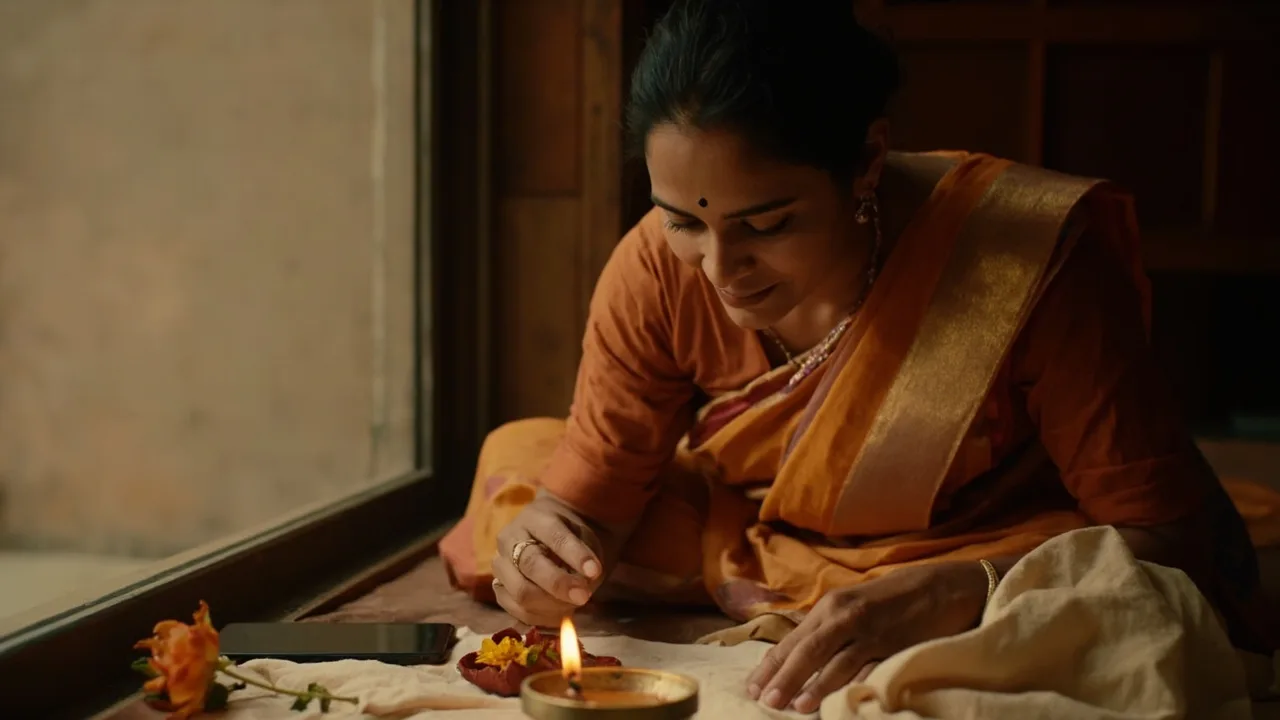
Lakshmi Puja is the central ritual of Diwali night and is ideally performed during the Pradosh Kaal on Amavasya, when the goddess of wealth and prosperity is believed to roam freely and bestow her grace upon clean, illuminated, and devotionally prepared homes. The puja involves installing an idol or image of Maa Lakshmi alongside Lord Ganesha — who is always invoked first — on a raised platform covered with red or yellow cloth. Coins, gold ornaments, account books, and new utensils are placed before the deity, symbolizing the sanctification of one's financial life. The ritual includes Ganesh Puja, Lakshmi Puja with sixteen-step Shodashopachara, lighting of diyas in all corners, chanting of Lakshmi Stotram and Sri Sukta, and offering of lotus flowers, sweets, and red hibiscus. The legend behind Diwali Lakshmi Puja traces to the return of Lord Rama to Ayodhya after defeating Ravana — the people of the kingdom lit oil lamps to welcome him and Sita, who is an avatar of Lakshmi herself. On a deeper level, the ritual marks the beginning of the new financial year in the Hindu mercantile tradition, especially among Marwari and Gujarati communities who open new account books on this night.
Kali Puja: The North Indian and Bengali Tradition on Diwali Night
While most of India celebrates Lakshmi Puja on Diwali Amavasya, the states of West Bengal, Odisha, Assam, and parts of Bihar observe Kali Puja with equal or greater fervor on the very same night. Maa Kali — the fierce, transformative aspect of the Divine Mother — is worshipped during the Nishita Kaal, the midnight window, because her power is considered most accessible during the deepest darkness. The Kali Puja tradition on Diwali night is particularly associated with the tantric worship lineages of Bengal, where Maa Kali is seen not as a wrathful goddess to be feared but as the ultimate liberator who destroys the ego and grants moksha. The puja involves offerings of red hibiscus flowers, red sindoor, sweets, and in some traditional lineages, non-vegetarian offerings in accordance with tantric Agama texts. Large community Kali Puja pandals are erected across Kolkata, often rivaling Durga Puja in scale and artistry. The simultaneous observance of Lakshmi Puja and Kali Puja on the same Amavasya night reflects the dual nature of the Divine Feminine — nurturing abundance and fierce liberation — honored differently across India but united in the shared understanding that the darkest night of the year belongs to the goddess in all her forms.
Astrological Significance of Diwali: Kartik Amavasya and Planetary Positions
Astrologically, Kartik Amavasya holds unique importance because it occurs when the Sun is in Libra, having just completed its transit through Virgo. The Sun is in a debilitated state in Libra in the Vedic system, which spiritually represents the ego at its lowest point — an ideal condition for the goddess of inner light to enter. The Moon on Amavasya is conjunct the Sun, creating a period of minimal lunar light and maximum solar-lunar fusion that amplifies inward spiritual energy. In 2026, planetary positions during the Diwali window should be assessed via a local panchang for specific yogas and doshas. Traditionally, the most auspicious Diwali nights occur when the Taurus Lagna (the sign of wealth and Venus) rises at the time of puja, as it directly activates the second house of abundance. The Nakshatra of the day — Swati in most Kartik Amavasyas — is ruled by Vayu, the wind god, and is associated with independence, commerce, and the dispersal of blessings. Vedic astrologers consider lamps lit during a favorable hora on Diwali night to carry specific planetary protection for the household throughout the coming year. For 2026, consulting a Jyotishi for individual kundali-based muhurat for Lakshmi Puja is highly recommended.
Diwali Customs, Symbols and Their Deeper Spiritual Meaning
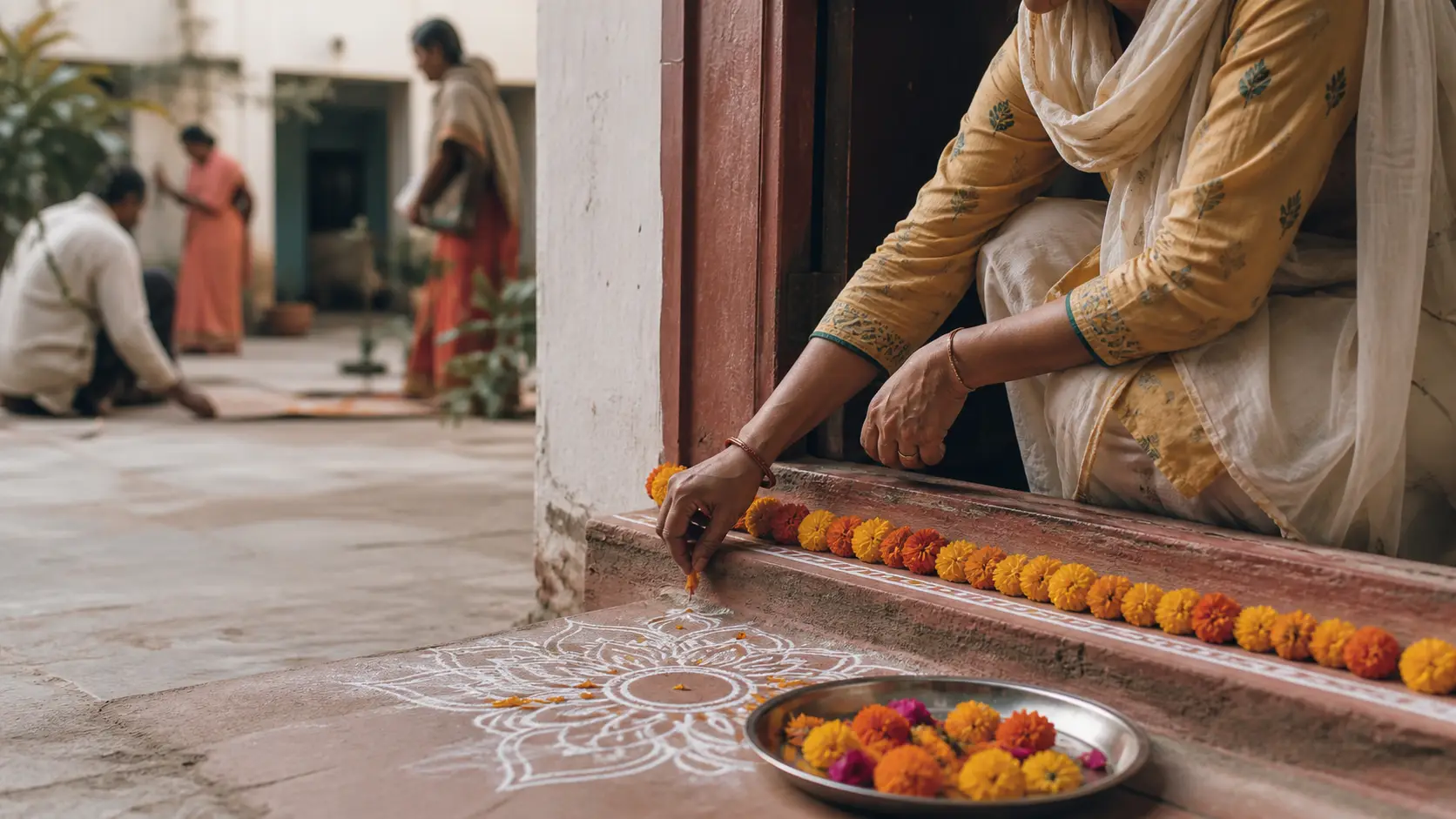
Every Diwali custom carries a layer of spiritual symbolism that rewards contemplation. The rangoli drawn at the entrance of homes is not merely decorative — it is a yantra, a geometric invitation to the goddess to enter. The oil lamp or diya represents the Atman, the individual soul, which though small and flickering, holds within it the same light as the cosmic fire of Brahman. Firecrackers, often debated in modern contexts for their environmental impact, were traditionally understood as sound-offerings to drive away negative entities attracted to the Amavasya darkness. The gifting of sweets and dry fruits during Diwali is a continuation of the ancient practice of prasad-sharing, affirming community bonds after the successful harvest of the Kharif crop. Cleaning the house before Diwali is ritualistic as much as practical — clutter is considered a form of spiritual blockage, and Maa Lakshmi is said to only enter homes that are clean, organized, and lit with devotion. The entire five-day festival from Dhanteras to Bhai Dooj encodes a complete cycle of honoring wealth, death (via Yama on the second day), love, joy, and sibling bonds — a microcosm of the full human experience compressed into five sacred days of Kartik.