
Summary · Quick answer
One festival, many homecomings. Why the same five nights mean Rama's return in the north, Lakshmi's arrival in the west, and Krishna's victory in the south — and why all of them are true.
This is editorial context. Where no primary citation is shown, treat it as a guide, not as a verified claim, personal prediction or medical advice.
Not one story, but a season of them
It is tempting to ask what Diwali 'really' commemorates, as though there were a single correct answer underneath the lamps. There isn't, and that is the point. Diwali is a cluster of festivals that happen to share the new-moon night of the month of Kartika, and the traditions that gather there were never meant to agree. In much of North India the lamps mark the return of Rama to Ayodhya after fourteen years of exile, a homecoming the Ramayana tradition treats as the restoration of order itself. In the west and among trading communities, the same night is Lakshmi Puja, when the goddess of fortune is invited across a freshly cleaned threshold. In parts of the south the festival leans on the Bhagavata's account of Krishna's defeat of Narakasura the day before. To insist on one of these as the original is to misread how a festival lives.
This plays out differently in every chart.
See it in yours →Why the lamp is the constant
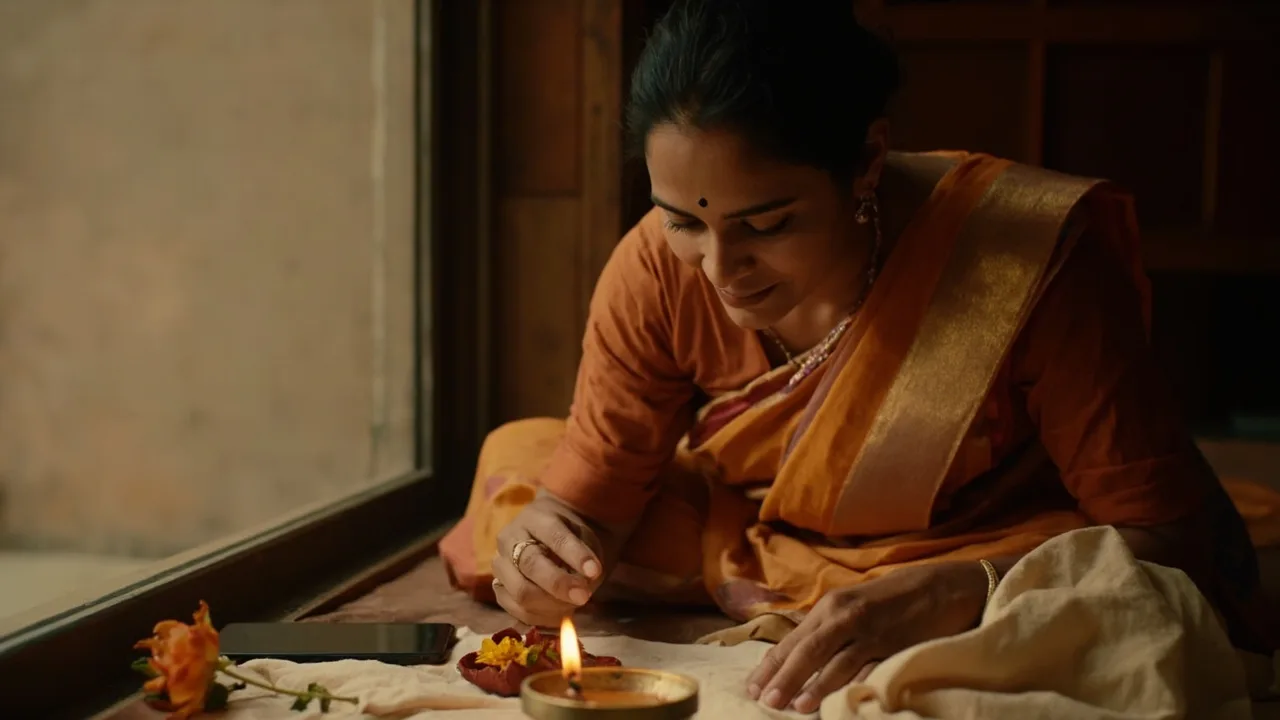
What every regional reading shares is the lamp, the diya, and that is older and more basic than any single legend attached to it. Light placed against the longest dark of the lunar month is a near-universal human gesture, and in the Indian tradition it carries a specific weight: the movement, as the well-known Upanishadic prayer puts it, from darkness toward light and from death toward what does not die. The festival's coherence is not narrative but symbolic. Whichever homecoming a family remembers, the act — cleaning the house, opening the door, setting a flame on the sill — is the same.
The five days, briefly
Diwali is rarely a single night. It opens with Dhanteras, associated with Dhanvantari, the physician who rises from the churning of the ocean in the Puranic account, and with the auspicious buying of metal. Naraka Chaturdashi follows. The central night is the new moon, Lakshmi Puja proper. Govardhan Puja, recalling Krishna lifting the hill to shelter the cowherds, comes next, and the season closes with Bhai Dooj, a day for the bond between sisters and brothers. The shape varies by region, but the arc — health, victory, fortune, shelter, kinship — is remarkably stable.
How to keep it honest
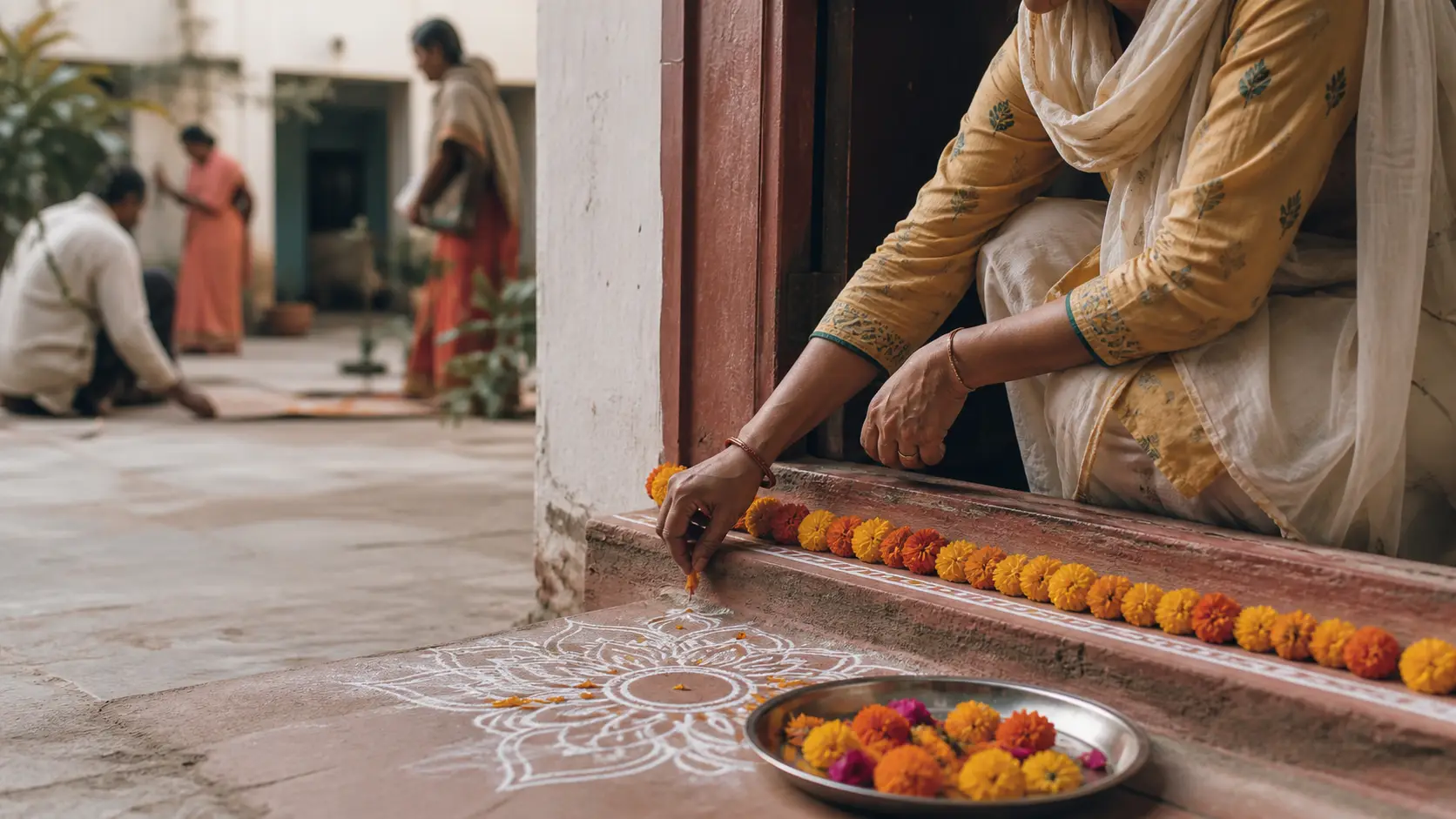
If you want to observe Diwali well, the most faithful thing is not to standardise it. Light the lamps your family lights, tell the story your region tells, and let the neighbour's different story stand beside yours without correction. A festival this old survives precisely because it refused to become one thing. The single discipline worth keeping is the original one: clean the space, and bring in the light.