Summary · Quick answer
Navratri 2026 begins on Ashwin Shukla Pratipada in late September. This complete guide covers all nine forms of Devi, correct fasting rules, Ghatasthapana muhurat, and the Vedic astrological significance of the nine sacred nights.
This is editorial context. Where no primary citation is shown, treat it as a guide, not as a verified claim, personal prediction or medical advice.
Navratri 2026 Dates: When Does Sharad Navratri Begin and End?
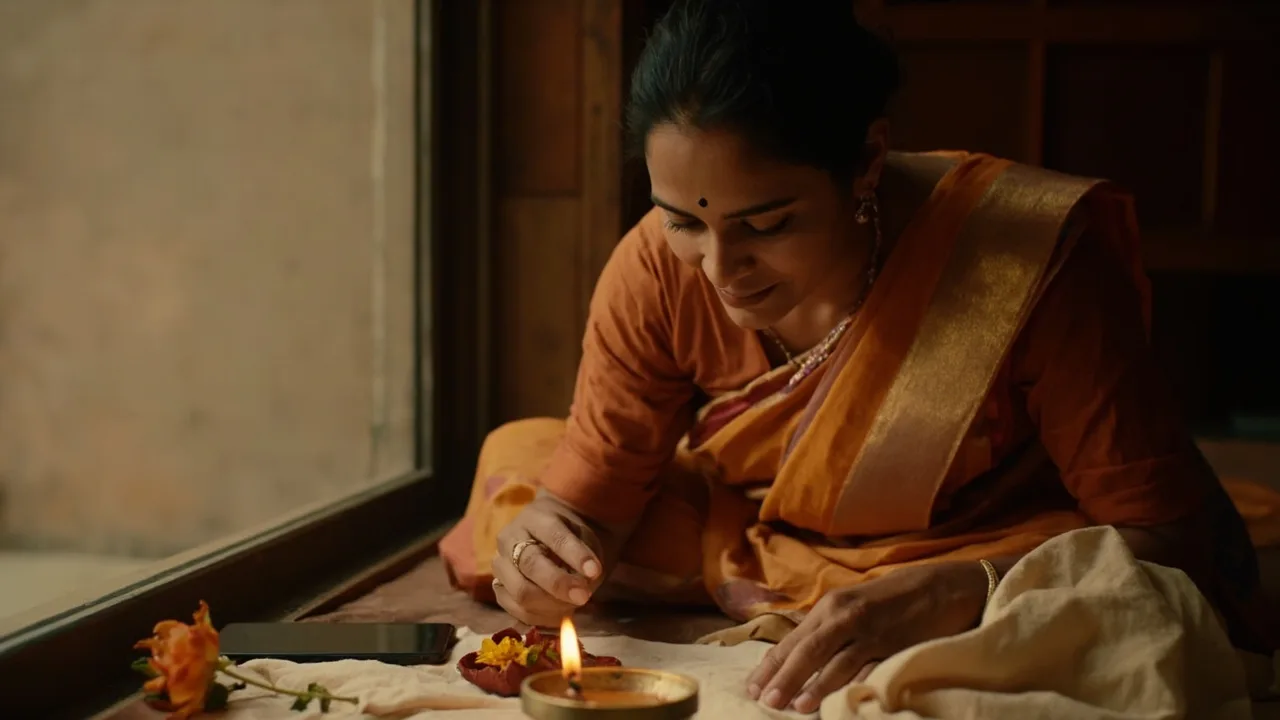
Sharad Navratri 2026, the most widely celebrated of the four annual Navratri periods, begins on the Pratipada tithi of Ashwin Shukla Paksha, which falls in late September 2026. The exact start date should be confirmed via a regional panchang as the Pratipada tithi may begin in the afternoon of one day and carry into the next, with Ghatasthapana — the inaugural ritual of establishing the sacred clay pot — being performed only during the Pratipada window and not on Dwitiya. The festival spans nine nights and ten days, concluding with Mahanavami and followed by Vijayadashami (Dussehra) on the tenth day. In 2026, the festival will see the usual convergence of millions of devotees across India at Shakti Pithas and Devi temples, with Vaishno Devi, Kolkata Durga Puja, Mysore Dasara, and Gujarat Garba being the most prominent regional expressions. Ghatasthapana, the most auspicious moment to begin Navratri worship, occurs in the morning hours of the first day within the first one-third of the daytime, ideally during the Abhijit muhurat. Families setting up a home altar should perform Ghatasthapana with barley seeds sown in soil as a symbol of growth and divine blessing throughout the nine days.
This plays out differently in every chart.
See it in yours →The Nine Forms of Devi: Navadurga and Their Significance
Each of the nine nights of Navratri is dedicated to one of the Navadurga — the nine principal forms of Maa Durga — each representing a distinct aspect of the Divine Feminine power. Day one honors Shailputri, the daughter of the mountains, who embodies the earth element and the root of all stability. Day two celebrates Brahmacharini, the ascetic form of Parvati who undertook severe tapas to win Lord Shiva, representing discipline and spiritual seeking. Day three is dedicated to Chandraghanta, the warrior goddess with a crescent moon on her forehead, who protects devotees from harm. Day four honors Kushmanda, the creator goddess whose cosmic laughter brought the universe into being, associated with solar energy and vitality. Day five belongs to Skandamata, the mother of Kartikeya, representing maternal love and the protective instinct. Day six celebrates Katyayani, the fierce warrior form born from the collective anger of the gods to defeat the demon Mahishasura, associated with justice and power. Day seven honors Kalaratri, the darkest and most fearsome form of Devi, who destroys ignorance and fear. Day eight is dedicated to Mahagauri, the pure white form of Parvati who granted liberation through compassion. Day nine, Mahanavami, honors Siddhidatri, the goddess of supernatural perfections and fulfillment, who bestows all eight siddhis on her devotees.
Navratri Fasting Rules: What to Eat, What to Avoid and Why
Fasting during Navratri is one of the most widespread spiritual practices in Hinduism and carries both physical and metaphysical dimensions. The primary purpose of the Navratri fast is to purify the body and mind in preparation for receiving the grace of Devi. Traditional Navratri fasting rules prohibit regular grains including wheat, rice, semolina, and corn flour, and instead permit the consumption of Kuttu (buckwheat) flour, Singhare ki atta (water chestnut flour), Rajgira (amaranth), and Samak rice (barnyard millet). Potatoes, sweet potatoes, raw banana, and certain vegetables like lauki and arbi are permitted. Onion, garlic, non-vegetarian food, alcohol, regular table salt (replaced with sendha namak or rock salt), and all pulses and legumes are strictly avoided. Many devotees observe partial fasts, consuming only one meal of fruit and milk, while stricter practitioners observe complete fasts without even water. The spiritual rationale is that Navratri fasting raises the Sattvic quality of consciousness, reduces the Rajasic and Tamasic tendencies that cloud spiritual perception, and makes the body a suitable vessel for Devi's energy. Children, pregnant women, and those with medical conditions are traditionally exempt from strict fasting and are encouraged to offer their devotion through prayer and service instead.
Garba and Dandiya: The Cultural Celebration of Navratri
Navratri is not only a period of fasting and prayer but also one of the most joyous festival seasons in India, celebrated through the folk dances of Garba and Dandiya Raas, which originate in Gujarat but have spread across the country and the diaspora worldwide. Garba is a circular dance performed around a lamp or image of the goddess, with hand movements representing the cycles of creation and the orbit of the devotee around the Divine center. The word Garba derives from Garbha — the womb — symbolizing the source of all life. Dandiya Raas, performed with decorated sticks, re-enacts the cosmic battle between Devi and the demon Mahishasura, with the sticks representing her weapons. During Navratri nights, communities gather at open grounds and temple courtyards for hours of Garba, often continuing past midnight. The traditional Garba songs are devotional compositions in Gujarati and Rajasthani that narrate the stories, attributes, and glories of the goddess. In Bengal, the same nine nights are marked by Durga Puja, with elaborate clay idols of the ten-armed Durga installed in pandals across the state, culminating in the immersion of the idol on Vijayadashami in a deeply emotional collective ritual of farewell to the Mother.
Astrological Significance of Navratri: Navagraha Alignment and Devi's Power
In Vedic astrology, the two principal Navratri seasons — Chaitra (spring) and Sharad (autumn) — correspond to the two sandhi periods of the solar year when the Sun crosses the equinoxes. Sharad Navratri occurs when the Sun is in Virgo and moving toward Libra, a transitional moment cosmically associated with harvest, discernment, and the balance between light and darkness. This is the period when the Shakti of the Earth is considered most accessible to human beings who align with it through fasting, prayer, and austerity. The nine nights of Navratri correlate with the nine planets of Vedic astrology, the Navagrahas, and traditional texts suggest that worshipping each Navadurga form also propitiates the corresponding planetary deity. Shailputri rules the Moon, Brahmacharini rules Mars, Chandraghanta rules Mercury, Kushmanda rules the Sun, Skandamata rules Venus, Katyayani rules Jupiter, Kalaratri rules Saturn, Mahagauri rules Rahu, and Siddhidatri rules Ketu. For devotees undergoing difficult planetary periods — particularly Saturn's Sade Sati or a Rahu-Ketu transit — Navratri is considered one of the most powerful times to perform remedial worship and shift their karmic momentum through sincere surrender to the goddess.