
Summary · Quick answer
A home puja room is not a corner with a few idols. It is a consecrated portal — a place where the visible and invisible worlds meet, where the family's prayers accumulate across generations. This is how to create one correctly.
This is editorial context. Where no primary citation is shown, treat it as a guide, not as a verified claim, personal prediction or medical advice.
The Vedic Principle of Sacred Space: Why Every Home Needs a Puja Room
In the Vedic understanding of the home, the house is not merely a dwelling — it is a miniature universe, a Grhakosmos, built according to the laws of Vastu Shastra to align with cosmic energies. Within this miniature universe, the puja room (Devagriha or Devapuja Griha) is the Bindu — the point of concentrated divine energy, the axis mundi around which the entire life of the household revolves. The Agama Shastra and the Manasara (ancient Vastu text) both prescribe that every home must have a dedicated space for the gods — not a shelf in the bedroom, not a cabinet in the kitchen, but a room or at minimum a defined and consistently maintained sacred corner. The reason is both practical and metaphysical. Practically, a dedicated space conditions the mind to enter a devotional state the moment one enters it — like how a library conditions the mind toward reading. Metaphysically, concentrated prayer over time builds what the Tantrik texts call a Shakti Kendra (power center) in that location. The walls, the floor, the air of a well-maintained puja room absorb and radiate Sattva. Visitors to homes where puja has been performed consistently for generations often comment on an inexplicable atmosphere of peace and warmth that pervades the entire house — this is the unseen fruit of a properly maintained Devagriha.
This plays out differently in every chart.
See it in yours →Choosing the Right Direction and Location
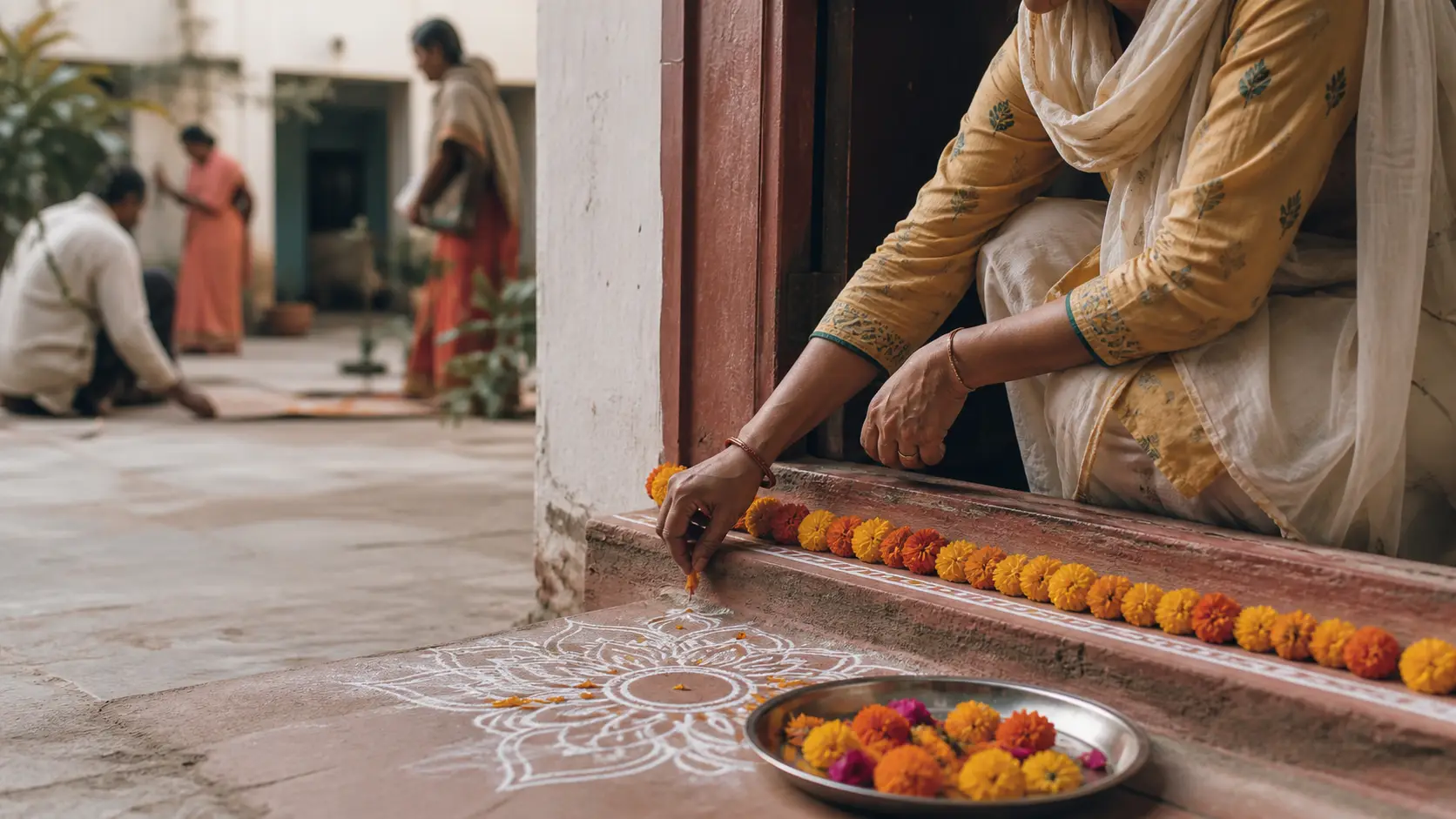
The northeast corner of the home (Ishanya Kona) is the most auspicious location for a puja room according to Vastu Shastra — it is the zone governed by Ishana, a form of Shiva, and is the direction from which divine blessings and cosmic prana flow into the home. A puja room in the northeast is said to ensure prosperity, clarity of mind for the residents, and the constant presence of divine grace in the household. The east direction is the second choice, as it faces the rising sun and is governed by Indra, king of the Devas. Never place the puja room in the south (governed by Yama, associated with endings), the southeast (Agni corner — associated with fire and strife), or directly over a toilet, under a staircase, or in the basement. The puja room should be on the ground floor if possible, and should not share a wall with a bathroom. The presiding deity's image or idol should face either east or west, so the devotee faces east (morning, most auspicious) or west while worshipping. Avoid placing the deity image facing south — this is a direction associated with Pitri Loka and is not appropriate for the primary family deity. The threshold of the puja room should be marked with a Swastika or Ashtamangala (eight auspicious symbols) drawn in kumkum and turmeric.
Installing the Deities: Sequence, Materials, and Consecration
The choice of deities for a home puja room depends on the family's Kula Devata (clan deity), Ishta Devata (personal chosen deity), and tradition (Shaiva, Vaishnava, Shakta, or Smarta). However, every Hindu home should have: Ganesha (always placed first, as the remover of obstacles), the Kula Devata, and a Navagraha symbol (nine planet representation) for planetary peace. Additional deities may be added based on devotion. Idols should be made of Panchaloha (five-metal alloy), pure silver, copper, or Shaligrama (sacred river stone naturally marked with Vishnu's symbols) — never plastic. The size of the idol should be proportionate: the idol of the main deity should not be taller than the length of the devotee's thumb (Angushtha matra) for home worship, except in large dedicated puja rooms. Before installing any idol or image, it must be consecrated through Prana Pratishtha — the ritual of installing the divine life-force into the image through mantra and fire ritual. A priest trained in Agamic procedures should perform this. Without Prana Pratishtha, an idol is an art object; with it, it becomes a living divine presence. Once installed, the deity should be treated as a living guest: bathed (Abhisheka), clothed (Vastra), fed (Naivedya), and rested (Shayya) daily.
Essential Items for the Puja Room and Their Significance
A properly equipped puja room contains: a Panchapatra (five-metal cup for sacred water) and a Uddharina (spoon for water), a conch shell (Shankha — blown to purify the atmosphere with its divine vibration, repel negative energies, and announce the beginning and end of worship), a ghee lamp (Diya) and a camphor lamp (Neerajanam), an incense holder (Agarbatti stand) with five holes representing the five elements, a bell (Ghanta — whose sound drives away disruptive subtle entities and alerts the deity to the devotee's presence), a small copper or silver plate (Tali) for offerings, kumkum (red powder — associated with Shakti), turmeric (Haridra — purifying and auspicious), sandalwood paste (Chandana — cooling and Sattvic), akshat (unbroken rice colored with turmeric), fresh flowers (especially Tulsi for Vishnu, Bilva for Shiva, red hibiscus for Devi, and Marigold as a universal offering), a Deepastambha (lamp stand) for holding multiple flames during Aarti, and a photograph or image of the family's lineage Guru if applicable. The puja room should have a small wooden plank or raised platform (Puja Peeth) on which all items are organized — placing puja items directly on the floor is considered disrespectful. A small drawer or box for the Puja diary — where the family records Sankalpa, significant dreams, and answered prayers — adds a living dimension to the sacred space.
Maintaining the Sacred Space: Daily Rhythm and Long-Term Consecration
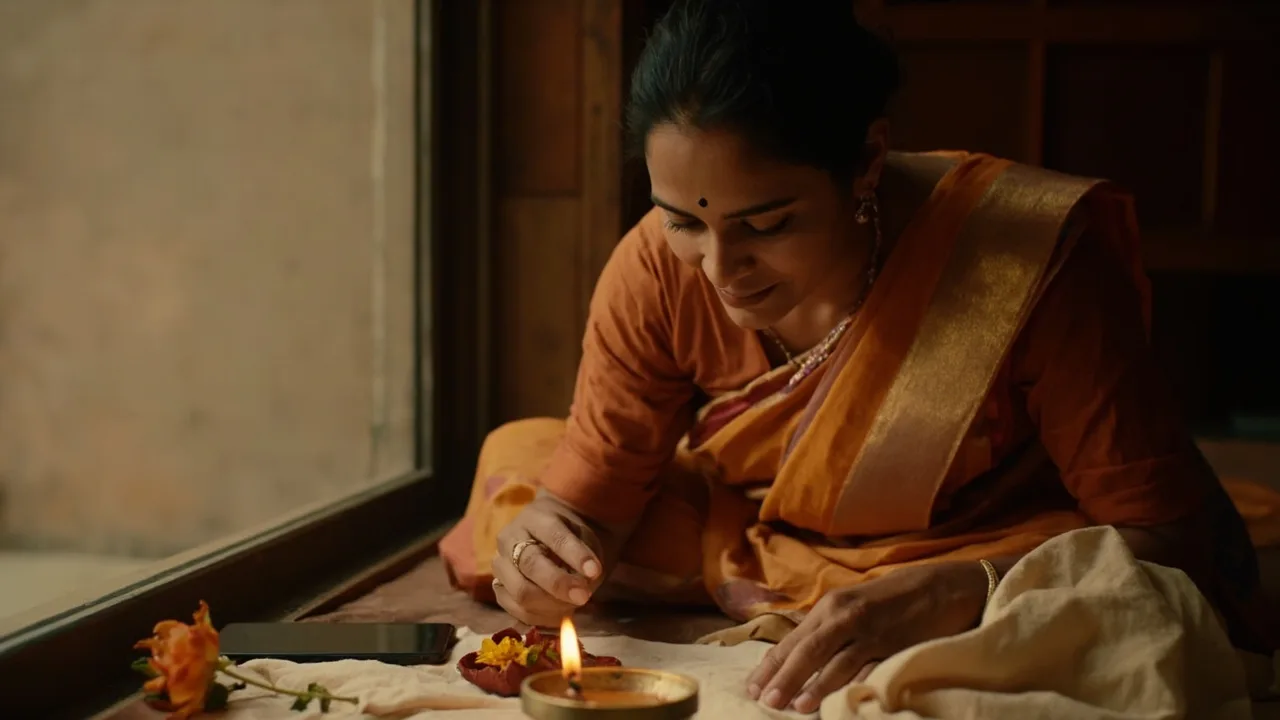
A puja room without daily worship is like a lamp that has never been lit — the structure exists but the purpose is unfulfilled. The minimum daily puja for a home devotee consists of: washing hands and face before entering, lighting the ghee lamp, offering fresh water in the Panchapatra, placing fresh flowers or Tulsi at the feet of the deity, burning incense, ringing the bell three times, reciting the deity's primary mantra or stotra for a minimum of five minutes, and performing Aarti (waving the lamp in a clockwise circular motion before the deity while singing the Aarti hymn). This entire minimum practice takes 15 to 20 minutes but sets the spiritual tone for the entire household's day. The puja room should be cleaned thoroughly every day — sweeping, wiping, and removing wilted flowers and leftover food offerings (which should be offered to birds or flowing water, never thrown in the dustbin). On auspicious days (Sankranti, Purnima, Amavasya, Navratri, and the deity's specific festivals), the worship should be expanded with Abhisheka, more elaborate offerings, and the reading of the deity's Purana. Every few years — and certainly after any significant trauma, illness, or structural renovation — a Vastushanti and Grha Pravesh puja should be performed by a priest to re-consecrate the entire home and especially the puja room, refreshing the Sattva that the space embodies.