Summary · Quick answer
Pradosha is the most intimate and most accessible of all Shiva Vratas — observed twice a month at twilight, when Shiva himself is said to dance on Mount Meru and grant boons with particular generosity. Here is everything you need to observe it correctly.
This is editorial context. Where no primary citation is shown, treat it as a guide, not as a verified claim, personal prediction or medical advice.
What Is Pradosha Vrat and Its Origin in the Puranas
Pradosha (प्रदोष) literally means 'the removal of sin' — the prefix 'Pra' indicating completeness, and 'Dosha' meaning flaw or blemish. It refers to the twilight period of approximately 1.5 hours beginning 45 minutes before sunset and ending 45 minutes after sunset on the Trayodashi tithi (13th day) of both the Shukla (bright) and Krishna (dark) fortnights — making Pradosha occur twice each month. The Shiva Purana, in its Kotichandravakarana section, narrates the origin of Pradosha Vrat: during the cosmic churning of the ocean (Samudra Manthan), when the deadly poison Halahala threatened to destroy the universe, Lord Shiva drank it to save creation. The Devas and the Moon (Chandra) nursed him back to health, and in gratitude, Shiva promised to be especially accessible and generous to his devotees on the Trayodashi tithi, the day Chandra began to recover his waning light. The Skanda Purana adds the beautiful detail that at the Pradosha moment, Lord Shiva — accompanied by Parvati, Nandi, and the Ganas — dances the Ananda Tandava on the peaks of Mount Meru while all the gods, celestial musicians, and sages assemble to worship him. At this moment of cosmic celebration and divine joy, any sincere prayer offered to Shiva is said to be heard immediately and fulfilled. The veil between the devotee and Shiva becomes thinnest at Pradosha.
This plays out differently in every chart.
See it in yours →The Different Types of Pradosha and Their Special Significance
While all Pradoshas carry tremendous spiritual power, certain Pradoshas are considered particularly auspicious and have specific names and specific Purana narratives associated with them. Soma Pradosha — when Trayodashi falls on a Monday (Soma = Moon/Monday) — is said to grant all desires, especially those related to health, family happiness, and liberation. This is considered the most blessed of all Pradoshas. Bhauma Pradosha — Trayodashi on a Tuesday (Bhauma = Mars) — is especially potent for curing disease and removing obstacles caused by Mangala Dosha. Shani Pradosha — when Trayodashi falls on a Saturday — is called Shani Pradosha and is one of the most intensely powerful of all, as the combined energy of Saturn and Shiva on the 13th tithi is said to dissolve the deepest karmas. Ravivara Pradosha (Sunday) is particularly good for relief from enemies and government-related troubles. The Shiva Purana also distinguishes between the Shukla Paksha Pradosha (in the bright fortnight, more appropriate for worldly boons and positive manifestation) and the Krishna Paksha Pradosha (in the dark fortnight, more powerful for dissolution of negative karma and spiritual liberation). Both are equally valid for worship, but serious Shiva devotees observe all 24 Pradoshas of the year without break, which the Shiva Purana declares to be equivalent to a lifetime of Kashi pilgrimage.
The Pradosha Fast: How to Prepare From the Day's Beginning
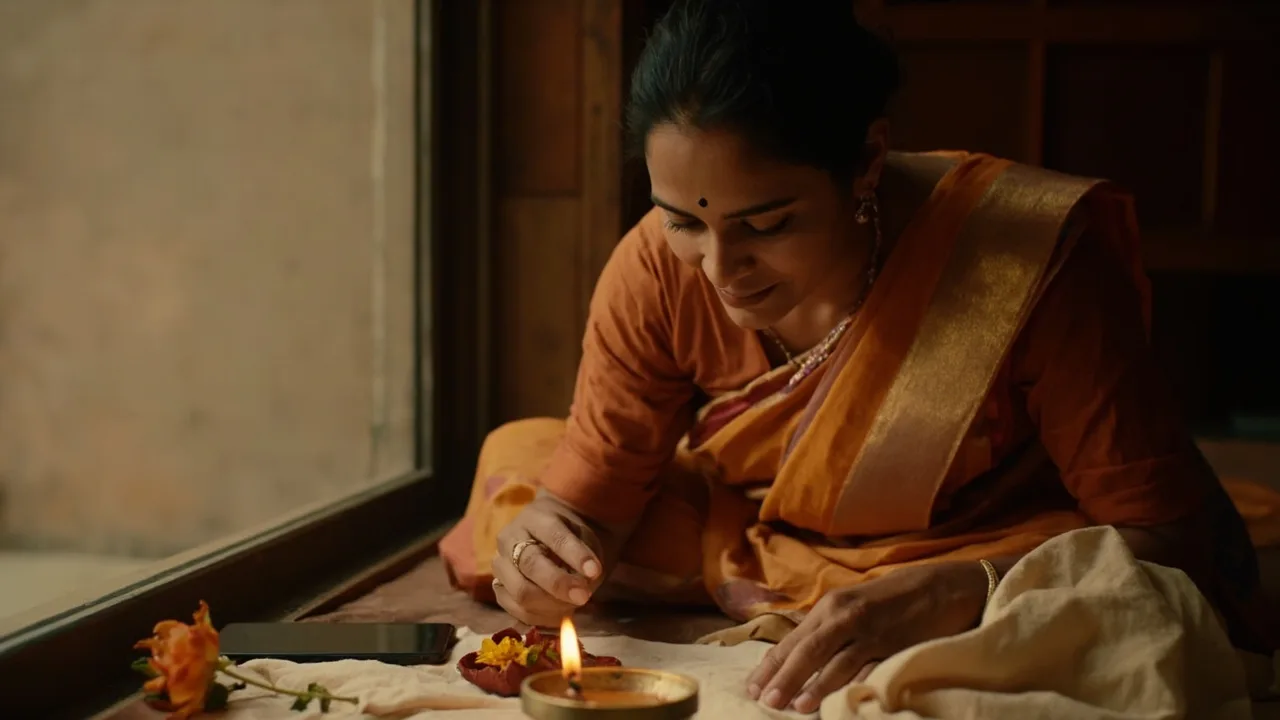
The Pradosha Vrat begins with complete fasting from sunrise on the Trayodashi day until after the evening worship is completed. For those who cannot observe a full fast, a partial fast on fruits and milk is permitted, but the spirit of fasting — reducing physical indulgence and turning the vital energy inward and upward — should be maintained throughout the day. Do not eat grains, lentils, or non-vegetarian food. Avoid anger, harsh speech, sexual activity, and entertainment on this day — the Shiva Purana specifically warns that the benefits of Pradosha fasting are diminished by these activities. Upon waking, bathe, apply Vibhuti (sacred ash) on the forehead in three horizontal lines (Tripundra) — the mark of Shiva's devotee — and wear clean white or pale clothing. Spend the day in as much silence and japa as possible: the Panchakshara Mantra 'Om Namah Shivaya' is the primary mantra for the Pradosha Vrat. If you have a Shiva temple nearby, visit it in the morning as well as in the evening for Pradosha puja. If temple attendance is not possible, your home puja room with a Shivalinga (even a small Narmada Banalinga or a clay linga made fresh for the occasion) is entirely appropriate. The Shiva Purana affirms that Shiva resides equally in the devotee's heart as in the grandest temple, and sincere home worship on Pradosha is never inferior to external temple worship.
The Evening Pradosha Puja: Step-by-Step Method
The Pradosha Puja begins approximately 45 minutes before sunset. Bathe once more if possible, or at minimum wash hands, feet, and face. Light the ghee lamp and sandalwood incense before the Shivalinga. Begin with Achamana (purification by sipping water with Vishnu's name — for even in Shiva worship, the integrated Shaiva-Vaishnava tradition acknowledges both as aspects of the one Divine). Then perform Ganesha Puja briefly. Invoke Nandi — Shiva's divine bull and doorkeeper — with 'Om Nandikeshwaraya Namah,' asking him to grant access to Shiva's presence. Now begin the Abhisheka of the Shivalinga: bathe the linga with Panchamrita (milk, curd, honey, ghee, sugar) one at a time, chanting 'Om Namah Shivaya' with each pouring. Then bathe with pure water, then rose water if available. After Abhisheka, apply Bilva (Bael) leaves — never Tulsi for Shiva worship, as Tulsi is specifically contraindicated for Shivalinga — white flowers (especially Dhatura, white lotus, jasmine), Vibhuti, sandalwood paste (white chandana, not red kumkum on the linga), and unbroken rice (akshat). Offer incense (Gugul, loban, or sandalwood), ghee lamp, and then Naivedya — Shiva accepts any simple pure offering: milk, coconut, fruits, Panchamrita again. Recite the Shiva Panchakshara Stotram, the Bilvashtakam, and at least 108 repetitions of 'Om Namah Shivaya.' Close with Pradakshina (three circumambulations of the Shivalinga, always in a clockwise direction but reversing at the Jaladhara — the water channel — which should never be fully crossed). Perform Aarti and end with full prostration.
The Fruits of Pradosha Vrat and Its Deeper Spiritual Meaning
The Skanda Purana narrates several stories of devoted souls who transformed their lives through the power of Pradosha Vrat. A widow's son, reduced to poverty and illness, was restored to prosperity and health after his widowed mother maintained Pradosha Vrat for a full year with unwavering devotion. A king unjustly imprisoned recovered his throne. A childless couple was blessed with a son of extraordinary virtue. These narrative fruits — health, wealth, progeny, liberation from enemies — are the Purana's way of communicating a deeper truth: that sincere Shiva devotion at Pradosha dissolves the accumulated Prarabdha karma that is creating one's current suffering, and replaces the heaviness of past-life residue with the lightness of divine grace. At the deepest level, the Pradosha Vrat is a practice of recognizing Shiva as the Kalagni — the fire that consumes time itself. The twilight hour of Pradosha is the moment between day and night — between creation and dissolution — and Shiva, the lord of transitions and the master of the between-state, is most fully himself at this liminal hour. When the devotee stands before the Shivalinga at Pradosha and chants 'Namah Shivaya' — 'I bow to Shiva, to the auspicious one, to that which is most fundamentally Real' — they are not worshipping an external deity. They are recognising their own deepest nature, the Pratyagatman, the inner witness, the still point within which all the churning of life occurs. This recognition is the ultimate fruit of Pradosha — not a boon granted from without, but an awakening kindled from within.