Summary · Quick answer
Most people know Surya Namaskar as a morning exercise. But in its original form, it is a complete act of solar worship — a moving prayer, a mantra recitation, and a breath meditation fused into twelve sacred gestures. This is how to practice it as the ancients intended.
This is editorial context. Where no primary citation is shown, treat it as a guide, not as a verified claim, personal prediction or medical advice.
The Solar Deity and the Origin of Surya Namaskar
Surya Namaskar (सूर्य नमस्कार) means 'salutation to the Sun,' and in its original spiritual context, it is exactly that — a full-body act of worship offered to Surya Deva, the solar divinity who is the source of all life, all intelligence, and all time on this earth. The Aditya Hridayam, recited by the sage Agastya to Rama on the battlefield of Lanka, declares that the Sun is simultaneously the cosmic father, the divine physician, the destroyer of darkness, and the supreme being who resides within all hearts as the Antaratman. The Rigveda opens with 'Surya Aatma Jagatas Tasthushascha' — the Sun is the soul of both the moving and the still universe. Surya Namaskar as a structured practice is believed to have been formalized by the Kshatriya tradition — Rama himself is said to have offered 108 Surya Namaskars before battle — but its roots are even older, in the Vedic practice of Arghya (water offering to the Sun) combined with Stuti (glorification through verse). Each of the twelve postures of Surya Namaskar corresponds to one solar month, one of the twelve names of Surya, one of the twelve positions of the Sun through the zodiac, and one of the twelve primary Pranas that sustain the physical body. Practiced with this awareness, Surya Namaskar becomes an act of cosmic alignment.
This plays out differently in every chart.
See it in yours →The Twelve Mantras and Their Meanings
Each of the twelve postures in Surya Namaskar is accompanied by a Bija or Nama Mantra that invokes a specific aspect of the solar deity. These mantras are: 1. Om Mitraya Namah (the friend of all) — Pranamasana; 2. Om Ravaye Namah (the radiant one) — Hasta Uttanasana; 3. Om Suryaya Namah (the source of light) — Hasta Padasana; 4. Om Bhanave Namah (the one who illumines) — Ashwa Sanchalanasana; 5. Om Khagaya Namah (the one who moves through the sky) — Dandasana; 6. Om Pushne Namah (the nourisher) — Ashtanga Namaskar; 7. Om Hiranyagarbhaya Namah (the golden-wombed one) — Bhujangasana; 8. Om Marichaye Namah (the ray of light) — Parvatasana; 9. Om Adityaya Namah (son of Aditi, the infinite) — Ashwa Sanchalanasana (reverse); 10. Om Savitre Namah (the one who creates) — Hasta Padasana (reverse); 11. Om Arkaya Namah (the one worthy of worship) — Hasta Uttanasana (reverse); 12. Om Bhaskaraya Namah (the one who leads to enlightenment) — Pranamasana. Chanting each mantra aloud or mentally as you move through the corresponding posture transforms each physical gesture into a devotional offering. The body becomes a mantra — a sacred instrument of praise.
Breath, Bandhas, and the Flow of Prana
In the purely spiritual practice of Surya Namaskar, breath is not a support for the exercise — breath IS the practice. Each movement is an expression of the breath, not the other way around. The general principle is: inhale on opening, expanding, or backbending postures (Hasta Uttanasana, Ashwa Sanchalanasana, Bhujangasana) and exhale on closing, folding, or forward-bending postures (Hasta Padasana, Parvatasana, Ashtanga Namaskar). The breath should be full, slow, and conscious — an ujjayi breath (slight constriction at the throat, creating an oceanic sound) is traditionally recommended for those with a personal practice established under a teacher. Each Surya Namaskar cycle, performed with twelve conscious breaths, becomes a pranayama practice in itself. The Hatha Yoga Pradipika and the Gheranda Samhita both recognise that when breath is controlled and mantra is chanted simultaneously, the Kundalini Shakti is gently awakened from Muladhara and drawn upward toward Sahasrara through the central Sushumna Nadi. This is the deeper mechanics of Surya Namaskar as a Tantrik solar practice — it is not stretching the body, but opening the inner sun, the Anahata Chakra, where the individual soul meets the solar divine.
How to Set Up Your Surya Namaskar Worship Practice
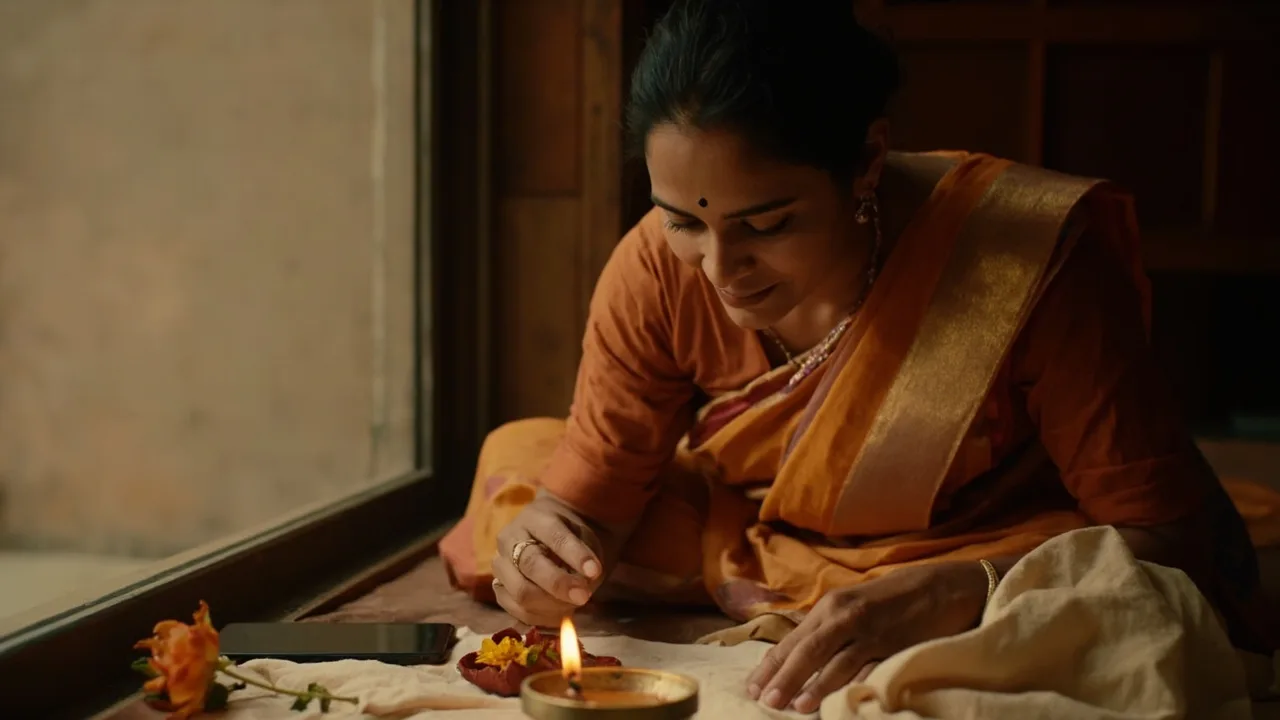
Rise during Brahma Muhurta or at least before sunrise. After bathing, face east. Place a yoga mat or a folded cotton blanket on the ground — never leather. Light a ghee lamp facing the east direction of the rising sun, or place a small image or yantra of Surya Deva on a low stool or shelf in front of your mat. Begin with the Suryopasthana — the traditional invocation of the Sun — by standing with folded hands and chanting: 'Om Jaya Jayahe Savitur Varenyam, Jagat Prakasham Bhuvana Abhiramam' followed by three offerings of Arghya (water cupped in the palms and released toward the rising sun while chanting the Surya Gayatri: 'Om Bhaskaraya Vidmahe, Divakaraya Dhimahi, Tanno Suryah Prachodayat'). Then begin your rounds of Surya Namaskar — traditionally in multiples of 12 (one for each solar month), 24, 54, or 108 for the most spiritually intensive practice. After completion, stand in Tadasana (mountain pose) with eyes closed for five minutes, feeling the warmth of the inner sun at the center of the chest. Finally, perform a Namaskara to the actual sun, if visible, and offer the merit of your practice to all beings.
The Spiritual Fruits: What Sustained Solar Worship Awakens
The Aditya Purana and the Samba Purana — two texts entirely dedicated to solar worship — describe the fruits of Surya Namaskar in terms that modern practitioners find astonishing until they experience them directly. Regular solar salutation is said to cure diseases of the eyes (Surya governs sight in Jyotish), purify the blood, strengthen the Ajna Chakra (the center of intuition), and gradually dissolve the veil of Maya that makes the individual feel separate from the Divine. On the subtler level, because Surya governs the Atman in Vedic metaphysics — he is called 'Pratidyaur Atma Jagatah Tasthuvas' in the Rigveda, the soul of the world — offering your body and breath to the solar deity each morning is an act of recognising that the light you worship outwardly is the same light that burns within you as consciousness. This recognition is the seed of Jnana, of liberating wisdom. Devotees who maintain 108 Surya Namaskars daily for 41 consecutive days as a Vrata frequently report a sustained upliftment of mood, a marked reduction in anger and anxiety, improved health, and most profoundly, a growing sense of being held and guided by a presence larger than themselves — which the Vedic tradition identifies as Mitra, the friend of all, the most benevolent face of the Sun.