In common speech 'Diwali' names a single night of lamps, but in practice it is a five-day arc that moves through the end of one lunar fortnight and the start of the next. Each day carries a distinct theme, and reading them as a sequence makes the festival far more legible than treating it as one undifferentiated celebration.
It opens with Dhanteras, traditionally a day to honour health and prosperity — many families buy metal or begin the year's accounts. The second day, Naraka Chaturdashi (also called Chhoti Diwali), commemorates the defeat of the demon Narakasura and is marked by early-morning cleansing. The third and central day is Lakshmi Puja, performed on the new moon of Kartika, when homes are lit to welcome the goddess of fortune.
The fourth day shifts register: Govardhan Puja recalls Krishna lifting Mount Govardhan to shelter his people, and in many regions it begins the new year. The fifth, Bhai Dooj, honours the bond between brothers and sisters. So the festival travels from prosperity, to the conquest of darkness, to the welcoming of fortune, to gratitude for shelter, to family — a small theology of the good life compressed into five days.
Regional practice varies enormously, and that variation is the tradition, not a deviation from it. The dates themselves are fixed by the lunar calendar, which is why Diwali lands on a different Gregorian date each year. If you would like to participate from a distance, you can offer a facilitated seva at a partner temple during the festival window.
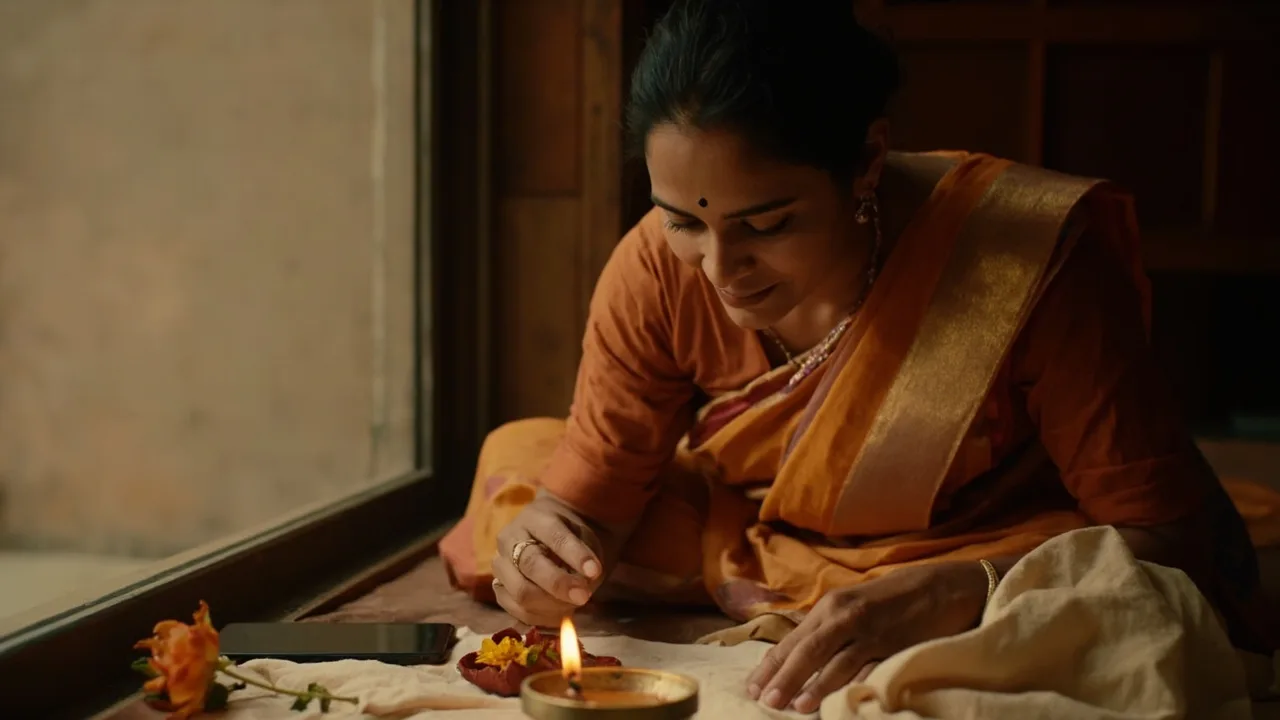

 Chart readings are calculated by the Vedika engine from the birth details you save.