An eclipse — grahan in Sanskrit and most Indian languages — is, astronomically, nothing more than a precise alignment: the Moon passing into the Earth's shadow (a lunar eclipse) or between the Earth and Sun (a solar eclipse). Indian astronomers calculated these alignments with remarkable accuracy more than a thousand years ago, which is why eclipse times in a panchang are genuine ephemeris data, not guesswork.
Traditionally, the eclipse is marked by a sutak period — a span of hours before the eclipse begins and until it ends — during which many households suspend cooking and temple doors are closed. The custom is best understood as a ritual pause around a charged astronomical moment, and observance varies widely by region and family; it is a practice, not a universal rule.
The mythological layer explains the eclipse as the demon Rahu swallowing the Sun or Moon in revenge for being beheaded after stealing a drop of the nectar of immortality — his severed head and body becoming the two lunar nodes, Rahu and Ketu. This is one of the most vivid stories in the tradition, and it is exactly that: a story carried by the Puranas, sitting alongside the precise mathematics rather than competing with it.
If you want to know whether the sky holds an eclipse in a given window, that is a computed fact — and a far more reliable thing to act on than rumour. The tradition's instruction is calm: pause, reflect, and resume; an eclipse is a moment to mark, not to fear.

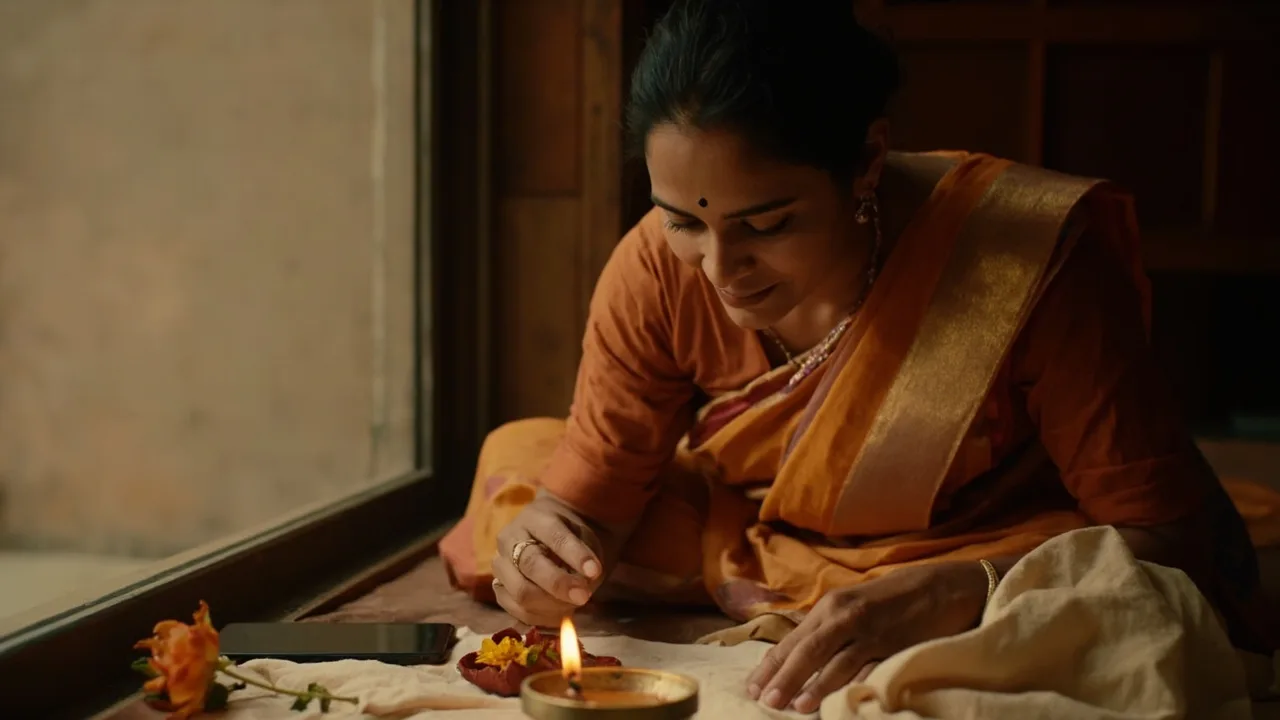

 Chart readings are calculated by the Vedika engine from the birth details you save.