
Summary · Quick answer
Ganesh Chaturthi 2026 falls on Bhadra Shukla Chaturthi in August-September 2026. This complete guide covers the installation of Ganesha idols, Modak prasad significance, the ten-day festival arc, and the visarjan ritual with its deep astrological and spiritual meaning.
This is editorial context. Where no primary citation is shown, treat it as a guide, not as a verified claim, personal prediction or medical advice.
Ganesh Chaturthi 2026 Date: Bhadra Shukla Chaturthi and Shubha Muhurat
Ganesh Chaturthi 2026 falls on the Chaturthi (fourth) tithi of Shukla Paksha in the Hindu month of Bhadrapada, which corresponds to August or early September 2026. The Chaturthi tithi during the waxing phase in this month is specifically designated in the Ganesha Purana and Narada Purana as the birthday of Lord Ganesha — the first son of Shiva and Parvati, the remover of obstacles, and the lord of beginnings. The festival is celebrated most grandly in Maharashtra, where it was given a massive public dimension by Lokmanya Bal Gangadhar Tilak in 1893 as a means to unite communities during India's independence movement. The Shubha Muhurat for installing the Ganesha idol at home is the Madhyahna Kaal — the mid-morning to midday window on Chaturthi — which is considered the most auspicious time for Ganesha's puja according to the Dharmasindhu and Nirnayasindhu texts. Puja should ideally be performed when the Chaturthi tithi is in effect during this Madhyahna window. The festival officially spans ten days, from Chaturthi through Ananta Chaturdashi, with families choosing to perform visarjan (immersion) of their Ganesha idol on the first, third, fifth, seventh, or tenth day depending on their tradition, family custom, and the idol's size.
This plays out differently in every chart.
See it in yours →The Birth of Ganesha: Mythology and the Elephant Head's Meaning
The birth story of Ganesha is among the most beloved in all of Hindu mythology and contains within it a teaching about the relationship between the individual will and the cosmic order. The most popular version, from the Shiva Purana, tells of how Goddess Parvati created a boy from the turmeric paste and sandalwood applied to her own body, breathing life into him to be her guardian while she bathed. When Lord Shiva returned and was stopped by this unknown boy at the doorway — an act of rightful protection — Shiva, not recognizing his own son, severed the boy's head in anger. Parvati's grief was absolute, and to restore her child to life, Shiva sent his ganas (attendants) to find the head of the first creature sleeping with its head facing north — they returned with an elephant's head, which Shiva placed upon the boy and restored him to life, declaring him leader of all the ganas: Ganapati. The elephant head carries extraordinary symbolic freight: elephants are the most powerful yet gentle of creatures, possessing a large brain, an enormous capacity for memory, and the ability to break through obstacles with their trunks. The single tusk that Ganesha broke off (to write the Mahabharata as Vyasa's scribe, in another story) represents the willingness to sacrifice something precious in service of knowledge. The large belly is traditionally said to contain within it all the universes, reflecting Ganesha's all-encompassing nature.
Modak: The Sacred Sweet of Ganesha and Its Ritual Significance
Among all the foods associated with Hindu deities, the Modak is perhaps the most specifically identified with a single god — Lord Ganesha's love for the sweet Modak is a universal constant across all regional traditions of Ganesha worship. The word Modak comes from the Sanskrit root Moda, meaning pleasure or bliss, and the sweet itself represents the experience of spiritual bliss that Ganesha as the remover of obstacles helps devotees attain. The traditional Modak is made of rice flour dough stuffed with a filling of fresh coconut and jaggery, shaped into a conical form resembling the linga or a teardrop (some scholars see it as representing the bindu or cosmic point from which creation emerges), and either steamed or fried. The Shiva Purana describes Ganesha's mother Parvati making Modak herself for her son, establishing the maternal-divine-sweet connection that makes Modak offerings so emotionally resonant. 21 Modaks are traditionally offered to Ganesha in the Shodashopachara (sixteen-step) puja on Chaturthi. Beyond the traditional version, regional variations abound: Maharashtra's Ukdiche Modak (steamed, considered the original), the fried Talniche Modak, chocolate Modak, dry fruit Modak, and Mawa Modak in North India. During the ten days of Ganesh Chaturthi, Modak-making at home is as much a devotional practice as cooking for a deity — the act of preparing Modak with intention and love is itself considered a form of puja.
The Ten Days of Ganesh Chaturthi: Daily Puja and Community Celebrations
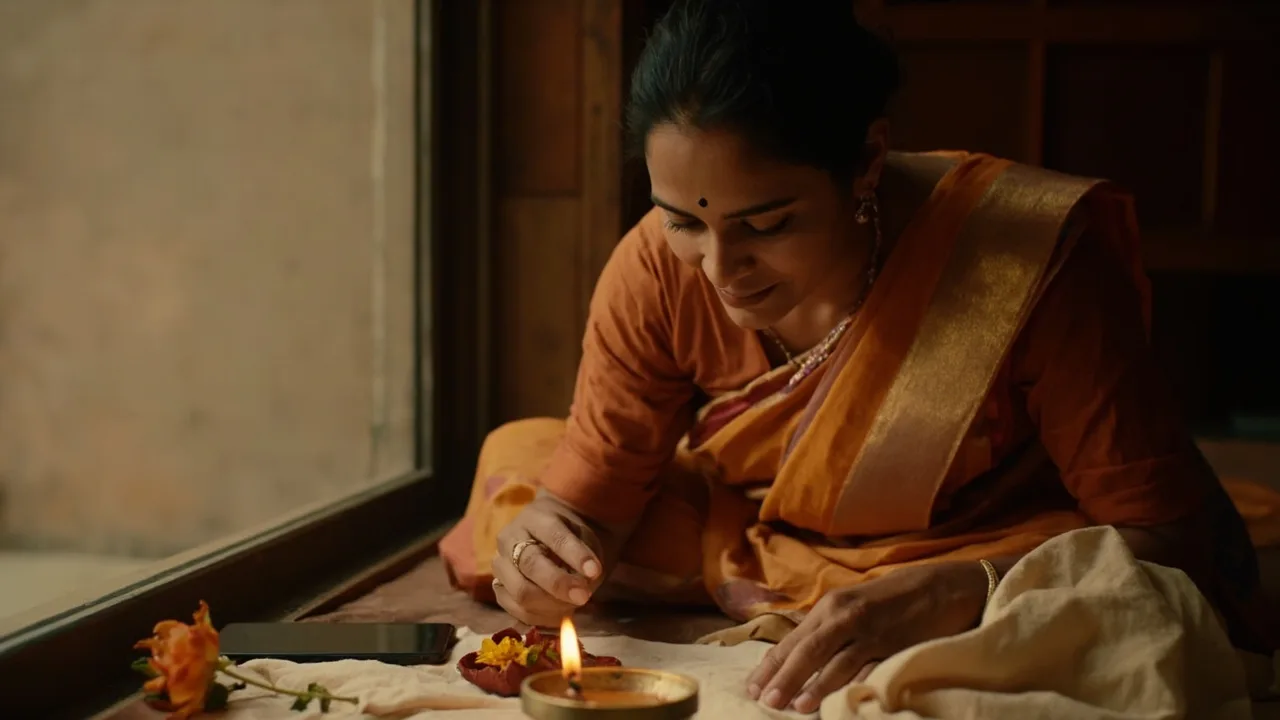
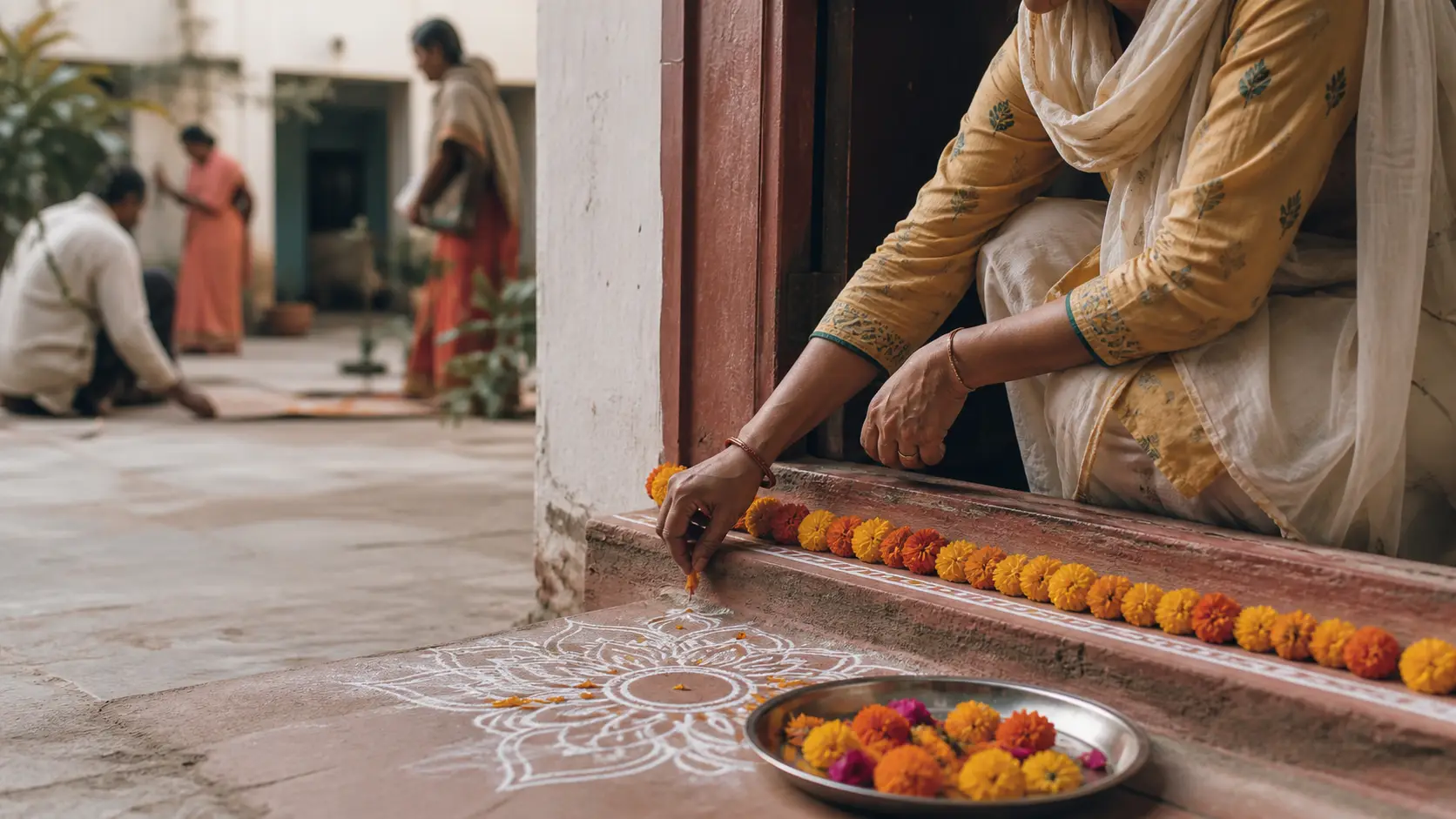
The ten-day arc of Ganesh Chaturthi is one of the most socially cohesive and spiritually structured festival experiences in Hinduism. In homes, a clay or plaster-of-Paris Ganesha idol is installed on a raised altar decorated with flowers, mango leaves, and rangoli on Chaturthi. Daily puja is performed morning and evening with the offering of Modak, durva grass (the only grass permitted in Ganesha puja), red flowers, red sandalwood paste, turmeric, vermillion, incense, lamps, and the recitation of the Ganapati Atharvashirsha — the most important scriptural text dedicated to Ganesha from the Atharva Veda. In public celebrations, especially in Maharashtra's cities and villages, enormous community Ganesha idols are installed in pandals (temporary structures) in public squares, with each neighborhood competing in the grandeur of their Ganesha's decoration, size, and thematic presentation. Cultural programs, musical performances, religious discourses, community feasts, and social service activities are organized throughout the ten days. Ganesh Chaturthi as revitalized by Tilak deliberately replaced the private domestic observance with a massive community gathering, making it a festival of social bonding and collective devotion. The tenth day, Ananta Chaturdashi, is the day of the largest and most emotionally intense public celebrations, as the Ganesha idols — some over 30 feet tall — are carried in procession through the streets before being immersed in rivers, lakes, or the sea.
Visarjan: The Immersion Ritual and Its Spiritual Symbolism
The Visarjan — the immersion of the Ganesha idol in water — is one of the most emotionally intense moments in the Hindu festival calendar and one that can appear paradoxical to those unfamiliar with its spiritual logic. Why invite a deity with great ceremony and devotion only to submerge the idol ten days later? The answer lies in the Hindu understanding of sacred form and the divine's relationship with matter. The Ganesha idol is not simply a sculpture — through the Pranapratishtha ritual (installation of life force) performed on Chaturthi, the clay or metal image is understood to have become a genuine abode of Ganesha's presence. The immersion does not destroy Ganesha but releases his concentrated presence back into the universal waters from which all form emerges and returns. The farewell cries of Ganpati Bappa Morya, Pudchya Varshi Lavkar Ya (Beloved Lord Ganesha, come again soon next year) that fill the streets during Visarjan express simultaneously the grief of parting and the confident expectation of reunion — a perfect encapsulation of the Hindu attitude toward sacred time as cyclical and recurring. Ecologically, the Visarjan tradition has required updating in the modern period, with the proliferation of chemically painted, non-biodegradable plaster idols creating serious water pollution. The response has been a return to traditional unvarnished clay idols (Shadu mati in Maharashtra) that dissolve naturally, and the installation of artificial immersion tanks in major cities. Choosing an eco-friendly clay Ganesha is both a devotional and environmental choice increasingly supported by religious authorities.