Puja Vidhi · Goddess Kali (Mahakali, Bhadrakali, Dakshina Kali)
Kali Puja
काली पूजा
Kali Puja is the worship of Goddess Kali, the fierce and transformative form of Adi Shakti. While Lakshmi Puja is performed during Diwali in most of India, Kali Puja is the primary worship in Bengal, Assam, and parts of Odisha on the same Diwali night. Goddess Kali is the destroyer of ego and ignorance, and her fierce form (dark complexion, sword, severed head, garland of skulls) represents the dissolution of all limiting forms of existence. Her puja is traditionally performed at midnight, as she is the goddess of the night (Ratri).
Puja Samagri (Materials Required)
- ◆Idol or image of Goddess Kali — Dakshina Kali (right foot forward) is most commonly worshipped in home pujas
- ◆Red hibiscus flowers (Kali's most loved offering)
- ◆Blue or black flowers (optional, representing her dark complexion)
- ◆Bel (Bilva) leaves
- ◆Red sandalwood paste (Rakta Chandan)
- ◆Red cloth for altar
- ◆Sesame oil lamp or mustard oil lamp
- ◆Coconut (symbolising the ego being offered to the Goddess)
- ◆Naivedya: fish, cooked rice, or sweets depending on regional tradition
- ◆Red hibiscus garland (Jaba mala)
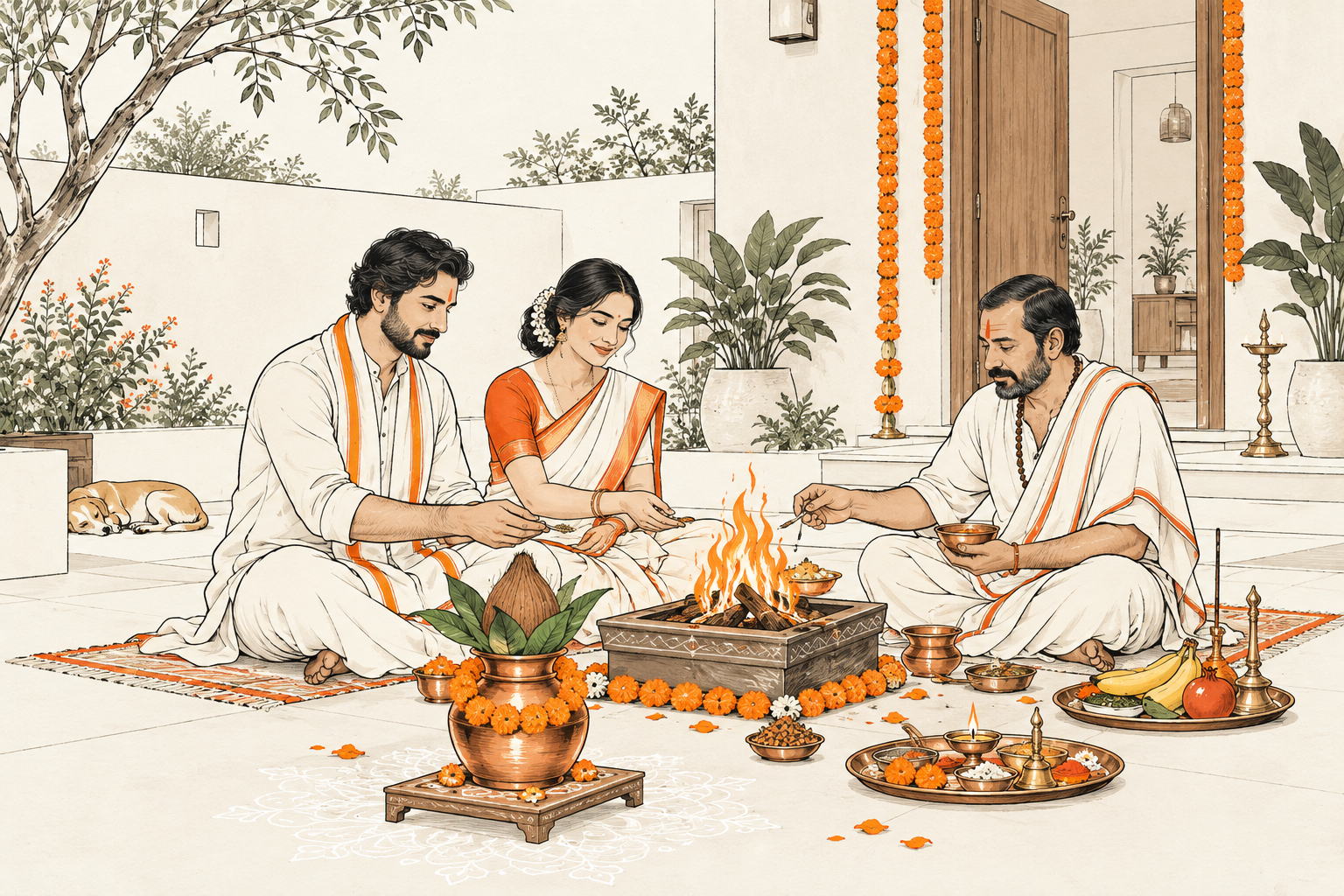
Step-by-Step Vidhi
- 1
Preparation: Purify the space. Cover the altar with red cloth. Place the Kali image facing south (the direction associated with death and transformation) or east
- 2
Perform Sankalp (intention-setting) at the start of the puja
- 3
Ganesh Puja: invoke Ganesha first
- 4
Invoke Goddess Kali: 'Om Kreem Kalikaye Namah' (the Kalikaya beeja mantra). Invite her presence into the idol or image
- 5
Panchamrit Snan: bathe the image with milk, curd, ghee, honey, and sugar, followed by clean water
- 6
Offer red hibiscus flowers — the most essential Kali offering. 108 hibiscus flowers (one by one with 'Om Kreem Kalikaye Namah') is the most potent offering
- 7
Offer coconut (symbolising the ego surrendered to the Goddess)
- 8
Light sesame oil lamp and incense. Recite Mahakala Stotra or Kali Sahasranama
- 9
For midnight puja (Nisha Puja): this is the traditional form. Lights are dimmed, and the puja is performed in the hour of midnight
- 10
Conclude with Kali Aarti and distribute prasad
Main Mantra
Om Kreem Kalikaye Namah
Chant 108 times during the puja
Frequently Asked Questions
What is Kali Puja?
Kali Puja is the worship of Goddess Kali, the fierce form of Adi Shakti representing time, death, and liberation from the ego. It is the principal worship on Kartik Amavasya (Diwali night) in Bengal, Assam, and Odisha. The puja is traditionally performed at midnight, offering red hibiscus flowers, coconut, and chanting 'Om Kreem Kalikaye Namah'. Kali is not a goddess of death in the Western sense — she destroys ignorance and the ego, enabling spiritual liberation.
Is Kali puja dangerous or only for tantric practitioners?
No. The mainstream 'Dakshina Kali' form worshipped in homes and temples across Bengal is a benevolent mother deity who protects devotees from all harm. The Dakshina Kali (right foot forward) is the accessible, household form of the Goddess. Tantric or Smashan (cremation ground) forms of Kali worship are specialized practices within the Shakta Tantra tradition and are distinct from household Kali Puja.
Why is Kali associated with midnight?
Kali is called Ratri (night) and is associated with the cosmic darkness that existed before creation — the primordial potential of the universe. Midnight is called Nisha Kaal and is considered her most active period. The Devi Mahatmya (Durga Saptashati) describes how Goddess Kali emerged from Durga's brow at night to slay Chanda and Munda. Traditional Kali Puja, particularly in the Tantric tradition, is performed at midnight in the hour of Nisha to align with her energy.
More Puja Guides
Book a Pandit for Kali Puja
Let a verified pandit perform the puja on your behalf with full sankalp and prasad.
Book Puja →