 Healers World


































 Updated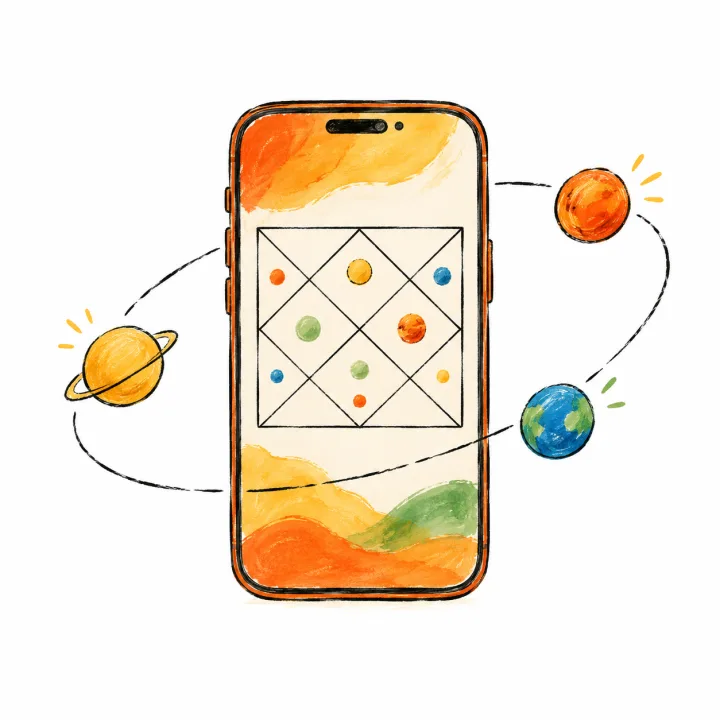
 quick answer
Dharma is one of the most misunderstood words in Sanskrit. It is not religion, not ritual, and not morality imposed from outside. It is the law of your being — and living it is the most powerful spiritual act available to you.
- Topic
- Vedic Astrology
- Reading time
- 10 minutes
- Written by
- Guruji
- Last updated
- 12 August 2026
The Many Dimensions of the Word Dharma
The Sanskrit root of dharma is dhr, meaning to hold, to sustain, to uphold. Dharma is therefore what holds reality together — the structural law underlying all phenomena. In its cosmic dimension, it is Rita, the cosmic order that governs the movements of planets, the cycle of seasons, the laws of cause and effect. In its natural dimension, it is Svabhava-dharma — the nature-law of a thing. Water's dharma is to flow downward. Fire's dharma is to consume and illuminate. The sun's dharma is to give light without discrimination. In its social dimension, dharma refers to the codes of conduct appropriate to one's role and stage of life — a teacher's dharma differs from a warrior's, a child's differs from an elder's. In its individual dimension, Svadharma (one's own dharma) is the irreplaceable, non-substitutable duty of being exactly who you are. In the Bhagavad Gita, Krishna says to Arjuna: Sreyan svadharmo vigunah paradharmat svanushthitat — better is one's own dharma, even if imperfectly performed, than the dharma of another perfectly performed. This is one of the most radical statements in world philosophy. It does not encourage mediocrity. It recognises that inauthenticity — living someone else's truth, following someone else's calling, performing a role that is not yours — is a deeper form of failure than imperfect alignment with your own.
The Four Stages of Life: Dharma Through the Ashrama System
Classical Vedic thought organises the human lifespan into four ashramas — stages of life, each with its own dharmic responsibilities. Brahmacharya is the stage of the student (roughly birth to 25), characterised by learning, discipline, celibacy (the conservation of vital energy for growth), and service to the teacher. The dharma of this stage is to absorb — to build the foundations of knowledge, skill, and character that will support all subsequent stages. Grihastha is the stage of the householder (roughly 25 to 50), characterised by family, profession, earning wealth, and raising children. Far from being spiritually inferior, the Grihastha stage is considered the most important in the Vedic system — it is the householder who supports the student, the forest dweller, and the renunciate through their earnings and generosity. The dharma of this stage is to engage fully with the world while practising non-attachment within engagement. Vanaprastha is the stage of gradual withdrawal (roughly 50 to 75), where the individual begins handing over responsibilities to the next generation and turning attention increasingly inward — more meditation, more study, more pilgrimage. The dharma of this stage is preparation for the final stage. Sannyasa is the stage of the renunciate — the complete withdrawal from social roles and the dedication of remaining life to liberation. Very few reach this stage formally, but its spirit — the loosening of identity from role, status, and possession — is available to all in the later years of life.
Dharma vs. Rules: Why Dharma Is Not Moralism
One of the most common misunderstandings of dharma is to reduce it to a moral rulebook — a list of things you must and must not do. This misses the living heart of the concept entirely. Dharma is not an external imposition. It is an internal responsiveness to what a situation actually requires. The great dharmic dilemmas in the Mahabharata — the war that pits family against family, guru against student, friend against friend — resist easy moral resolution precisely because dharma is contextual, not absolute. What is right action in one context may be wrong in another. Drona, the greatest teacher of the age, fights on the side of Adharma (Duryodhana) out of loyalty to the Kuru lineage. Arjuna is asked by Krishna to fight against his own grandfather and teacher out of fidelity to a higher order. Neither is a simple villain or hero. The tradition uses the term Apad-dharma — emergency dharma — to describe situations where the normal rules must be suspended to serve a deeper order. The Vedic tradition is therefore not fundamentalist. It is deeply contextual and requires the practitioner to cultivate viveka (discrimination) and prajna (wisdom) — the capacity to read a situation clearly and respond appropriately, rather than mechanically applying a rule. This is why dharma is said to be subtle (sukshma) — its proper application is not always obvious and often requires the guidance of a qualified teacher and deep self-knowledge.
Your Personal Dharma: Reading the Birth Chart
The Vedic birth chart is considered one of the most precise maps of svadharma available. The 1st house (lagna) and its lord reveal the nature of the self and its primary orientation in life. The 9th house is called the Dharma Bhava — the house of dharma, spiritual inclination, the father, the guru, and the higher law. The 10th house reveals Karma Bhava — the arena of action, profession, and public duty. The relationship between the 9th and 10th house lords is critical: when they are well-placed and mutually supportive, the person's professional life and spiritual life reinforce each other. When they are in conflict, there is often a painful tension between what one is expected to do (social duty) and what one is called to do (soul duty). The dharma planet par excellence is Jupiter — the guru of the gods, the planet of wisdom, law, higher learning, and righteous conduct. A well-placed Jupiter in the chart (especially in Sagittarius, Pisces, Cancer, or the 1st, 5th, 9th, or 10th house) gives natural dharmic clarity — the person tends to know, at some deep level, what they are here to do. Saturn's placement reveals where discipline and long-term commitment are required for dharmic fulfilment. Rahu and Ketu (the lunar nodes) reveal the soul's evolutionary direction — Ketu indicating past-life mastery being carried forward, Rahu indicating the new territory the soul is here to explore in this lifetime. Understanding these placements is not fatalism. It is strategic self-knowledge.
Living Your Dharma: Practical Signs and Daily Practice
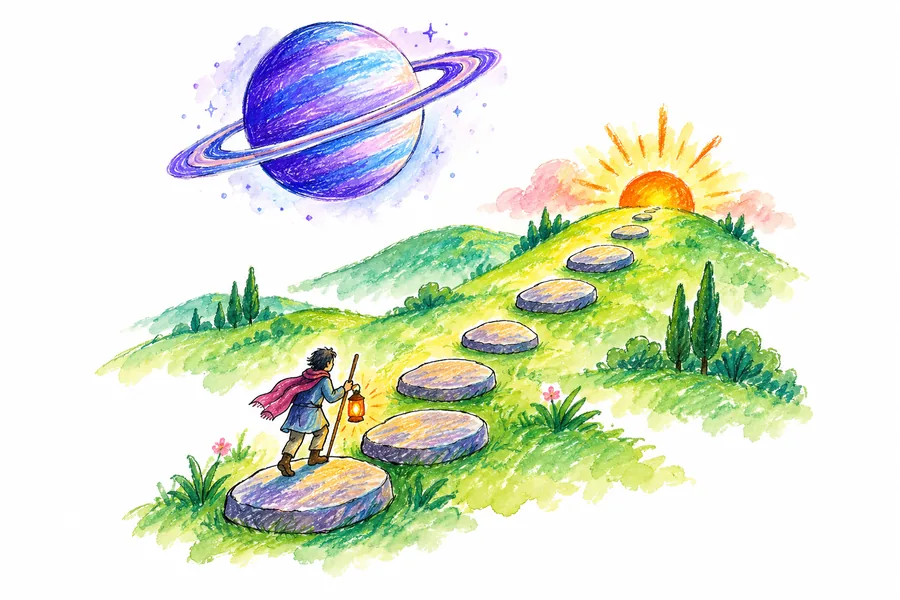
How do you know when you are living your dharma? The tradition offers several signs. There is a quality of effortlessness — not the absence of effort, but effort that feels like expression rather than performance. There is a sense of rightness, of being in the correct place at the correct time doing the correct thing. There is often a quality of service — your dharmic path tends to benefit others, not just yourself. And there is resilience: when obstacles arise on the path of dharma, you find the energy to continue. When you are off your dharmic path, you are perpetually tired, perpetually seeking external validation, and often caught in comparison with others. Daily practice aligned with dharma does not require dramatic gestures. It begins with honesty about your own nature — what genuinely energises you versus what you do out of fear, obligation, or social pressure. It continues with the willingness to orient your choices, however gradually, toward what you are actually called to do rather than what is merely convenient or approved. The Vedic tradition recommends daily Sandhya (dawn and dusk contemplation), self-study (svadhyaya), and regular dialogue with a teacher as practical anchors. The morning practice of setting a Sankalpa — a conscious intention aligned with one's highest understanding of dharma — gradually re-patterns the subconscious mind and creates the conditions in which right action arises naturally.