 Healers World











































 Updated
 quick answer
The Char Dham pilgrimage encompasses Badrinath, Dwarka, Puri, and Rameswaram—the four holiest shrines representing divine omnipresence. Complete guide to this supreme yatra.
- Topic
- Temple Story
- Reading time
- 10 minutes
- Written by
- Healers World Studio
- Last updated
- 12 August 2026
The Divine Significance of the Four Sacred Abodes in Hindu Cosmology
The Char Dham or four sacred abodes represent the manifestation of Lord Vishnu and the Adi Shankaracharya tradition's affirmation that the divine consciousness is omnipresent throughout the universe, accessible through sincere worship at these four cardinal points. Badrinath, located in the north in the Himalayas, represents the region of ice and snow where the divine manifests in the form of meditative transcendence and union with the infinite consciousness. Dwarka, located in the west, represents the realm of divine action and creation where Lord Krishna manifested to establish dharma and demonstrate the integration of spiritual wisdom with dynamic action. Puri, located in the east, represents the dimension of dharma, compassion, and the cyclical transformation inherent in all creation, where Lord Jagannath accepts the devotion of all castes and communities equally. Rameswaram, located in the south, represents the terrestrial bridge between the human realm and the infinite, where Lord Rama established his connection with devotion and duty. Together, these four shrines create a sacred geometry encompassing the entire Indian subcontinent and represent the completeness of spiritual wisdom and divine grace. Completing the Char Dham yatra is considered the fulfillment of a Hindu's ultimate spiritual obligation, granting moksha or liberation from the cycles of birth and death. The yatra itself, undertaken with sincere faith and proper preparation, purifies accumulated karmic debts and accelerates the soul's evolution toward ultimate realization. The divine order of visiting these shrines—Badrinath, Dwarka, Puri, and Rameswaram—follows the clockwise circumambulation of the sacred geography, aligning the pilgrim with the cosmic flow of divine energy.
Badrinath: The Meditation Center and Divine Abode in the Northern Himalayas
Badrinath Temple, located at an elevation of 3,300 meters in the Garhwal Himalayas, houses the sacred image of Lord Badrinath, an incarnation of Lord Vishnu believed to be eternally meditating for the welfare of all beings. The temple is surrounded by snow-capped peaks creating an environment of unparalleled spiritual purity and transcendence. The sanctum houses the sacred deity carved from a single black stone, radiating spiritual presence and divine energy. Pilgrims reach Badrinath through a trek from Joshimath or via road connectivity that opens only during summer months. The current temple structure showcases Himalayan architectural style with stone walls and ornate decorations. Dwarka Temple, located in Gujarat on the western coast, is believed to be the kingdom where Lord Krishna ruled and demonstrated divine incarnation in human form. The temple complex features seven-story architecture with intricate carvings and multiple shrines. The deity at Dwarka represents Lord Krishna in his role as divine administrator and teacher of the Bhagavad Gita. Puri Temple in Odisha houses Lord Jagannath, believed to be a form of Lord Vishnu where caste distinctions are completely dissolved in the equality of devotion. The famous Jagannath Ratha Yatra or chariot festival attracts millions of devotees annually. Rameswaram Temple in Tamil Nadu is believed to be the place where Lord Rama established his connection with devotion before crossing to Lanka. The temple features elaborate architecture with thousands of pillars and sacred bathing tanks. Together, these four temples create a comprehensive spiritual journey encompassing all dimensions of divine manifestation.
Planning Your Char Dham Yatra: Routes, Duration, and Best Season
The Char Dham yatra requires significant advance planning as the pilgrimage covers vast geographic distances and involves visiting four geographically dispersed temples. The total duration typically extends from twenty to thirty days, depending on individual pace and desired duration of stay at each temple. The recommended route begins at Badrinath in the north, proceeds to Dwarka in the west, then to Puri in the east, and concludes at Rameswaram in the south. Alternatively, devotees can begin at any of the four temples and complete the pilgrimage in any order, though the recommended sequence aligns with cosmic and spiritual principles. The ideal season for Char Dham yatra is from April to November, with summer months (April to June) being optimal for Badrinath visit due to snow clearance in the Himalayas. Transportation between the four temples is facilitated through flights, trains, and road networks, with flight connectivity being the fastest though costlier option. Total travel costs typically range from fifty thousand to several hundred thousand rupees depending on travel class and accommodation choices. Organized tour packages offered by various temples and travel agencies simplify the logistics and provide experienced guides for pilgrims. Devotees undertaking the Char Dham yatra should be in good health due to the physical demands of the pilgrimage, particularly the trek to Badrinath. Carrying warm clothing is essential for the northern temple, while lighter clothing suffices for the southern temples. Most pilgrims arrange their yatra during their vacation periods or take special leave from professional commitments to undertake this sacred journey.
Rituals and Darshan Practices at Each of the Four Sacred Abodes
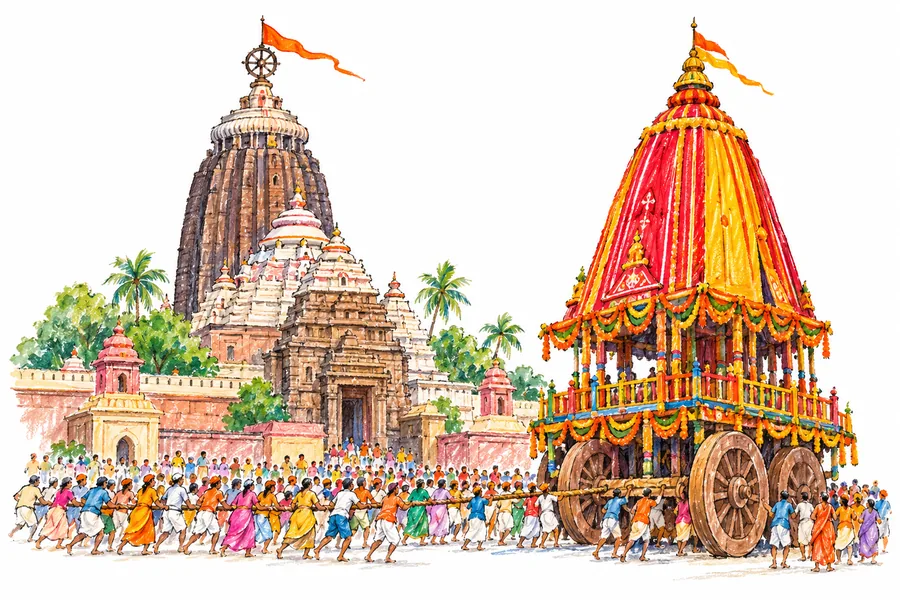
At each of the four temples, devotees undergo specific rituals and darshan practices designed to facilitate maximum spiritual benefit and divine blessing. At Badrinath, the primary ritual involves darshan of the deity in meditation posture, circumambulation of the shrine, and ritual bathing in the sacred Alakananda River believed to have purifying properties. The temple priests perform daily Aarti ceremonies that can be attended by pilgrims. At Dwarka, devotees circumambulate the seven-story temple, participate in the evening Aarti, and make offerings of flowers and incense to Lord Krishna. The temple provides facilities for ritualistic bathing and meditation. At Puri, the famous Jagannath Ratha Yatra during June represents the most significant ritual, where millions of devotees pull the sacred chariot in a carnival celebrating divine incarnation. Regular daily rituals include Mangala Aarti and evening Aarti ceremonies. At Rameswaram, devotees ritually bathe in the sacred tanks before approaching the deity, perform circumambulation, and participate in daily Aarti ceremonies. Special pujas honoring Lord Rama's devotion and duty can be arranged at each temple. The practice of making offerings of flowers, incense, coconut, and monetary donations is common across all four temples, with Prasad distributed to all devotees. The spiritual atmosphere at each temple guides sincere pilgrims toward deeper meditation and communion with the divine presence.
Supreme Blessings and Spiritual Liberation Through Char Dham Completion
Completing the Char Dham yatra is considered the fulfillment of a Hindu's ultimate spiritual obligation and dharmic duty, granting the pilgrim complete absolution and direct access to moksha or liberation. The pilgrimage encompasses all dimensions of spiritual development: the meditative transcendence of Badrinath representing union with infinite consciousness; the divine action and wisdom of Dwarka representing the integration of spirituality with dynamic engagement; the compassionate inclusivity of Puri representing universal love and acceptance; and the devoted surrender of Rameswaram representing complete trust in divine providence. Pilgrims undertaking the Char Dham yatra with sincere faith and proper intention experience profound spiritual transformation, often reporting mystical experiences, sudden clarity about life purpose, and extraordinary synchronicities that confirm divine presence and guidance. The cumulative spiritual power of millions of devotees who have completed this sacred journey across millennia, combined with the divine grace manifesting through these four supreme abodes, creates a momentum that directly accelerates spiritual evolution. Completing the Char Dham yatra is believed to erase accumulated karmic debts and prepare the soul for ultimate merger with divine consciousness in future lifetimes. The pilgrimage itself, despite its physical challenges, is considered the most auspicious use of one's resources and time, with the difficulty and hardship serving as purification of negative karmic patterns. Many sincere pilgrims report that completing the Char Dham yatra marked a turning point in their spiritual journey, granting them new perspectives on life, liberation from psychological limitations, and direct connection with the omnipresent divine consciousness. For devout Hindu practitioners, undertaking the Char Dham yatra represents the pinnacle of spiritual practice and the manifestation of sincere desire for union with the infinite, resulting in blessings that extend across multiple lifetimes and dimensions of existence.