 Healers World








































 Updated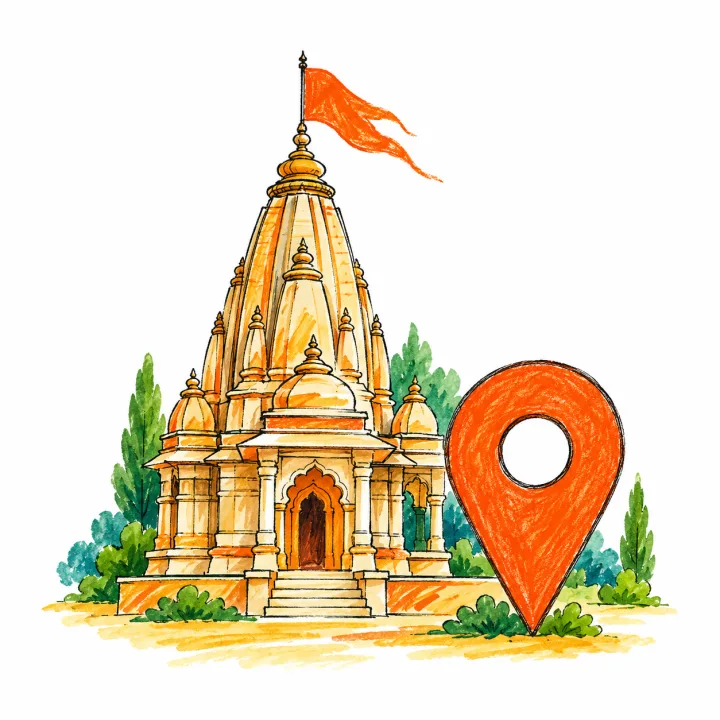
 quick answer
The Meenakshi Amman temple of Madurai is one of India's greatest living sacred masterpieces, where the fish-eyed goddess rules as queen and Shiva dwells as her husband — a divine love story written in stone across fourteen sky-reaching gopurams.
- Topic
- Temple Story
- Reading time
- 9 minutes
- Written by
- Healers World Studio
- Last updated
- 12 August 2026
The Myth and Origin of Meenakshi Amman Temple
The story of Meenakshi is one of Hinduism's great divine romance narratives. The Pandya king Malayadwaja Pandian and his queen Kanchanamala prayed for a son who would succeed him on the throne of Madurai. Their prayers were answered not with a son but with a daughter born with three breasts — a child who was radiant beyond ordinary human description. Voices from the heavens told the king to raise her as he would raise a prince and crown her ruler, and that her third breast would disappear when she met the man destined to be her husband. Meenakshi grew up to be a fierce and brilliant warrior-queen who conquered the known world. When her armies reached Mount Kailash, Lord Shiva himself came to meet her — and the moment their eyes met, her third breast disappeared, signaling that here was her divine consort. Shiva descended to Madurai in the form of Sundareswarar — the beautiful lord — and the divine wedding was celebrated in Madurai with all the gods attending. This wedding, the Meenakshi Tirukalyanam, is re-enacted every year during the Chithirai festival and is understood not merely as a mythological event but as an ongoing cosmic reality: the goddess rules Madurai, and her husband dwells with her on her own terms, in her city, in her temple. Meenakshi gives her name to the fish — the symbol of Madurai and of the Pandya dynasty — whose large, clear eyes hold an ancient association with feminine beauty, divine sight, and the grace that draws all living things toward the light.
Historical Significance and Architecture
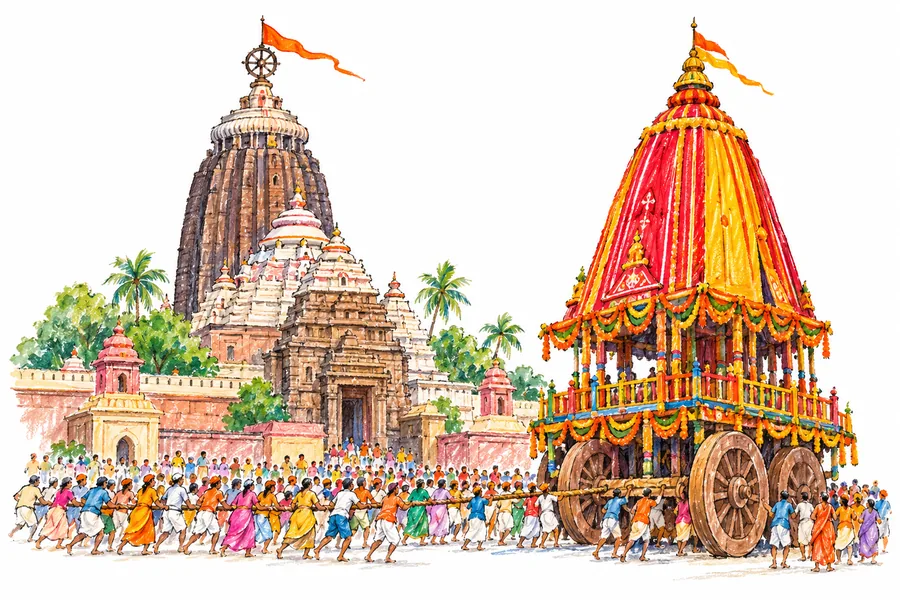
The Meenakshi Amman temple complex is one of the largest functioning temple complexes in India, covering approximately 45 acres in the heart of Madurai city in Tamil Nadu. Madurai has been continuously inhabited for over 2,500 years and is considered one of the oldest cities in South Asia, making the Meenakshi temple not just a religious site but a living testament to one of the world's longest unbroken urban civilizations. The temple's fourteen gopurams (towered gateways) range in height from 45 to 52 meters, each covered in thousands of brilliantly painted stucco figures of gods, demons, celestial beings, and mythological scenes — repainted in vivid colors at regular intervals, giving the towers an intensity that photographs can never fully capture. The complex contains the main Meenakshi Devi sanctum and the separate Sundareswarar (Shiva) sanctum, connected by the celebrated Aayiramkaal Mandapam — the Hall of a Thousand Pillars, each column carrying individually carved sculptural programs of remarkable variety. The Porthamarai Kulam, the Golden Lotus Tank, occupies the center of the complex. This temple is the supreme example of Dravidian temple architecture, built and expanded predominantly during the Nayak dynasty of the sixteenth and seventeenth centuries by rulers who devoted the wealth of their kingdom to its grandeur. The temple employs thousands of priests, musicians, craftsmen, and maintenance workers and operates as a fully living institution with daily rituals running continuously throughout the year.
How to Reach Meenakshi Amman and Best Time to Visit
Madurai is well connected to the rest of India and is easily accessible from multiple directions. Madurai Airport receives flights from Chennai, Bengaluru, Mumbai, Delhi, Hyderabad, and several other cities, including some international connections. The airport is about 12 kilometers from the temple. Madurai Junction is a major railway hub with excellent connections to Chennai, Bengaluru, Kochi, Coimbatore, and cities across Tamil Nadu and Kerala. The railway station is about 1.5 kilometers from the temple's main gopuram and is reachable on foot or by auto-rickshaw. The city has extensive bus connections to the rest of Tamil Nadu and Kerala via the main CMBT bus stand. The temple is in the center of Madurai city and is accessible by auto-rickshaw, taxi, or on foot from all major hotels and commercial areas. The best time to visit is between October and March for relatively cooler weather. The Chithirai festival (April–May) celebrating the divine wedding of Meenakshi and Sundareswarar is the grandest annual event, drawing over a million participants and lasting several weeks with daily processions. The Float Festival in the Tamil month of Thai (January–February) is also visually magnificent, when the deities are taken out on decorated rafts across the Porthamarai Kulam in candlelight.
Rituals and Darshan Protocol
The Meenakshi Amman temple follows a precise and ancient schedule of sevas from 5:00 a.m. to 9:30 p.m. The day begins with the Thiruvanandal seva — the opening of the inner sanctum — and includes rituals of bathing the deities, adorning them, and the formal offering of meals multiple times across the day. The evening procession is one of the defining moments of Madurai's daily life: the deity is taken through the temple corridors accompanied by Nadaswaram (the long South Indian wind instrument whose sound carries extraordinary spiritual charge), drums, Vedic chanting, and the strong fragrance of flowers, camphor, and incense. Devotees queue for darshan in gender-separated lines; the Meenakshi sanctum and the Sundareswarar sanctum each have their own entry. The temple is extremely crowded on Fridays (Devi's day) and during all festival occasions. Special tickets for closer darshan and specific sevas can be purchased at the temple trust counter, including archana, abhisheka, and alankara darshan. Offerings typically include kumkum (vermilion), yellow turmeric, jasmine garlands, and coconuts presented to the goddess. One of the most beloved temple practices is the nightly procession of Sundareswarar to Meenakshi's bedchamber — a nightly re-enactment of the divine couple's union that has continued unbroken for centuries and is attended by devotees who line the corridor in hushed reverence.
Spiritual Experience and Blessings Sought
Unlike many temples where one comes in quiet reverence toward a distant deity, Meenakshi Amman Madurai pulses with a particular quality of energy: this is the goddess's house, her city, her kingdom, and she knows it. Devotees who enter the temple — especially through the towering eastern gopuram at dusk, when the figures on the tower are lit by orange light and the nadaswaram rings out across the evening — describe being immediately overwhelmed, not by peace alone but by power. The sheer scale of the complex, the smell of flowers and ghee lamps, the sound of constant chanting, and the press of humanity all contribute to an experience that leaves many pilgrims in tears without knowing exactly why. The blessings most sought at Meenakshi Amman include happy and loving marriages (the divine wedding makes this the most auspicious site in South India for couples seeking marital blessings), fertility and the grace of children, success and confidence for women navigating difficult circumstances, recovery from illness, and the courage to claim one's full power without apology. Meenakshi is not a goddess who demands passive submission — she is a ruler who grants her devotees something of her own nature: valor, beauty, intelligence, and the deep assurance that love and strength are not opposites. Devotees who sit quietly in the Porthamarai Kulam courtyard after the evening procession and watch the lamplight reflect on the water describe it as one of the most serene experiences available in any Indian temple — the fierce power stilled into an encompassing grace that leaves one held.