 Healers World












































 Updated
 quick answer
Master the 9-day Navratri puja vidhi, honor all nine forms of Goddess Durga, and perform daily rituals for divine protection and success.
- Topic
- Ritual Guide
- Reading time
- 12 minutes
- Written by
- Healers World Studio
- Last updated
- 12 August 2026
Purpose and Spiritual Significance
Navratri (nine nights) celebrates the eternal divine feminine principle represented by Goddess Durga and her nine forms (Navadurga). Each night honors a different aspect of the Goddess: Shailaputri (daughter of mountains), Brahmacharini (ascetic), Chandraghanta (bell-shaped mark on forehead), Koosmanda (cosmic creator), Skandamata (mother of Kartikeya), Katyayani (warrior goddess), Kaalratri (dark night), Mahagauri (supreme white goddess), and Siddhidatri (giver of accomplishments). This festival celebrates the triumph of good over evil, light over darkness, and the divine feminine over all obstacles. Navratri occurs twice yearly (Chaitra Navratri in spring, Sharad Navratri in autumn), with Sharad Navratri being more widely celebrated across India. Performing daily puja during these nine days invokes the Goddess's blessings for strength, wisdom, protection from negativity, fulfillment of desires, and spiritual elevation.
Materials Needed and Preparation
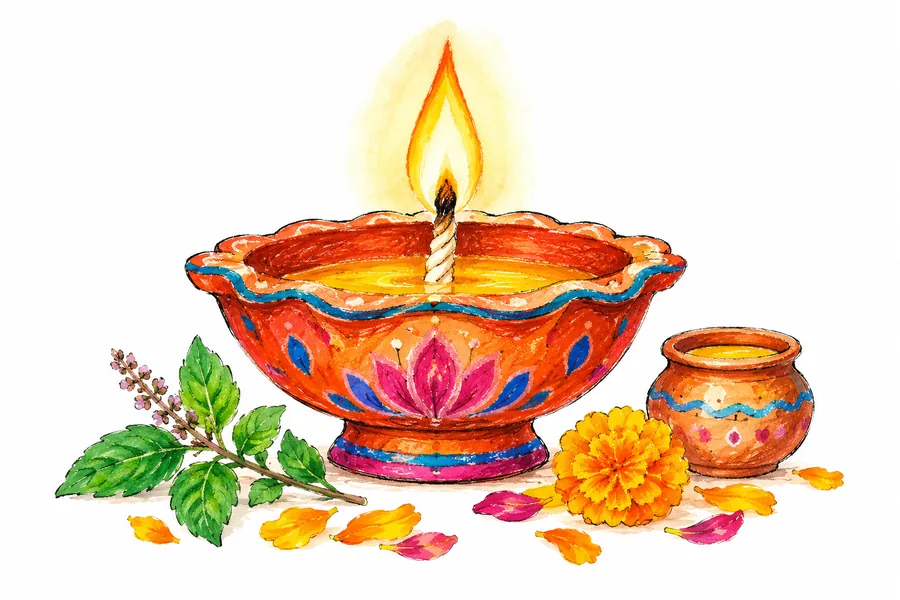
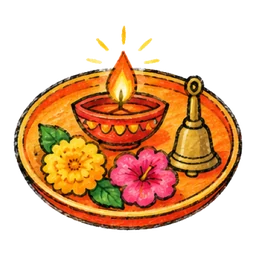
Essential samagri for entire Navratri period: Durga idol or image (preferably showing all nine forms), red flowers (hibiscus, marigold, roses), coconut, banana leaves, turmeric powder, vermillion, camphor, incense sticks, oil lamps (ghee-based diyas), bell, water vessel, sandalwood paste, honey, jaggery, ghee, sugar, sesame seeds, rice flour, nine different types of grains for germination (wheat, barley, moong, arhar, chickpea, lentil, cumin, fenugreek, mustard), and nine different fruits corresponding to each day. Prepare a clean north or east-facing altar space decorated with rangoli and marigold garlands. Set up earthen pots to germinate the grains before Navratri begins (soak grains 2 days prior). Prepare simple prasad ingredients like kheer, halwa, and puris. Gather fresh flowers daily. Create a nine-day schedule noting each day's Devi form, color, and relevant mantras. Invite family members to participate daily. Ensure everyone showers and wears clean clothes before the puja each day.
Step-by-Step Puja Procedure
On Day 1 (Shailaputri - Pratipada): Light the ghee lamps and ring the bell. Place the Durga idol on the altar facing east. Perform abhishek (bathing) with milk mixed with water while chanting the day's mantra. Apply turmeric and vermillion. Offer red flowers, then germinated grains (jwar) in a small pot as the main offering. On Days 2-9: Follow the same ritual structure each morning or evening. Sprinkle turmeric-water around the altar. Ring the bell to invoke presence. Bow to the Goddess three times. Perform abhishek with water and milk. Apply turmeric and vermillion. Offer flowers of the day's associated color (red for Shailaputri and Katyayani, white for Mahagauri, etc.). Present the corresponding grain and fruit offering. Offer incense and light lamps. Recite the day's specific mantra and stotra (hymn) 11 or 21 times. Perform aarti by waving the ghee lamp clockwise before the idol. After each day's puja, consume the blessed prasad (kheer and fruit). Maintain a daily ritual schedule and ensure consistency. On the ninth day (Siddhidatri), perform extended aarti with all family members participating in song and prayer.
Mantras, Prayers and Offerings
Day 1 (Shailaputri): Om Devi Shailaputryai Namah - Offer jwar (wheat sprouts). Day 2 (Brahmacharini): Om Devi Brahmacharinyai Namah - Offer barley sprouts. Day 3 (Chandraghanta): Om Devi Chandraghantyai Namah - Offer moong sprouts. Day 4 (Koosmanda): Om Devi Kusmanday Namah - Offer arhar sprouts. Day 5 (Skandamata): Om Devi Skandamatyai Namah - Offer chickpea sprouts. Day 6 (Katyayani): Om Devi Katyayanyai Namah - Offer lentil sprouts. Day 7 (Kaalratri): Om Devi Kalaratryai Namah - Offer cumin sprouts. Day 8 (Mahagauri): Om Devi Mahagauryai Namah - Offer fenugreek sprouts. Day 9 (Siddhidatri): Om Devi Siddhidatryai Namah - Offer mustard sprouts. Universal mantra for all days: Devi Mahatmyam Vidmahe, Mahakali Dheemahi, Tanno Durga Prachodayat (recognize the Goddess's greatness, meditate on the Great Kali, guide us toward righteousness). During each offering, say: Shakti Swarupini Devi, Kripa Karo Bhakton Par (Divine Mother in form of Energy, bless your devotees). Conclude daily puja with: Om Shanti Shanti Shanti (peace).
Post-Puja Prasad, Restrictions and Fasting
Consume the blessed grain sprouts (jwar) and kheer/prasad as sacred food after each day's puja. Many devotees maintain fasting during Navratri; if fasting, consume only fruits, milk, and sattvic (pure) foods like root vegetables, avoiding grains, spices, and non-vegetarian foods. If not fasting, avoid meat, fish, eggs, and alcohol throughout the nine days. Maintain cleanliness and purity in the puja space and your home environment. Do not allow the lamps to extinguish before completing the daily aarti. On Day 10 (Vijayadashami or Dussehra), perform a concluding puja and consider distributing the germinated grain sprouts to devotees as blessed food. This marks the victory of good over evil and the successful completion of Navratri. Many devotees also perform the Durga Saptashati (reading of seven hundred verses of Durga Mahatmya) during Navratri for maximum spiritual benefit. Schedule daily puja ideally in early morning or during evening hours (preferably before sunset). The nine days of Sharad Navratri typically fall in September-October, determined by lunar calendar. Consistency in daily practice is more important than elaborate rituals; sincere devotion yields maximum benefits.
 Ritual Guide