 Healers World










































 Updated
 quick answer
Puja isn't superstition—it's the householder's yoga, aligning your home with cosmic law. Learn why daily puja anchors your dharma.
- Topic
- Ritual Guide
- Reading time
- 9 minutes
- Written by
- Healers World Studio
- Last updated
- 12 August 2026
The Cosmic Purpose of Daily Puja
In Hindu philosophy, the universe is not a dead mechanism but a living consciousness that is constantly flowing, creating, sustaining, and transforming all existence. Puja—worship, offering, and communion—is the householder's method of aligning themselves with this cosmic flow. To understand puja's purpose, you must first grasp a fundamental Hindu teaching: the universe is sacred. Every element—earth, water, fire, air, space—every creature, every force of nature is an expression of the Divine. When you perform puja, you are not asking an absent God to grant favors; you are establishing communion with the sacred reality that pervades all existence. The Vedas teach that creation itself is a cosmic sacrifice (yajna): the Divine continuously offers itself, manifesting as all forms while remaining eternally unchanged. In response, humanity's role is to recognize this gift and offer back gratitude, service, and conscious participation in maintaining cosmic order (rta). Daily puja is how the householder fulfills this role. It is not merely personal prayer; it is your participation in the cosmic rhythm. Just as the ocean has tides, the earth has seasons, and the body has rhythms of sleep and waking, the universe has rhythms of energy and consciousness. By performing puja at consistent times—especially at dawn when the veil between the physical and subtle realms is thin—you tune yourself to cosmic frequencies. The Sanskrit word 'puja' comes from a root meaning to bow down, to honor, to serve. It is an acknowledgment of a reality greater than your individual self. When you bow before the deity in puja, you are not degrading yourself; you are liberating yourself from the prison of ego-illusion that insists you are separate from and superior to the whole. Puja dissolves this illusion and returns you to your true nature: a conscious part of the unified whole, capable of receiving and offering divine energy.
How Puja Aligns Your Home with Divinity
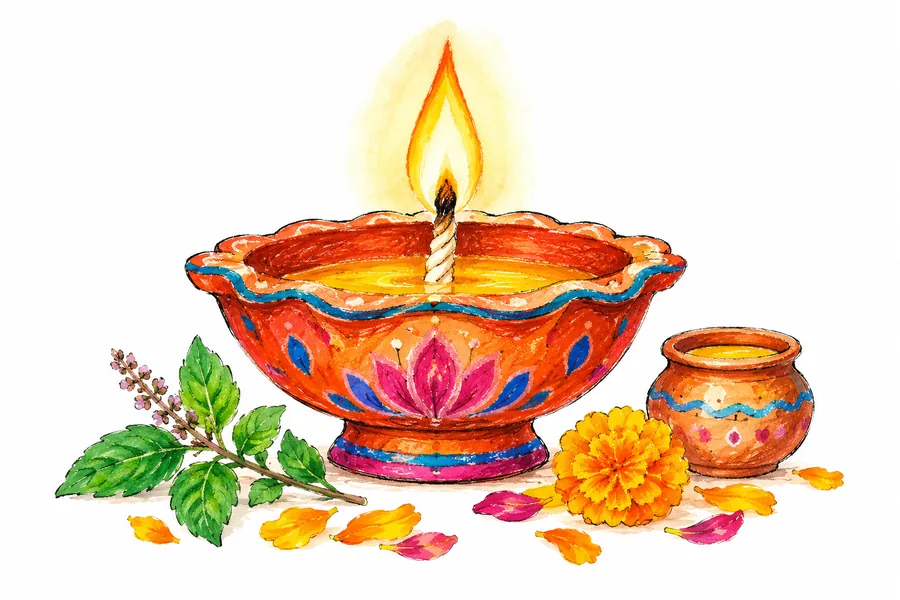
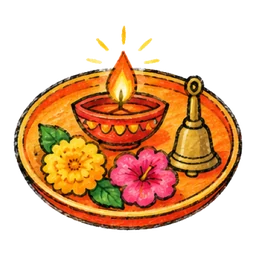
In Hindu tradition, the home is not merely a physical shelter; it is a sacred space where the boundaries between the material and spiritual worlds become permeable. When you establish a puja altar in your home and perform daily worship, you sanctify that space, transforming it into a temple. The Sanskrit word for home—griha—shares a root with words meaning to hold and to gather; the home is the place where the family—the basic unit of human civilization—gathers, learns, and grows. To establish a sacred altar in your home is to declare that spiritual practice is not separate from daily life but is woven into its very fabric. When you light the lamp (diya) during puja, you are kindling not merely a physical flame but the inner flame of consciousness in your home. This light repels not only physical darkness but also the darkness of ignorance, fear, and negativity. The Upanishads teach that the light of Brahman shines in all hearts; the puja lamp is a symbol of awakening to this inner light. When you offer flowers, fruits, and water, you are performing the karma of gratitude, acknowledging that all sustenance comes from the Divine. When you sound the bell (ghanta), you create vibrations that purify the energetic field of your home; ancient Hindu temples design their architecture so that the ringing of the bell reverberates through the sanctum, awakening the consciousness of all who hear it. When you offer incense (agarbatti), its smoke carries your prayers and intentions to the subtle realms, and its fragrance transforms the atmosphere of your home into one of peace and sanctity. Over time, as you perform puja daily in the same space with sincere intention, that space becomes saturated with your devotion. Guests entering your home will feel a palpable peace, a subtle lightness in the atmosphere. This is not imagination; it is the result of consistent spiritual practice raising the vibrational frequency of the physical space. Your home becomes not just a place where your body lives, but a place where your soul breathes, where your family's spiritual practice is grounded, where the Divine feels welcome and present.
The Structure of Puja: Every Step Has Meaning
Traditional puja follows a structure that has been refined over millennia, with each step carrying profound symbolic and practical meaning. The sequence typically begins with purification: washing your hands and feet, and if possible, bathing before puja. This is not superstition but a practical recognition that purity of body supports purity of mind. As you wash, you contemplate the removal of impurities, preparing your consciousness for communion with the Divine. Next comes the invocation (Avahanam), where you call upon the deity to be present. This invocation is not magical thinking but a focusing of intention: you are directing your consciousness toward the Divine presence both outside you and within you. Many puja rituals begin with pranama—bowing—an act that physically symbolizes the surrender of ego. When you bow to the ground, you are saying: 'I am nothing; You are everything.' The altar is then adorned: you may place flowers, arrange offerings of fruits or prepared foods, and light the lamp and incense. These offerings have specific meanings. Flowers represent beauty, fragrance, and the brief season of blooming—they remind us of the impermanence of all things and the beauty of the present moment. Fruits represent sweetness, nourishment, and the fruits of right action. Water represents purity, flow, and life itself. The lamp represents the light of consciousness. You may then recite prayers, mantras, or sacred texts—the Bhagavad Gita, the Devi Mahatmya, or hymns specific to your chosen deity. This recitation anchors your mind and connects you to a vast lineage of devotees across time. Meditation or silent contemplation may follow, where you simply sit in the presence of the deity, allowing your mind to settle and your heart to open. Finally, you perform Arati—a circular movement of the lit lamp before the deity—and distribute Prasad (sanctified food offerings) to all present. By eating the prasad, you internalize the blessing; you are not merely receiving food but ingesting the energy of your own worship transformed by divine grace. Each step is both functional and deeply symbolic, creating a complete yoga—a union—between your individual consciousness and the universal consciousness.
Puja as the Householder's Spiritual Practice
For most of humanity, life is lived not in monasteries or ashrams but in homes, with families and worldly responsibilities. The Hindu tradition recognizes this and offers a beautiful teaching: the householder's path is not inferior to the renunciate's path; it is a different, equally valid expression of spirituality. The householder's role is to maintain dharma in their family, contribute to society, earn their livelihood ethically, and ultimately, realize that this very engagement in life can become a vehicle for spiritual liberation. Puja is the householder's primary spiritual practice. Unlike meditation, which requires extensive training and long hours of silence, puja is accessible to everyone regardless of education or ability. A child can perform puja; an elderly person can perform it; a person of humble circumstances can perform it with minimal resources. All that is required is sincere intention and consistent practice. The Bhagavad Gita teaches that work done with the right intention—without clinging to results, as an offering to the Divine—becomes yoga (union). This is exactly what puja embodies. When you prepare for puja, you are serving your family, your deity, and ultimately the Divine. When you light the lamp, you are offering your consciousness. When you recite prayers, you are directing your mind toward truth. When you make offerings, you are practicing generosity and gratitude. The beauty of puja is that it requires you to be fully present. Unlike prayer, which can be done hastily with the mind wandering, puja demands your complete attention: you must light the lamp properly, arrange the offerings carefully, recite the prayers accurately. This focused presence is meditation in action. Through puja, the householder cultivates devotion (bhakti), discipline (sadhana), and a direct personal relationship with the Divine. Over time, puja becomes not a task you perform but a joy you anticipate, not something required of you but something your heart yearns for. This is when puja transforms from a ritual into a living experience of connection with the Divine.
Creating Your Own Meaningful Puja at Home
To begin a puja practice at home, you do not need extensive knowledge or elaborate equipment. The simplest puja can be performed with a lamp, flowers, water, and sincere intention. If you do not have a separate altar space, even a small shelf or table can be consecrated for worship. You might place an image, idol, or symbol of your chosen deity there—whether it is Ram, Krishna, Shiva, Durga, Ganesha, or a universal symbol like Om. Then, at a consistent time each day—preferably early morning—sit before this space, calm your mind, and begin. Light a lamp (diya or candle), offer flowers, water, and perhaps fruit or prepared sweets if you have them. You can recite any prayers or mantras you know, or simply sit in silence, focusing your heart on the Divine. If you know Sanskrit, beautiful traditional puja hymns exist for every deity; if not, you can perform puja in your own language or simply speak from your heart. The key is consistency and sincerity. Begin with just 10 or 15 minutes daily. As the practice becomes natural, you may extend the time if you wish. Do not make puja another burden; make it a gift you give yourself and an offering you make to the Divine. You may find that puja transforms your day: the peace, clarity, and devotion you cultivate at the altar extend into all your activities. Conflicts with family members become less intense; your reactions to stress become more measured; your perspective on life problems becomes broader and more compassionate. This is the natural result of aligning yourself daily with the cosmic law of dharma. If you have specific deities that resonate with you—whether Hanuman (devotion and courage), Saraswati (knowledge and wisdom), Lakshmi (prosperity and abundance), or Shiva (transformation and meditation)—you can focus your puja on one while honoring all. The deity you choose is not arbitrary; Hindu philosophy teaches that the Divine has infinite aspects, and different aspects appeal to different temperaments and stages of life. By choosing a deity, you are choosing an aspect of the Divine that you wish to cultivate within yourself. Finally, know that puja is not transactional. You are not performing it to extract favors from God or to obligate the Divine to fulfill your wishes. Rather, you are expressing gratitude for existence itself, affirming your allegiance to dharma, and inviting the Divine to flow through your actions and consciousness. When done with this understanding, puja becomes not a petitionary prayer but a celebration, not a request but a gift, not a means to an end but an end in itself.
 Ritual Guide