 Healers World









































 Updated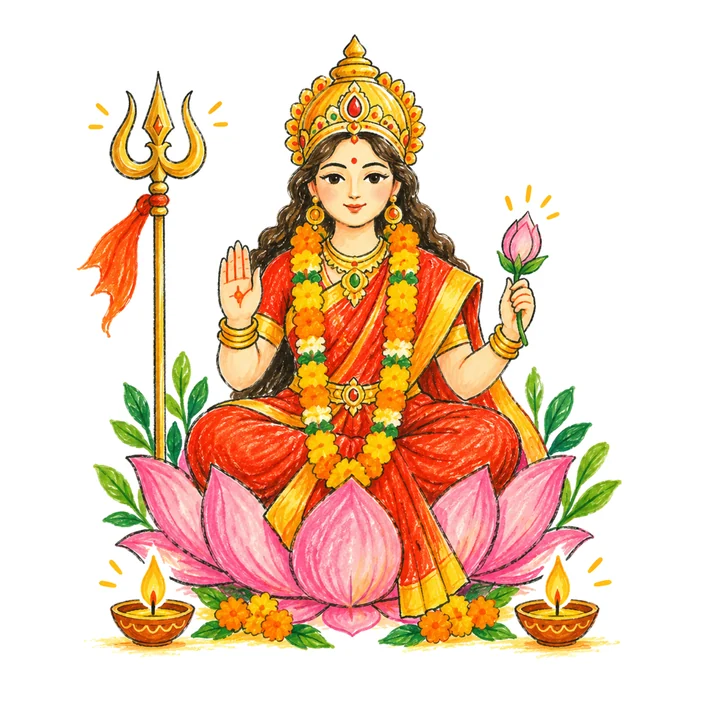
 quick answer
Diwali spans five sacred days, each celebrating different aspects of divine victory. From Dhanteras gold to Bhai Dooj bonds, discover the ritual and spiritual significance of each day.
- Topic
- Festival
- Reading time
- 10 minutes
- Written by
- Healers World Studio
- Last updated
- 12 August 2026
The Mythology and Divine Victory Behind Diwali's Five Days
Diwali (Deepavali — row of lamps) is celebrated over five days during the Krishna Paksha Amavasya (new moon) of Kartik month (October-November), commemorating Lord Rama's return from 14 years of exile and his ultimate victory over the demon Ravana. However, the deeper mythology encompasses five distinct divine victories: Day 1 (Dhanteras) celebrates the birth of Lakshmi, goddess of wealth and prosperity, and the churning of the cosmic ocean; Day 2 (Chhoti Diwali) honors Lord Krishna's victory over the demon Narakasura; Day 3 (Diwali proper) marks Rama's triumphant return to Ayodhya after defeating Ravana, symbolizing light's victory over darkness and righteousness over evil; Day 4 (Govardhan Puja) celebrates Krishna lifting the Govardhan mountain, demonstrating divine power protecting his devotees; Day 5 (Bhai Dooj) honors the sacred bond between brothers and sisters, celebrating Yama and Yamuna's divine sibling love. Together, these five days represent the completion of a cosmic cycle where righteousness is re-established, abundance is restored, relationships are honored, and the universe is renewed in light and consciousness.
Spiritual Significance: Light Vanquishing Darkness and Karma Purification
Diwali's profound spiritual significance lies in its representation of consciousness vanquishing ignorance, illumination dispelling darkness, and good overcoming evil — all operating both externally in the world and internally within the human mind. Each day's observance purifies specific karmic layers and activates different chakras. The five-day sequence is designed to fully transform consciousness: Dhanteras activates prosperity consciousness and abundance awareness; Chhoti Diwali removes the demonic tendencies within (ego, greed, envy); Diwali proper (main day) illuminates the divine light within, awakening intuition and spiritual wisdom; Govardhan Puja shifts consciousness from dependence on external circumstances to trust in divine protection; Bhai Dooj heals relationships and restores harmony. Collectively, Diwali is the cosmic celebration affirming that light is eternal and darkness is temporary, that good will ultimately triumph, and that every sincere seeker will be victorious over their inner demons. The practice of lighting oil lamps is not merely ceremonial — each flame represents the individual consciousness lighting up the cosmos, multiplied by millions of devotees worldwide, creating a global prayer for peace and enlightenment.
How to Observe All Five Days of Diwali: Complete Ritual Guide
DAY 1 (DHANTERAS): Begin by cleaning your home thoroughly (symbolizing removal of negativity). Purchase gold, silver, or new utensils with gratitude, recognizing Lakshmi's presence in material prosperity. Create a Lakshmi altar with her image, light lamps, offer flowers, incense, sweets, and chant 'Om Shreem Mahalakshmyai Namaha.' Day 2 (CHHOTI DIWALI): Light lamps before sunset, perform a fire ritual (havan) or light candles, symbolizing the destruction of negativity. Fast on simple food or observe dietary restraint. Meditate on releasing fear and embracing courage. Day 3 (DIWALI PROPER): This is the full celebration — thorough cleaning, new clothes, ritual oil bath (Urad-oil bath is traditional), creating elaborate Lakshmi altar, lighting hundreds of oil lamps throughout the home, performing Lakshmi Puja with offerings of flowers, sweets, incense, and prayers. Burst fireworks (or light sparklers) symbolizing the joy of victory. Exchange gifts with family and friends. Distribute sweets and food to all, embodying generosity. Day 4 (GOVARDHAN PUJA): Create a small mud mountain (Govardhan) in your puja space, encircle it with cow dung or turmeric paste, offer food and prayers, symbolizing complete surrender to divine protection. Day 5 (BHAI DOOJ): Sisters apply tilak (sacred mark) on brothers' foreheads, praying for their protection and success. Exchange gifts and sweets, reinforcing sibling bonds. If no siblings, honor all brother-sister relationships in your life.
Regional Diwali Celebrations Across India's Diverse Traditions
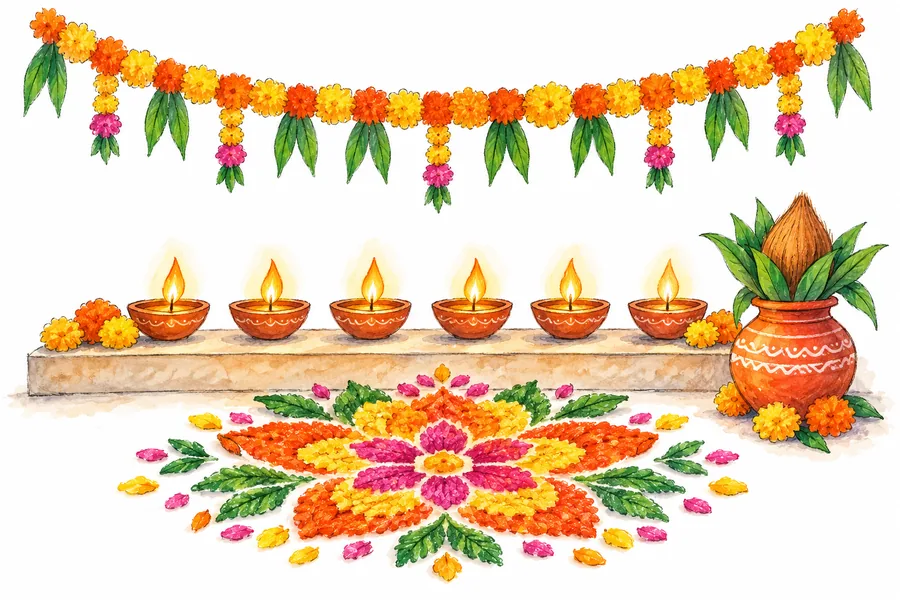
In North India, particularly Delhi, Varanasi, and Ayodhya, Diwali is celebrated as Rama's return, with massive temple celebrations, rangoli (colorful floor art) competitions, and spectacular fireworks displays. In Gujarat, Diwali marks the start of the new year, celebrated with elaborate house decorations, family gatherings, and the trading season opening. In Maharashtra, the celebration emphasizes Govardhan Puja with cow worship and agricultural blessings. In Bengal and Assam, Diwali celebrates Kali Puja with unique rituals honoring the fierce mother goddess. In South India (Tamil Nadu, Karnataka, Andhra Pradesh), Diwali is celebrated as Deepavali with temple rituals, oil bath traditions, and emphasis on defeating the demon Narakasura. Tamil Nadu maintains ancient traditions of lighting oil lamps at the Arunachaleswara temple and performing special ceremonies. In Kerala, Diwali lighting and community celebrations reflect the unique Kerala Hindu tradition. In Odisha, Diwali is celebrated with visits to Jagannath temple and community gatherings. In Punjab, Sikhs celebrate Bandi Chhor Divas (commemorating Guru Hargobind's release) on the same day, with temple ceremonies and community feasts. Across all regions, the common threads are lighting lamps, wearing new clothes, exchanging gifts, distributing sweets, and family gatherings.
Astrological Alignment and the New Moon Gateway of Diwali
Diwali occurs on the Kartik Krishna Amavasya (new moon) when the Moon aligns with the Sun in Libra (Tula), creating a unique gateway where new beginnings are most powerful. The new moon represents the void state — a period of potential where all possibilities exist before manifestation. Astrologically, this is the optimal time to set intentions for the coming months and years, as the new lunar cycle amplifies new beginnings. The Kartik month itself is ruled by Jupiter (wisdom and expansion), making Diwali exceptionally potent for spiritual and material growth. In one's natal chart, the Amavasya tithi native possesses natural affinity with new beginnings and transformation. Individuals with weak Jupiter, Moon, or Venus in their natal chart receive exceptional benefit from Diwali observances, as the day's energy activates these planets' positive potential. The five days of Diwali are believed to correspond with the five elemental energies (earth, water, fire, air, ether), making the full observance a complete energetic cleansing and recalibration. Vedic astrology stipulates that rituals and intentions set during Diwali's Amavasya hour (the precise moment of new moon) manifest with extraordinary power and speed. Advanced practitioners use precise astronomical calculations to determine the exact Amavasya moment, performing their most important rituals during this window for maximum cosmic resonance and blessing multiplication.
 Festival