 Healers World




































 Updated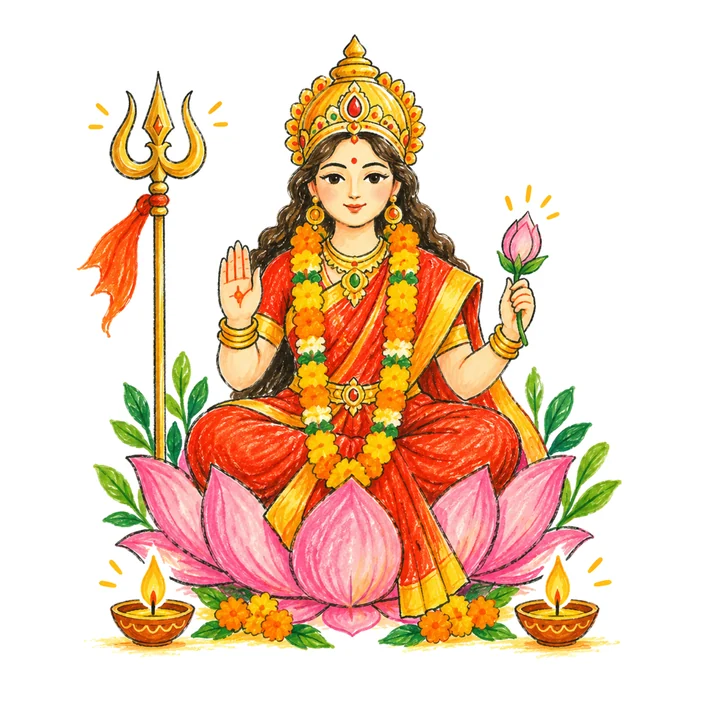
 quick answer
Of all the full moons in the Hindu calendar, Sharad Purnima is considered the most potent — the night when the moon is closest to the earth, Lakshmi descends asking who is awake, and a bowl of kheer left in moonlight becomes medicine for the body and the soul.
- Topic
- Festival
- Reading time
- 8 minutes
- Written by
- Healers World Studio
- Last updated
- 12 August 2026
The Myth and Story of Kojagari
The central myth of Sharad Purnima comes from the Skanda Purana and the traditions of Lakshmi worship. On this night, Goddess Lakshmi is said to descend from her celestial abode and walk the earth, peering into homes and asking the question Kah jagarti — who is awake? This is the origin of the festival's alternative name, Kojagara or Kojagari, derived from the Sanskrit ka + jagarti (who + is awake). Only those who are awake and in a state of devotional alertness receive her blessings. The divine walk of Lakshmi on this night is not arbitrary — it is the moment in the Vedic cosmic cycle when the harvest has been gathered, the monsoon rains have ended, the air is crystal clear, and the moon hangs so full and so close that it illuminates the earth with unusual brightness. In the mythology, Lakshmi is described as wearing white and carrying a pot of nectar (amrita), which she distributes to the faithful who remain awake in her honor. In some versions of the story, she is accompanied by Kubera (the god of wealth) and together they assess which households have demonstrated the spiritual qualities — gratitude, cleanliness, generosity — that create the ground for prosperity to take root. The all-night vigil (jaagran) on Kojagari is therefore understood as an act of spiritual readiness, not merely wakefulness.
Spiritual Significance of Sharad Purnima
In the Vedic seasonal framework, Sharad (autumn) is considered the most sattvic season — the season of clarity, balance, and illumination. The monsoon has purified the earth, the heat of summer has passed, and the light of the moon on a clear autumn night is described in texts as carrying unique healing properties. Sharad Purnima falls when this clarity is at its absolute peak: the moon is at its brightest and, in many years, at its physical closest to the earth. The Vedic tradition recognizes what modern science has confirmed — that moonlight on Sharad Purnima contains a special quality that was attributed to amrita (nectar), the divine substance of immortality. The practice of leaving kheer (rice cooked in milk and sweetened with sugar) in the moonlight overnight is a direct application of this understanding: the kheer acts as a receiver of the moon's sattvic energy, and consuming it the next morning is considered highly beneficial for the lungs and respiratory system. This is why Sharad Purnima rituals are particularly recommended in Ayurvedic texts for people with Vata and Pitta imbalances — the cool, calm, sweet energy of the autumn full moon directly counterbalances the heat and dryness of those doshas. Staying awake through this night in prayer and devotional song is an act of aligning oneself with the sattvic frequency that the moon broadcasts most powerfully on this one night.
How to Observe Sharad Purnima and the Kheer Ritual
The primary ritual of Sharad Purnima centers on three acts: the preparation of kheer, the night vigil, and the early morning worship. Kheer is made in the afternoon using whole rice, full-fat milk, sugar (or mishri — rock sugar), saffron, and cardamom, cooked slowly until it thickens. It is placed in a clean earthen or silver pot and left on the open terrace or in a courtyard where it will receive direct moonlight from the moment the moon rises to just before dawn. No covering is placed over it. The kheer is offered to Lakshmi during the evening puja, which includes lighting a ghee lamp, offering lotus flowers or white flowers, turmeric, kumkum, and reciting the Lakshmi Ashtakam or the Shri Sukta. Games of cards and dice are traditionally played through the night — not for gambling but as a form of Lakshmi's play, and also because keeping the household alert and joyful through the night fulfills the Kojagari tradition. The kheer is brought inside just before sunrise, before the first bird sounds, offered once more to the deity with incense, and then distributed to all family members as prasad. Couples traditionally share the kheer together as a blessing on their relationship. Elders recommend sitting under the moonlight for at least thirty minutes during the night to absorb its healing properties directly.
Regional Variations and Celebrations
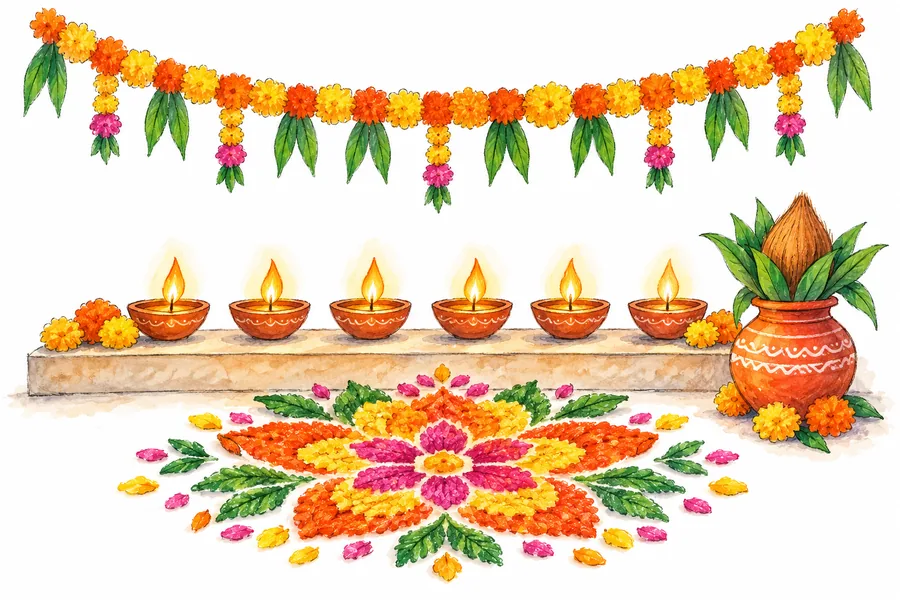
In Bengal and Odisha, Sharad Purnima is called Lakshmi Puja (or Kojagari Lakshmi Puja) and is one of the most significant Lakshmi worship days of the year. It is primarily a women's festival in these states, where women fast through the day and perform a detailed puja in the evening that includes alpona (rangoli drawn with rice paste), the singing of Lakshmi's Panchali (devotional narrative songs), and a formal worship with sixteen offerings. In Odisha, the worship is so elaborate that it is considered the premier Lakshmi puja of the entire year — surpassing even Diwali in some communities. In Maharashtra, Sharad Purnima is called Sharad Poornima and the emphasis is on the moonlight feast — families cook kheer together and sit on their terraces eating by moonlight, accompanied by devotional songs. In Vrindavan and Mathura, Sharad Purnima is celebrated as the anniversary of the Maha Raas — the cosmic dance of Krishna with the Gopis that is described in the Bhagavata Purana as occurring on this exact night. Devotees perform the Raas Lila through the night, singing Krishna bhajans, and circumambulate the Yamuna river by moonlight. In Gujarat, the night is observed with garba dancing in open grounds under the full moon — a tradition that blurs beautifully with the Navratri spirit still fresh in the community's memory.
Astrological and Tithi Connection
Sharad Purnima falls on the full moon of Ashwin — typically when the sun is in Kanya (Virgo) or just entering Tula (Libra) and the moon is in Mesha (Aries) or in the nakshatra Ashwini or Bharani. Ashwini nakshatra is ruled by the Ashwini Kumaras, the twin physicians of the gods, which directly supports the healing traditions associated with this Purnima. In years when the moon falls in Ashwini, the healing properties of the Sharad Purnima moonlight are considered especially potent by Vedic astrologers and Ayurvedic practitioners. The full moon of Sharad Purnima is also notable as the closest approach of the moon to the earth in the harvest season — what modern astronomy identifies as a supermoon in many years. Vedic astrology's understanding of the moon's influence on bodily fluids, mental states, and the subtle body makes this proximity astrologically significant: a closer moon amplifies all lunar qualities, including the sattvic mind, emotional clarity, and the receptivity to divine blessing. The combination of the sun in Kanya (a sign of health, precision, and devotional service) and the full moon in Mesha (a sign of initiatory energy and courage) creates a sky map that supports both healing and the renewal of devotional commitment — the exact twin aims of Sharad Purnima worship.
 Festival