 Healers World






































 Updated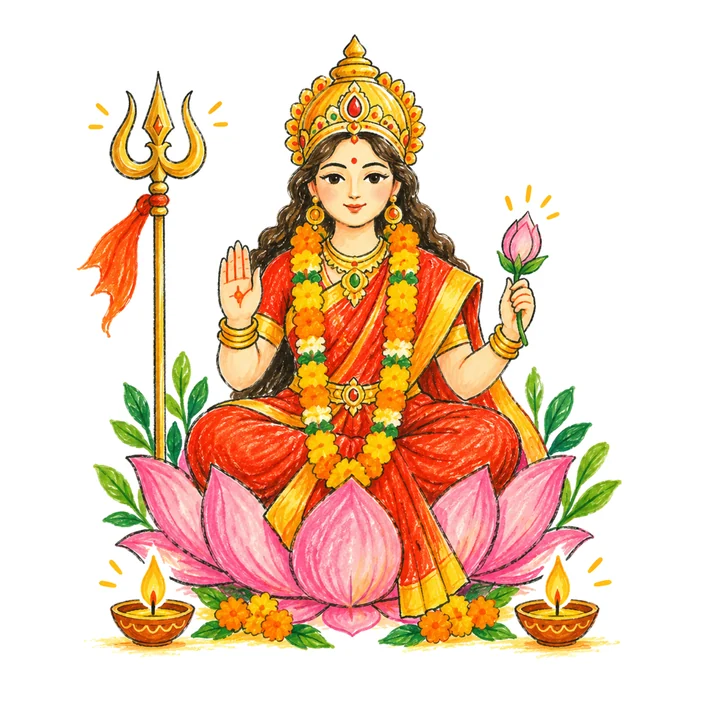
 quick answer
On Kartik Shukla Dwadashi, the cosmos witnesses the divine union of Lord Vishnu and Tulsi Devi — a celestial marriage that lifts the auspicious bar for all human weddings to follow.
- Topic
- Festival
- Reading time
- 8 minutes
- Written by
- Healers World Studio
- Last updated
- 12 August 2026
The Myth and Story of Tulsi Vivah
The story of Tulsi Vivah begins with Vrinda, a supremely devoted wife of the asura king Jalandhar. Vrinda's chastity was so absolute that it formed an invincible shield around her husband, making him impossible to defeat in battle. The gods, led by Lord Vishnu, devised a plan: Vishnu assumed the form of Jalandhar and broke Vrinda's vow of fidelity. The moment her devotion faltered, Jalandhar was slain by Shiva. When Vrinda discovered the deception, she was consumed by grief and fury, cursing Vishnu to become a stone — which is why Shaligram, the sacred black stone, is venerated as a form of Vishnu. Vrinda then gave up her body, and from the earth where she fell grew the Tulsi plant. Moved by her devotion and repenting the pain caused, Vishnu blessed her saying she would be worshipped as Tulsi Devi and that he would marry her in the form of Shaligram every year on Kartik Shukla Dwadashi. This annual ritual marriage became Tulsi Vivah — a reminder that even divine plans carry karmic costs, and that true devotion always finds its sacred culmination.
Spiritual Significance of Tulsi Vivah
Tulsi Vivah marks the formal end of Chaturmas, the four-month period during which Lord Vishnu sleeps in Kshir Sagar, the cosmic ocean of milk. Because Vishnu is the preserver and the cosmic witness of all auspicious events, his sleep means no major life rituals — including weddings — should be performed during this period. His awakening on Prabodhini Ekadashi (Kartik Shukla Ekadashi) and his symbolic marriage on Dwadashi open the cosmic registry for human weddings once more. In this sense, Tulsi Vivah is not merely a story; it is the divine sanction of marriage as a sacred institution. Tulsi herself represents the highest ideal of devotion — not sentimental attachment, but a faithfulness so complete it bends cosmic law. Every home that performs this puja annually reaffirms the sanctity of domestic life, the role of the Grihalakshmi (the goddess who presides over the household), and the understanding that even a plant — rooted, quiet, fragrant — can embody divine grace. Planting and tending a Tulsi plant at home is therefore considered equivalent to housing a goddess.
How to Observe Tulsi Vivah
Tulsi Vivah is observed on the twelfth day (Dwadashi) of the bright fortnight in the month of Kartik, though in some traditions it is performed from Ekadashi through Purnima. The ceremony begins with the Tulsi plant being cleaned and adorned with a red chunari (a cloth representing a bride's veil), flowers, and turmeric. A Shaligram stone — representing Vishnu — is placed beside the plant and decorated with sandalwood paste, tulsi leaves, and yellow cloth. The family priest or the eldest woman of the house then conducts the actual wedding ceremony, reciting Vedic marriage mantras just as one would for a human wedding. Sacred items including sugarcane, amla (Indian gooseberry), and marigolds are arranged around the Tulsi mandap. The bride's family offers dowry items symbolically, and lamps are lit around the plant. In the evening, conch shells are blown, songs are sung, and sweets made from jaggery and sesame are distributed. Devotees keep a fast through the day and break it only after the ceremony. Married women pray to Tulsi for the wellbeing of their husbands, and young women pray for good life partners.
Regional Variations Across India
Tulsi Vivah is celebrated with distinct regional flavors across the Indian subcontinent. In Maharashtra, it is an elaborate multi-day festival called Tulsi Lagna, where the Tulsi plant is placed under a decorated canopy called a mandap and the wedding ceremony is conducted with full Marathi wedding rituals — including the exchange of garlands between Tulsi and Shaligram. Women apply haldi (turmeric) to the Tulsi plant the evening before, just as brides receive it. In Uttar Pradesh and Bihar, devotees perform Tulsi Vivah as part of broader Kartik Purnima celebrations and often take a holy dip in rivers before the ceremony. In Rajasthan, the Tulsi plant is painted and dressed in bridal finery by young girls, who sing local folk songs called panihari throughout the evening. In Karnataka and Andhra Pradesh, the occasion is closely tied to the Karthigai Deepam festival tradition, where lamps are lit around the Tulsi plant in geometric patterns. In Gujarat, it is combined with the observance of Devuthani Ekadashi, and entire neighborhoods gather in a common courtyard to perform a shared Tulsi Vivah, symbolizing community blessings for all upcoming marriages.
Astrological and Tithi Connection
Tulsi Vivah falls on Kartik Shukla Dwadashi, the twelfth tithi of the waxing moon in the month of Kartik. In Vedic astrology, Kartik corresponds roughly to when the sun transits Tula (Libra), and the moon in the Shukla paksha (bright fortnight) accumulates strength toward Purnima. The Dwadashi tithi is considered particularly dear to Lord Vishnu — it is the day after Ekadashi and carries residual energy from the fasting day that precedes it. Astrologically, Kartik Shukla Dwadashi also coincides with the nakshatra Uttara Ashadha or Shravana in many years, both of which are associated with Vishnu directly — Shravana being his birth nakshatra. The timing of Tulsi Vivah therefore has layered astronomical rationale: the sun is in Vishnu's exaltation sign (Libra), the moon is gaining strength, and the nakshatra adds divine resonance. The muhurta (auspicious window) for the puja is calculated from the moment of Dwadashi tithi's rise to its end, and families consult the local Panchang to determine the exact time. Additionally, as this marks the reopening of the marriage calendar, astrologers specifically check wedding muhurtas from this day onward, typically through Margashirsha and into Magha.
 Festival