 Healers World



































 Family, guru and vows
 North India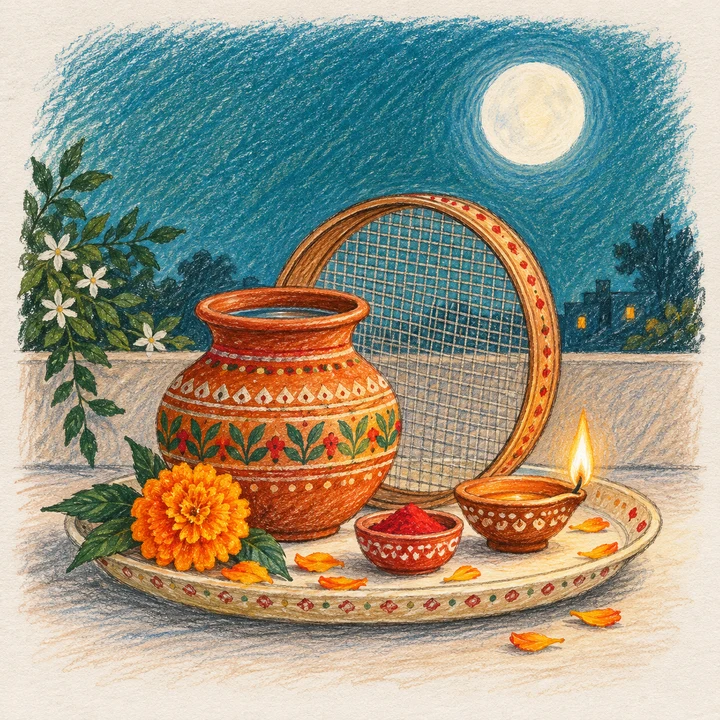
What does Karva Chauth mean for your practice?
Karva Chauth is a fast observed by married women for the long life, health and wellbeing of their husbands. From sunrise until moonrise, women keep a rigorous waterless fast, breaking it only after sighting the moon and viewing their husband — a day celebrating marital love, devotion and the bond between spouses.
Which story is remembered?
Among the festival's legends is that of Queen Veeravati, whose seven brothers, unable to bear her hunger during her first Karva Chauth, tricked her into breaking the fast early by creating a false moonrise with a fire behind a tree; her husband consequently fell gravely ill. Realising the deception, she resumed the fast with full devotion and, by the grace of the goddess and her steadfastness, her husband's life was restored — affirming the power of sincere observance.
Puja vidhi for Karva Chauth
Eating sargi (a pre-dawn meal) prepared by the mother-in-law before sunrise
Observing a strict nirjala (waterless) fast all day
Adorning with henna, bridal finery and red attire
Gathering for the Karva Chauth katha (storytelling) and puja in the afternoon
Worshipping Shiva, Parvati and Ganesha and exchanging the karva (clay pot)
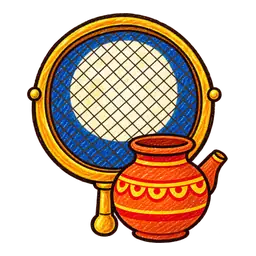
Sighting the moon through a sieve, offering arghya, then viewing the husband and breaking the fast
Offerings and festive foods
What families prepare and offer on Karva Chauth.
 Sargi before dawn: fruit, dry fruit, mathri and sweets sent by the mother-in-law
 A clay karva filled with water, worshipped with the Karva Chauth katha
 Baya, a gift of sweets, clothes and shringar for the mother-in-law
 Water offered to the moon through a sieve before the fast is opened
 The first sip of water and a sweet from the husband's hand
Mantras to chant
Chant with a clear sankalp, facing east or north, on a mala if you keep one.
Names and customs across India
Karva Chauth is predominantly a North and West Indian observance, most prominent in Punjab, Haryana, Rajasthan, Uttar Pradesh, Madhya Pradesh and among Hindu communities in Delhi. Customs like the pre-dawn sargi from the mother-in-law and the fasting circle of women passing karvas are especially associated with Punjab and Haryana.
Which classical sources guide the practice?
This occurrence follows the date record's stated confidence. For formal worship, confirm the local panchang and temple's announced schedule; a Gregorian date alone does not settle the city-specific ritual window.
Karva Chauth · 2027