 Healers World











































Identify the subject
Start with the definition, the tradition and the question being answered. A calendar calculation, a chart interpretation and a devotional story are different kinds of knowledge.
The archive is the complete paginated index of our journal's real articles, from Jyotish definitions to festivals, worship, temples and home guides. Each card keeps its recorded title, summary and byline. Choose a subject to read in full, or use search when you have a specific question rather than browsing page by page.
Start here
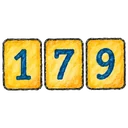
Page 28 of 36 · 863 articles
 Vedic Astrology
Read the full guideSade Sati is one of the most powerful and misunderstood transits in Jyotish. Its impact on physical health is real, predictable, and — with the right Ayurvedic and spiritual protocol — entirely manageable.
Vedic AstrologyRead the full guideThe 7th house is the primary house of partnership and marriage in Jyotish. Learn how to interpret the 7th lord, its placement, aspects, and what they reveal about your destined partner and marital life.
Vedic AstrologyRead the full guideIn Jyotish, Venus and Mars are the primary planetary indicators of romantic desire, attraction, and how we pursue love. Learn how Venus guides women's relational nature and Mars guides men's, and what their placement means for everyone's romantic life.
Vedic AstrologyRead the full guideThe Navamsha or D9 divisional chart is the most important secondary chart in Jyotish for understanding marriage quality, the soul's dharmic purpose in relationship, and how partnerships evolve over time. Learn what a strong versus weak Navamsha reveals.
Vedic AstrologyRead the full guideVedic astrology has a rich system for comparing two birth charts in relationship — examining how planets in one chart aspect, conjoin, or activate planets in the other. Learn the key inter-chart connections that define attraction, harmony, and challenge in love.
Vedic AstrologyRead the full guideEach of the twelve Jyotish rashis brings a distinct flavor to romantic relationships — different styles of courtship, expressions of affection, and approaches to commitment. Explore how each sign loves and what it needs from a partner.
Vedic AstrologyRead the full guideSome birth charts carry clear signatures of delayed or late marriage — Saturn's influence on the 7th house, malefic placements in key relationship houses, and retrograde Venus are among the primary indicators. Learn what causes late marriage in Jyotish and what it means for the native's path.
Vedic AstrologyRead the full guideThe Vimshottari Dasha system is Jyotish's primary timing tool for predicting when major life events — including marriage — will occur. Learn how to identify the 7th lord Dasha, Venus Dasha, and Jaimini techniques for pinpointing marriage timing.
Vedic AstrologyRead the full guideJyotish has specific chart indicators for second and subsequent marriages — from the 8th house and its lord, to the state of the 7th and 2nd houses, to Dasha sequences that reactivate partnership after loss or dissolution. Learn how Vedic astrology reads multiple marital cycles.
Vedic AstrologyRead the full guideWhen Chitra nakshatra occupies Virgo in the first pada, with Leo rising in the navamsha, the cosmic blueprint becomes a personal mission. Here, the Sun's radiant authority flows through Virgo's exacting precision, creating the supreme craftsperson - one whose hands translate divine geometry into flawless material form.
Vedic AstrologyRead the full guideWhen Chitra pada 2 places both the rashi and navamsha in Virgo, the nakshatra achieves vargottama - a concentration of power and authenticity. Here, Virgo's meticulous intelligence expresses itself with complete coherence. This is Vishwakarma at his highest expression, the cosmic architect whose blueprint is his entire being.
Vedic AstrologyRead the full guideChitra pada 3 achieves vargottama in Libra, creating a unique configuration where Venus, the planet of aesthetics and balance, rules both the outer life and inner nature. This is the designer's nakshatra elevated to supreme expression - where Vishwakarma's craft is consciously beautified, and form becomes an art form in its own right.
Vedic AstrologyRead the full guideChitra pada 4 combines Libra's aesthetic refinement with Scorpio's transformative intensity. Here, Vishwakarma's craft takes on an edge - the designer becomes alchemist, the architect becomes revolutionary. Mars in Scorpio navamsha brings the will to transform, to penetrate beneath surfaces, to reveal hidden dimensions.
Vedic AstrologyRead the full guideSwati pada 1 brings together Libra's air element with Sagittarius's fire, creating a nakshatra of independent-minded seekers. Ruled by Rahu in the rashi and Jupiter in the navamsha, this pada represents freedom amplified by wisdom, the wind of change guided by righteous intent.
Vedic AstrologyRead the full guideSwati pada 2 combines the air element's love of freedom with Saturn's mastery of structure and discipline. Here, the wind of change is channeled into lasting form. Saturn in Capricorn navamsha gives Swati's independence a practical edge - the visionary becomes the builder, the dreamer becomes the architect of systems.
Vedic AstrologyRead the full guideSwati pada 3 brings together the nakshatra's love of independence with Aquarius's revolutionary vision and technological brilliance. Rahu in Aquarius navamsha creates visionaries who see future possibilities and have the capacity to manifest them through innovation, technology, and paradigm-shifting ideas.
Vedic AstrologyRead the full guideSwati pada 4 combines the nakshatra's fierce independence with Pisces's boundless compassion and spiritual sensitivity. Here, the wind of freedom becomes a vehicle for the ocean of consciousness. Jupiter in Pisces navamsha brings wisdom, healing, and the understanding that true freedom is liberation into unity.
Vedic AstrologyRead the full guideIn Vishakha Pada 1, the balanced justice of Libra collides with Mars's direct warrior energy. Discover how this pada fuels decisive goal-pursuit and unwavering ambition.
Vedic AstrologyRead the full guidePada 2 brings Venus's stabilizing wealth energy to Vishakha's ambition. Here, the drive for achievement gains practical foundation and sensory appreciation.
Vedic AstrologyRead the full guideIn Pada 3, Mercury injects communicative brilliance into Vishakha's goal-seeking drive. Words become weapons, trade becomes triumph, intellect drives desire.
Vedic AstrologyRead the full guideThe final pada brings Moon's emotional depth to Vishakha's ambition. Goals become personal, desires run deep, achievement touches the heart.
Vedic AstrologyRead the full guideAnuradha Pada 1 channels the Sun's leadership into the loyalty nakshatra. Authority becomes a form of service, power becomes a tool of friendship and devotion.
Vedic AstrologyRead the full guidePada 2 brings Mercury's analytical clarity to Mitra's loyalty. Precision becomes devotion, attention to detail becomes a form of service and loyalty.
Vedic AstrologyRead the full guidePada 3 brings Venus's balance and partnership to the loyalty nakshatra. Bonds become graceful, devotion becomes mutual, alliances create beauty.

A festival article explains an observance; a nakshatra article explains a chart coordinate. The archive card is only a summary. Open the article for its reasoning and named context before using it in your own practice.
Start with the definition, the tradition and the question being answered. A calendar calculation, a chart interpretation and a devotional story are different kinds of knowledge.
Compare the explanation with its named basis. Follow related terms, regional practice and the method notes rather than treating one sentence as a complete judgement.

For a personal chart, use your own birth details. For a calendar, check the location and date. For a ritual or visit, confirm current instructions with the temple or provider.
The journal's recorded editorial catalogue, with unique article slugs and 24 entries per archive page. Traditional Jyotish, panchang and devotional sources are named in the individual article rather than invented for the index.
Our methodology: calculations, sources and limitsYes. It uses the existing journal catalogue with duplicate slugs resolved by the established archive helper, and shows 24 entries per page.
Pagination keeps the full catalogue accessible without rendering every article at once. The page count and article total are derived from the current catalogue.
Yes. Open search and enter a subject, temple, rite or report name to find matching public pages.
No. These guides explain a tradition or method. Personal readings need your own chart; calendar timing needs the correct place and date.
No. Examples are clearly labelled and are written to explain the subject. They are not results computed from your birth details.
Open the methodology page for calculation settings, coverage and source limitations. Each guide also names its own traditional or editorial basis.
A cited personal report · ₹199
Explore personal reportsChoose a topic and check its preview before buying. Your own birth details are used; these examples are never your chart.