 Healers World

































 Pan-India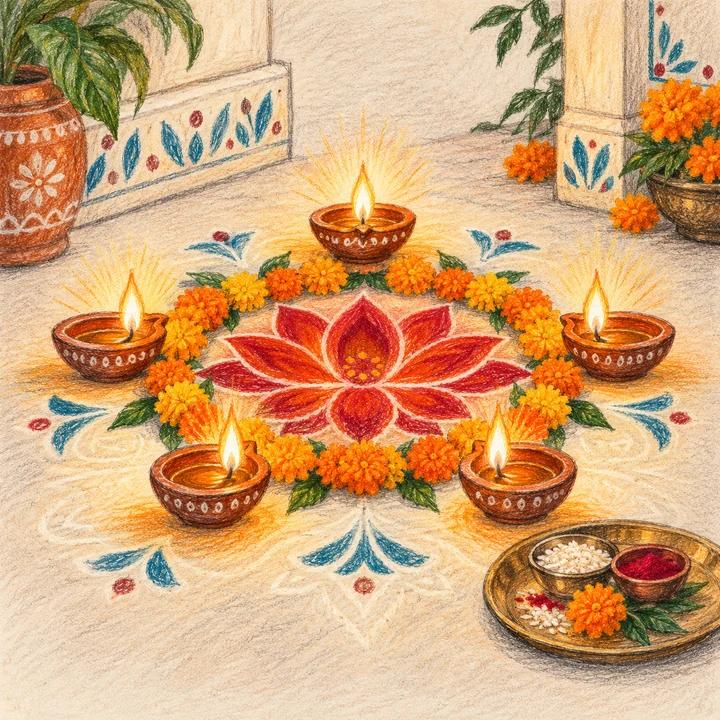
What does Diwali mean for your practice?
Diwali celebrates the triumph of light over darkness and knowledge over ignorance, marking new beginnings, prosperity and the homecoming of Lord Rama to Ayodhya. As the financial and spiritual new year for many communities, it is the most widely observed Hindu festival, honouring Lakshmi, the goddess of wealth and fortune, and dispelling inner and outer darkness with rows of lamps.
Which story is remembered?
The principal North-Indian legend holds that Diwali marks Lord Rama's return to Ayodhya after fourteen years of exile and his victory over the demon-king Ravana; the citizens lit rows of clay lamps (deepa) to welcome him home, giving the festival its name. Other strands recall the night Goddess Lakshmi emerged from the churning of the cosmic ocean (Samudra Manthan), and in eastern India the new-moon night is sacred to Goddess Kali.
Puja vidhi for Diwali
Cleaning and decorating homes, drawing colourful rangoli at doorways
Lighting rows of diyas (oil lamps) and candles through the night of Amavasya
Lakshmi-Ganesha puja for wealth, wisdom and prosperity
Exchanging sweets, gifts and new clothes with family and neighbours
Bursting firecrackers and illuminating homes and streets
Opening new account books (Chopda Pujan) by traders and businesses
Offerings and festive foods
What families prepare and offer on Diwali.
 Kheer, laddoos and fresh sweets offered as bhog to Goddess Lakshmi
 Kheel (puffed rice) and batashe, the traditional Lakshmi Puja offering
 Lotus or marigold flowers, silver coins and new account books placed before Lakshmi and Ganesha
 Rows of ghee lamps and a rangoli at the threshold to welcome the Goddess
 Dry fruits and sweets shared with family, neighbours and those who serve the home
Mantras to chant
Chant with a clear sankalp, facing east or north, on a mala if you keep one.
Names and customs across India
Diwali is a five-day celebration that varies widely by region: in the North it centres on Rama's return, in the West (Gujarat) it doubles as the start of the new business year, in Bengal and the East the new-moon night is devoted to Kali Puja, and in the South it commemorates Krishna's slaying of the demon Narakasura (Naraka Chaturdashi). It is called Deepavali in southern and eastern India and Diwali in the North and West.
Which classical sources guide the practice?
This occurrence follows the date record's stated confidence. For formal worship, confirm the local panchang and temple's announced schedule; a Gregorian date alone does not settle the city-specific ritual window.
Diwali · 2027