 Healers World



































 Shiva
Shiva Pan-India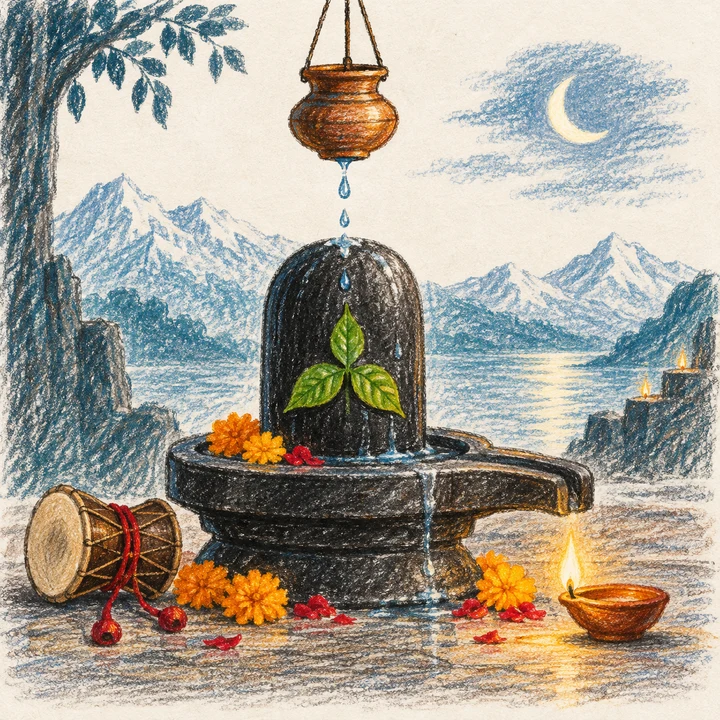
What does Maha Shivratri mean for your practice?
Maha Shivratri, the 'Great Night of Shiva', is the most important festival dedicated to Lord Shiva. Observed with fasting, night-long worship and meditation, it commemorates the convergence of Shiva and Shakti and is regarded as a night of profound spiritual potency for overcoming darkness and ignorance and advancing toward liberation.
Which story is remembered?
Several legends explain the night. One holds that it marks the divine wedding of Shiva and Parvati. Another, from the Samudra Manthan, recounts how Shiva drank the deadly halahala poison that emerged from the churning ocean to save creation, holding it in his throat (turning it blue, Neelkantha) while devotees kept vigil through the night. A further tradition tells of a hunter who, stranded in a bilva tree, unknowingly dropped leaves on a Shiva lingam through the night and was granted grace — establishing the all-night worship.
Puja vidhi for Maha Shivratri
Observing a strict day-and-night fast
Keeping a night-long vigil (jagaran) with the chanting of 'Om Namah Shivaya'
Performing abhishekam of the Shiva lingam with milk, water, honey and curd
Offering bilva (bel) leaves, datura and bhang to Shiva
Chanting the Maha Mrityunjaya mantra and Rudram, and meditating
Visiting Shiva temples and Jyotirlinga shrines through the four watches of the night
Offerings and festive foods
What families prepare and offer on Maha Shivratri.
 Bel leaves in sets of three offered on the Shivling
 Water, milk, curd, honey and ghee poured in abhishek through the four prahars of the night
 Dhatura, aak flowers and sacred ash (bhasma)
 Fruit, sabudana and sweet potato for those keeping the fast
 Thandai offered to Mahadev and shared as prasad
Mantras to chant
Chant with a clear sankalp, facing east or north, on a mala if you keep one.
Names and customs across India
Maha Shivratri is observed across India with regional emphases: vast pilgrim gatherings at the twelve Jyotirlingas and shrines like Kashi Vishwanath, Somnath and Mahakaleshwar; in Kashmir it is the major festival 'Herath'; and in the South temples conduct elaborate night-long pujas across four praharas. Tantric and yogic traditions treat the night as especially powerful for sadhana.
Which classical sources guide the practice?
This occurrence follows the date record's stated confidence. For formal worship, confirm the local panchang and temple's announced schedule; a Gregorian date alone does not settle the city-specific ritual window.
Maha Shivratri · 2027