





















Preparing your chart…
Healers World
Preparing your chart…Preparing your chart…Preparing your chart…
Healers WorldTemple WorldPooja WorldVaastu WorldRare You
Guna Milan, also called Ashtakoot Milan, is the Vedic way of matching two birth charts before marriage. Eight kutas, read from each partner's Moon sign and nakshatra, are scored together out of 36 points.
 Eight kutasFrom the Moon sign and nakshatra
 36 pointsEach kuta weighted 1 to 8
 Manglik checkRead alongside, kept separate
 Sign in with a free account to compare two charts at no charge. Paid cited reports are separate.
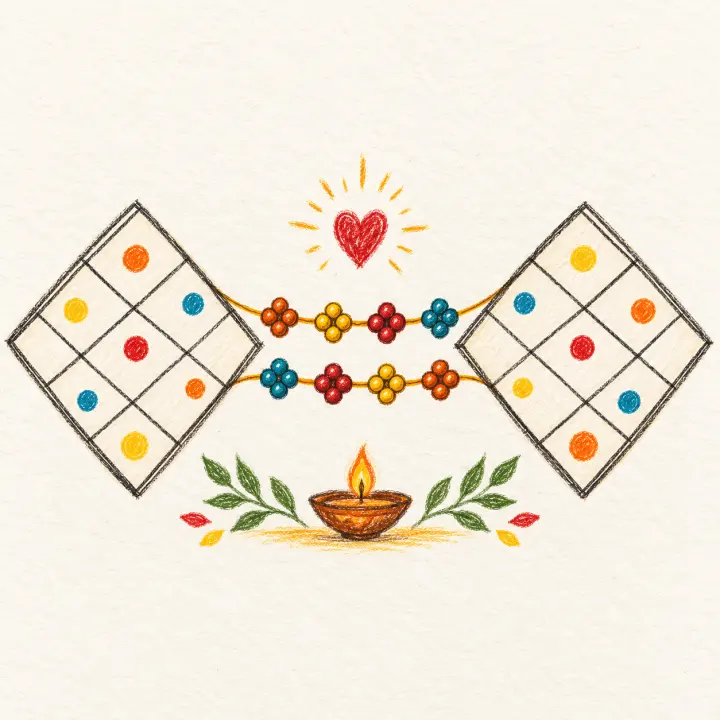
Enter a Guna Milan score to read what the tradition says about it, or match two kundlis to find yours.
Each kuta reads one part of the bond and carries its own weight. Together they make the 36 points of the score.

Temperament and spiritual outlook
Mutual attraction and influence
Wellbeing, read from the two birth stars
Physical harmony, shown by an animal pair

Friendship of the two Moon-sign lords

Nature: deva, manushya or rakshasa

Emotional and family harmony, from the Moon signs

Health and progeny, the weightiest kuta
The reading names the score's band and what the tradition advises for it. Shown here for a score of 27.
 The bandAuspicious, workable or look closer
 What to look atThe kutas that tell more than the totalThe next stepMatch two kundlis for the full kuta table
The tradition reads 25 or more as an auspicious match. Look at the kutas one by one all the same: which are full and which are low tells more than the total.
18 to 24 is read as workable. The weaker kutas are worth understanding with care, and the tradition names a remedy for each.
Below 18 is not a verdict on its own. It points to the kutas that need a closer reading, most often Nadi or Bhakoot, and the tradition names a remedy for each.
Guna Milan scores the eight kutas. The Manglik check, run alongside it, looks at Mars's house in each chart on its own. A Manglik difference between partners is read separately, with its own remedies, whatever the Ashtakoot total.
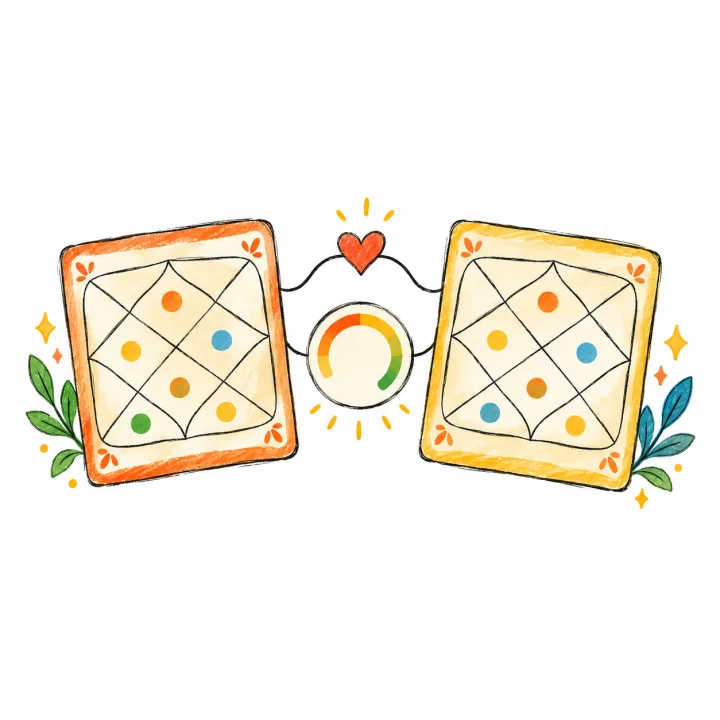 Why birth details, not names
Every kuta comes from the Moon's sign and nakshatra at the moment of birth, not from a name or the Sun sign. An approximate birth time can move the nakshatra and change Tara, Gana or Nadi, so use the most exact time you have for both.

Ashtakoot is the eight-kuta system used across North India for marriage matching. It reads both partners' Moon signs and nakshatras, scores each kuta and adds them out of 36.
The kutas and their weights come from the muhurta texts of the jyotisha tradition, such as Muhurta Chintamani, which treat marriage among the life events to be chosen with care.
Tamil, Telugu and Kannada families often use Porutham, a related ten-point system. The live matching on Healers World runs the eight-kuta Ashtakoot described here.
Date, exact time and place of birth for each partner.
The Moon's place at each birth sets every kuta.
Each kuta adds its points, up to 36 in all.
Mars is checked in each chart on its own.
What families ask before matching two kundlis.

Yes. Kundli matching, Guna Milan and Ashtakoot Milan name the same eight-kuta, 36-point Vedic system. Regions and families use different names for it.
25 or more of 36 is traditionally read as auspicious, and 18 to 24 as workable. Below 18, the tradition looks closely at which kutas are weak, most often Nadi or Bhakoot.
Not on its own. The classical texts give remedies for most weak kutas, and which kuta is weak matters as much as the total. Some traditions treat a single very weak kuta, Nadi in particular, more seriously than an evenly low score.
It matters more here than for one kundli, because Tara, Gana and Nadi depend on the exact nakshatra, which can change within a day. Use the most exact birth time you have for both.
Porutham, used in Tamil, Telugu and Kannada traditions, is a related ten-point system with its own structure. The live matching on Healers World runs the eight-kuta Ashtakoot described here.
The ₹199 kundli matching report reads both charts kuta by kuta, with Mangal Dosha and the Moon signs, and cites its classical sources.

Both full charts compared across the eight kutas, with Mangal Dosha and the Moon signs, and the sources cited.