Sacred Mantra · Lord Rama (Ramachandra, Maryada Purushottam)
Ram Mantra (Rama Nama)
Sri Ram Jai Ram Jai Jai Ram
Deity
Lord Rama
Author
The Rama Nama as spiritual practice is elaborated in the Skanda Purana. The mantra 'Sri Ram Jai Ram Jai Jai Ram' is the mantra taught by Saint Ramdas Swami (17th century CE
Type
Bija Mantra
Syllables
9
Significance: Truth, righteousness, family harmony, protection from evil, all-round auspiciousness
- 10languages
Traditional associations
The points below describe devotional tradition. They are not medical evidence, treatment advice or a promised outcome.
- ◆Protects from all forms of negativity and evil — Ram Nama is called 'Taraka Mantra' (the mantra that carries one across)
- ◆Brings righteousness and ethical clarity in difficult situations
- ◆Harmonises family relationships — Rama is the ideal son, husband, and king
- ◆Grants fearlessness — Rama's name was used by Hanuman as armour in Lanka
- ◆Traditionally chanted at the moment of death for peaceful transition
- ◆The Padma Purana states that chanting 'Ram' once equals the merit of 1,000 Vishnu names
When to Recite
Any time; Ram Nama has no time restriction (it is Taraka Mantra — for all conditions)
Repetitions: 108 times for formal japa; continuous for informal practice
How to Chant
- 1
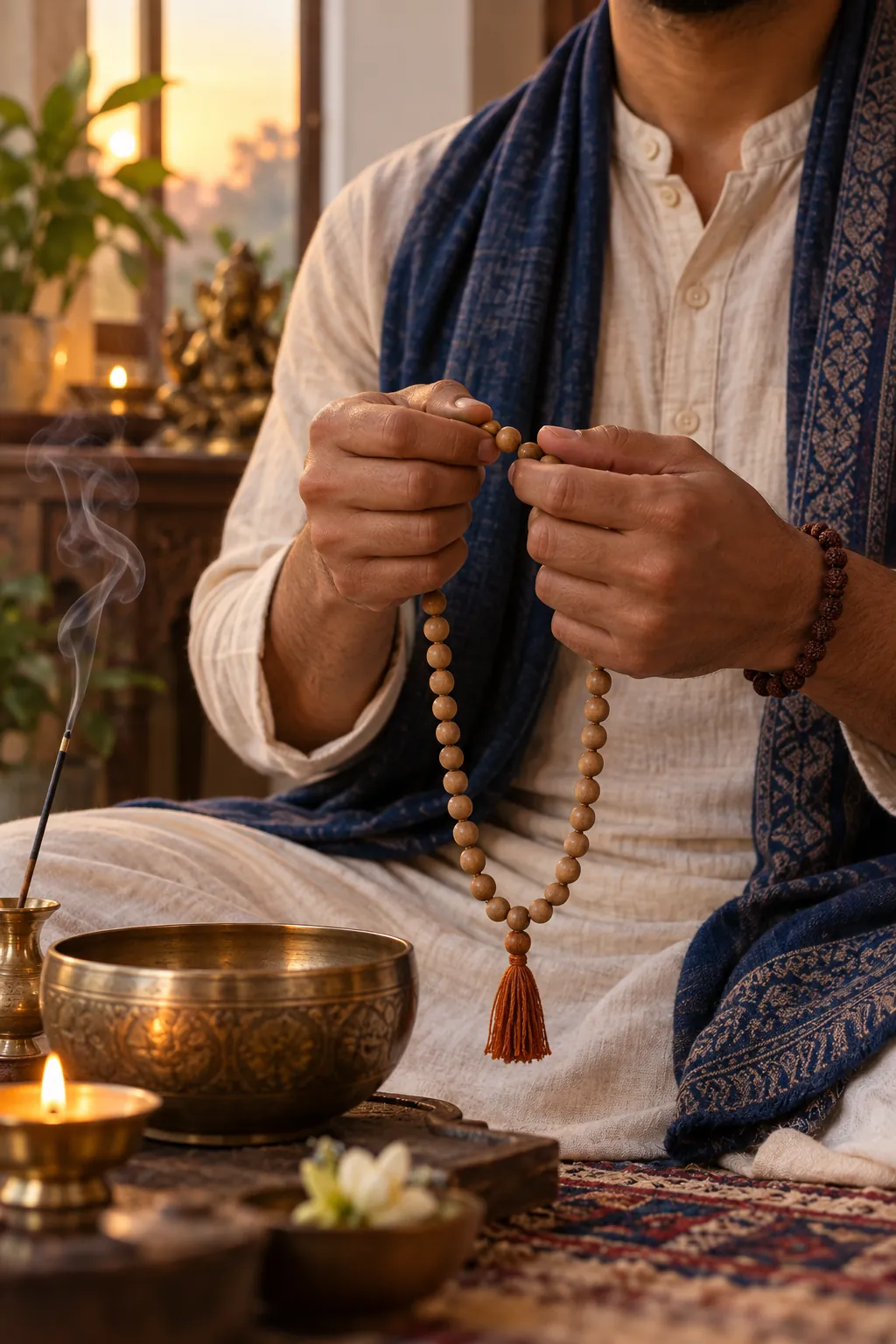
The simplest practice: continuous repetition of 'Ram Ram' (walking, resting, or seated)
- 2
Formal japa: 108 repetitions of 'Sri Ram Jai Ram Jai Jai Ram' on a Tulsi mala
- 3
The Ram Raksha Stotra (composed by Budha Kaushika Rishi) is the protective hymn tradition alongside the mantra
- 4
Sunday and Wednesday are suitable; Saturday is also favoured (as Hanuman, Rama's devotee, governs Saturday's remedy)
- 5
Reading or listening to Ramayana (especially Ramacharitmanas by Tulsidas) deepens the resonance of Ram Nama practice
Frequently Asked Questions
What does 'Ram Ram' mean?
'Ram' (or Rama) means 'the one in whom the wise rejoice' (from the Sanskrit root 'ram' — to delight, to enjoy). It refers to Lord Rama, the 7th avatar of Vishnu in the Dashavatara. Saying 'Ram Ram' as a greeting is the traditional Vaishnavite greeting in many parts of North and Central India, meaning 'I greet you in the name of Rama'. As a mantra, repetition of 'Ram' is the Taraka Mantra — the mantra that carries the soul across the ocean of birth and death.
What is the Rama Taraka Mantra?
The 'Taraka Mantra' (taraka = that which ferries across, that which liberates) in the Vaishnava tradition refers specifically to the name 'Rama'. The Padma Purana states that the two syllables Ra and Ma contain respectively the first letter of the Vishnu Sahasranama and the first letter of the Shiva Sahasranama, making 'Rama' a union of both supreme deities. It is said that Shiva himself whispers the Taraka Mantra in the ear of the dying at Kashi (Varanasi) — this is the central belief behind the Kashi Labh tradition.
More from Mantra Sangrah
Get a Personalised Mantra Recommendation
The most effective mantra depends on your birth chart, ruling planet, current dasha, and planetary strengths.
Ask an AstrologerPersonalised for you
 Chart readings are calculated by the Vedika engine from the birth details you save.