 Healers World





































What does Ekadashi Vrat mean for your practice?
Ekadashi is the eleventh lunar tithi of each fortnight, observed by Vishnu devotees through worship, remembrance and fasting according to their sampradaya. Its Gregorian date and parana window depend on the local panchang and applicable fasting-day rule. Read the katha and household instructions first, and choose an observance suited to your health and capacity.
Why is this observance important?
Ekadashi is the most widely observed recurring vrat in the Vaishnava tradition, kept to purify body and mind, build self-discipline, and draw the grace of Lord Vishnu. Puranic texts describe each of the roughly twenty-four Ekadashis in a year as carrying its own specific merit, from relief of debt to freedom from cyclic rebirth.
Which story is remembered?
The Padma Purana tells of the demon Mura, who could not be defeated even by Vishnu's weapons. Vishnu created a female form, Ekadashi Devi, from his own being; she destroyed Mura, and a pleased Vishnu granted her a boon — that observing a fast in her name, on the eleventh tithi, would free a devotee from sin. Each subsequent Ekadashi in the lunar calendar came to be treated as her day.
When is it observed?
Ekadashi, the eleventh tithi, of both the waxing (Shukla) and waning (Krishna) fortnights of every lunar month — observed twice a month, roughly fourteen to fifteen days apart. Each of the year's Ekadashis carries its own name (Nirjala, Devshayani, Mokshada and so on) and its own described merit. Reckoned from the panchang each fortnight.
How is it observed in the tradition?
- Waking before sunrise and bathing before beginning the fast
- Abstaining from grains, beans and certain vegetables; many keep a fruit-only or nirjala (waterless) fast
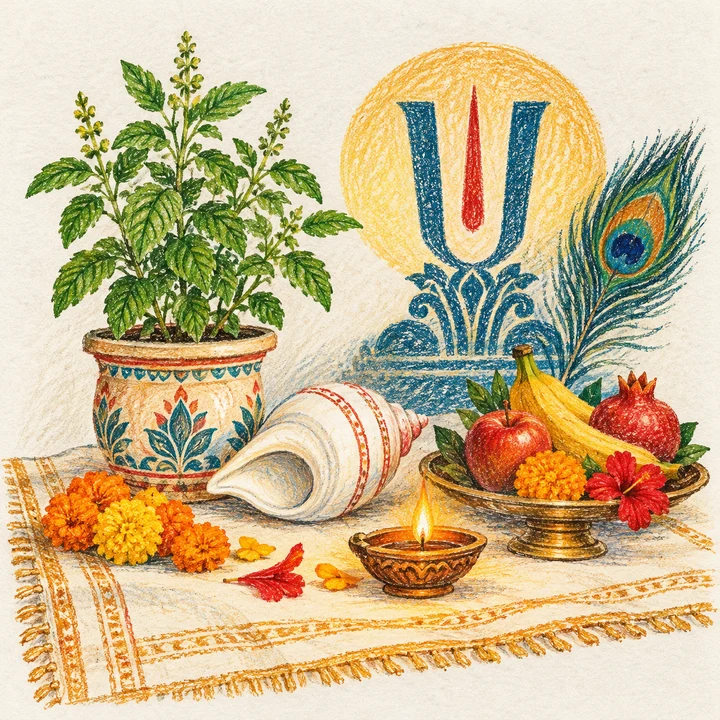
- Vishnu puja with tulsi leaves, which are considered essential to any offering made on this day
- Staying awake through the night (jagran) with bhajans and Vishnu-katha in stricter observance
- Breaking the fast (parana) the next morning, Dwadashi, within the time window laid down by the panchang
How do household and regional customs differ?
Observance varies by tradition and capacity: strict Vaishnava households keep a nirjala (no food, no water) fast, most keep a phalahar (fruit-permitted) fast, and some observe only a partial abstention from grains. Nirjala Ekadashi, in the month of Jyeshtha, is singled out as the one Ekadashi said to carry the merit of all the others combined, and is kept even by those who do not fast on the others.