 Healers World









































Identify the subject
Start with the definition, the tradition and the question being answered. A calendar calculation, a chart interpretation and a devotional story are different kinds of knowledge.
Parivartana yoga is a mutual sign exchange: two planets occupy signs ruled by each other, linking their house roles in that chart. This guide separates the definition from its traditional interpretation, gives a labelled example and explains the context needed before using it in a personal birth chart or calendar.
Start here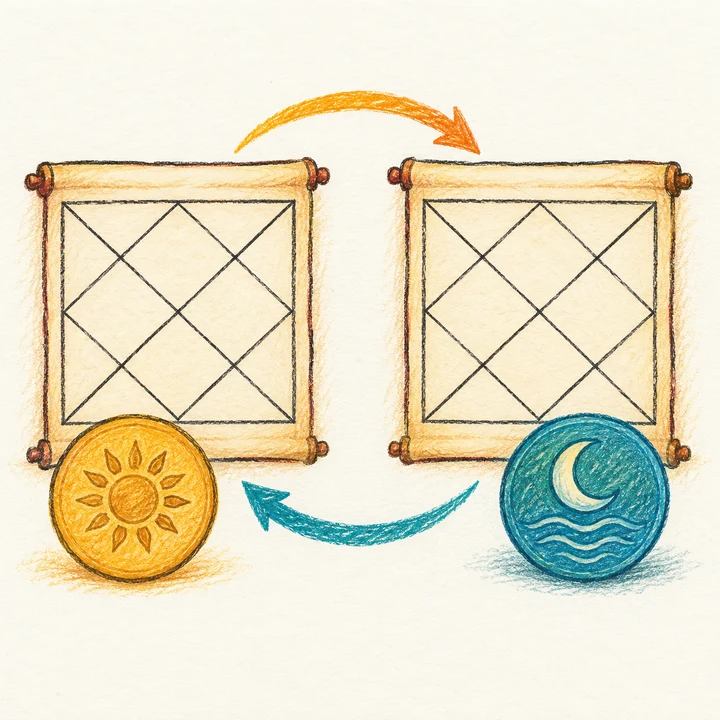
Parivartana Yoga is a term in the Vedic astrology glossary.
| Type | Learning guide |
|---|---|
| System | Vedic astrology |
Parivartana yoga is a mutual sign exchange: two planets occupy signs ruled by each other, linking their house roles in that chart.
The exchange requires actual sign lordship, not merely two planets aspecting each other. Classical classifications distinguish the houses involved. The same structural exchange can carry different meanings for different ascendants and does not guarantee prosperity or a particular event.
The definition explains a traditional method, not a promise about a person's health, wealth, relationships or future. Read the whole chart and its calculation settings before interpreting a placement.

Mars in Taurus and Venus in Aries exchange their ruled signs. The affected houses depend on the ascendant.
Start with the definition, the tradition and the question being answered. A calendar calculation, a chart interpretation and a devotional story are different kinds of knowledge.

Compare the explanation with its named basis. Follow related terms, regional practice and the method notes rather than treating one sentence as a complete judgement.
For a personal chart, use your own birth details. For a calendar, check the location and date. For a ritual or visit, confirm current instructions with the temple or provider.
Parashari Jyotish: Brihat Parashara Hora Shastra and Phaladeepika. Jaimini terms are identified separately; panchang terms describe the Indian almanac and astronomical angles.
Our methodology: calculations, sources and limitsParivartana yoga is a mutual sign exchange: two planets occupy signs ruled by each other, linking their house roles in that chart.
The exchange requires actual sign lordship, not merely two planets aspecting each other. Classical classifications distinguish the houses involved. The same structural exchange can carry different meanings for different ascendants and does not guarantee prosperity or a particular event.
No. A term names one part of a method. In Jyotish it is read with the ascendant, house lords, planetary strength and timing; it does not settle a life decision on its own.
No. Every example on this guide is illustrative. A personal kundli or report uses the date, time and place you enter or save, never a demonstration birth.
Texts, lineages, ayanamsa settings and techniques can differ. Check the named system and calculation method before comparing two readings; our methodology page explains those distinctions.
A cited personal report · ₹199
Explore personal reportsChoose a topic and check its preview before buying. Your own birth details are used; these examples are never your chart.