 Healers World










































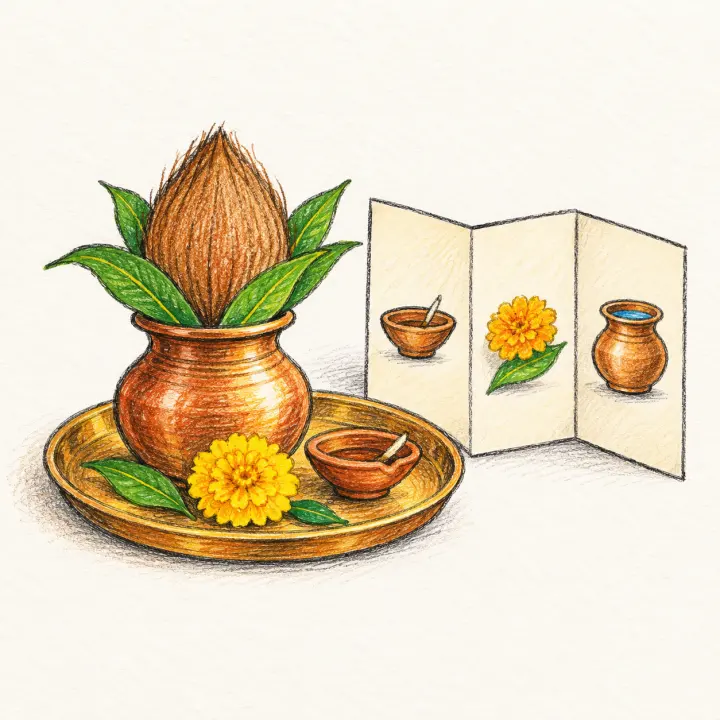
What does Pooja vidhi guides mean for your practice?
A pooja vidhi is the sequence of worship followed for a deity or occasion. Choose the guide for your household's observance, gather its samagri, and read the prayer and closing practice before you begin. These guides explain devotional preparation; your family priest or temple can guide the formal rite and local timing.
How do household and regional customs differ?
Follow the paddhati taught by your family, priest or sampradaya. Offerings, the order of worship and the closing practice can differ by region. This household outline does not prescribe one universal rite or change the sacred text.
Should I fast if I am unwell or taking medication?
Keep lamps and incense attended, ventilate the room and supervise children. If fasting is part of your observance and you are pregnant, unwell, taking medication or have a health condition, seek medical advice first. Do not stop prescribed treatment.
Which pooja would you like to prepare?

Satyanarayan Puja
Satyanarayan Puja is worship of Vishnu through prayer, offerings and the Satyanarayan Katha. Families observe it in gratitude and at important beginnings, often on Purnima. Prepare the katha book, simple samagri and prasad, then follow your household's paddhati. A local panchang and your priest guide formal timing and any additional rites.
Lakshmi Puja
Lakshmi Puja honours the Goddess of prosperity with a clean altar, lamps, flowers, prayer and offerings. Diwali's Kartik Amavasya is a central occasion, while many households worship on Fridays. Prepare within your means and follow your family's invocation. For Diwali, confirm the local Pradosh window rather than borrowing another city's clock time.
Ganesh Puja
Ganesh Puja invokes Ganesha with prayer, flowers, durva where customary, and a food offering such as modak. He is honoured at the beginning of many Hindu rites and on Ganesh Chaturthi. Prepare a clean, safe altar and follow your household's practice, whether the observance is a simple daily prayer or a formal ceremony.
Navratri Puja
Navratri Puja is worship of the Divine Mother across nine nights, with prayer, offerings and sacred recitation. Many households begin with kalash sthapana and follow their regional Devi practice. Prepare the altar and reading before the first day, confirm the local lunar calendar, and choose any fasting observance according to your health and capacity.
Shiv Puja
Shiv Puja is worship of Shiva through prayer, offerings and, where customary, abhishek of the linga. Devotees often observe it on Mondays, Pradosh and Maha Shivratri. Prepare clean water, bilva where prescribed and a familiar prayer, then follow your household or temple's paddhati. Formal abhishek and festival timing require local guidance.
Hanuman Puja
Hanuman Puja honours Hanuman's devotion to Rama through prayer, sacred reading, aarti and service. Tuesdays and Saturdays are common household occasions, and many devotees read the Hanuman Chalisa. Prepare the checked prayer text and simple offerings, then follow your family's practice without turning a chosen repetition count into a universal rule.
Surya Puja (Arghya)
Surya Puja honours the Sun deity through sunrise prayer, arghya and sacred recitation. A household may offer water from a safe standing place while remembering Surya with gratitude. Prepare the vessel and familiar prayer before sunrise, and never look directly at the Sun, including through falling water. Follow your family's customary form.
Saraswati Puja
Saraswati Puja honours the Goddess of learning, speech, music and the arts. Families and students offer prayer with books or instruments, especially on Vasant Panchami and in regional Navratri observances. Prepare a clean altar, flowers and a familiar invocation, then continue your study or practice with attention. Regional customs determine the particular day and rite.
Rudrabhishek
Rudrabhishek is worship of Shiva through abhishek accompanied by sacred recitation, traditionally including Shri Rudram. A formal ceremony requires the paddhati, offerings and Vedic pronunciation taught by a qualified priest. Prepare the samagri and intention with that priest, and keep the household's simpler Shiva prayer distinct from a full Vedic ritual.
Durga Puja
Durga Puja honours the Divine Mother and her victory over Mahishasura, with sacred recitation, offerings, aarti and community devotion. Bengal's festival paddhati includes distinct daily rites and Sandhi Puja at the Ashtami–Navami junction. Prepare for the particular household or temple practice you follow, and confirm its local lunar timings before arranging worship.
Kali Puja
Kali Puja honours the Divine Mother through prayer, offerings and sacred worship, prominently on Kartik Amavasya in Bengal and neighbouring regions. A household follows the form and paddhati taught by its family or temple. Prepare simple offerings and the familiar invocation; specialist practices require their own teacher and are not reconstructed in a household guide.
Krishna Janmashtami Puja
Krishna Janmashtami Puja celebrates Krishna's birth with remembrance, sacred reading, offerings and the household's birth observance. Families may adorn Bal Gopal and prepare prasad, following their regional Ashtami and night-worship rules. Confirm the local calendar and any fasting or parana instructions, while keeping health, medication and safe supervision of lamps central to preparation.