 Healers World











































What does Hartalika Teej mean for your practice?
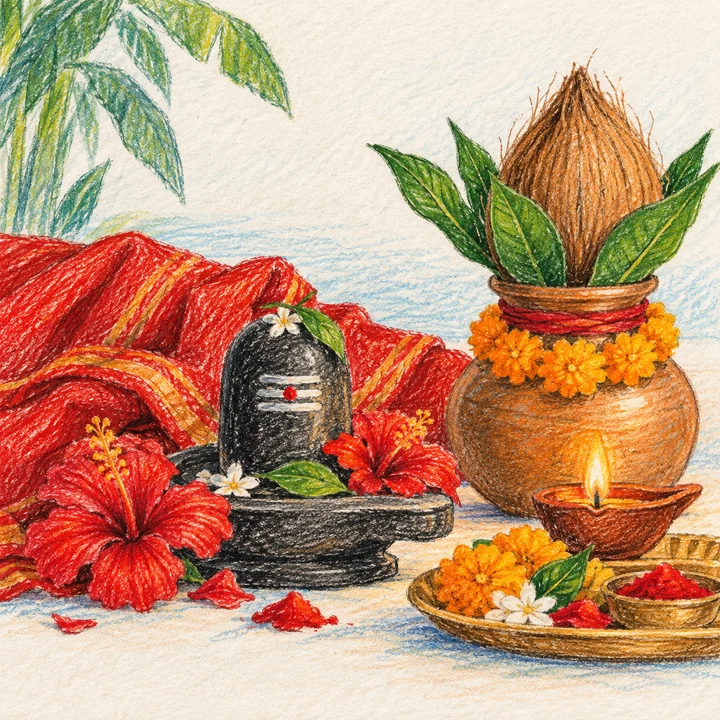
Hartalika Teej honours Parvati's devoted worship and her union with Shiva, traditionally observed on Bhadrapada Shukla Tritiya. Devotees prepare the household puja, hear the katha and follow the fasting and closing practice of their lineage. A waterless observance is not a reason to ignore illness, pregnancy or medication; seek medical advice when fasting may affect your health.
Why is this observance important?
Hartalika Teej is kept by married women for their husband's long life and marital happiness, and by unmarried women praying for a husband as devoted as Shiva. It commemorates Goddess Parvati's own penance to win Shiva as her husband, making it one of the more rigorous vrats of the year.
Which story is remembered?
The Shiva Purana recounts that Parvati's father, Himavan, intended to marry her to Vishnu, but Parvati's heart was set on Shiva. Her close friend spirited her away into a forest — 'harat' (abduction) by an 'aalika' (female friend) gives the vrat its name — where Parvati performed severe penance, fasting without food or water, until Shiva appeared and agreed to marry her. Devotees fast in remembrance of that penance.
When is it observed?
Tritiya, the third tithi of the bright fortnight (Shukla Paksha) of Bhadrapada — the day before Ganesh Chaturthi. Reckoned from the panchang each year.
How is it observed in the tradition?
- A rigorous fast, often nirjala (without food or water), kept from the previous evening through the following morning
- Building or worshipping an image of Shiva and Parvati together, often sculpted from sand or clay
- An all-night vigil (jagran) with bhajans in stricter observance
- Breaking the fast only the next morning, after the puja is complete
How do household and regional customs differ?
Most widely observed in North India — Uttar Pradesh, Bihar, Rajasthan, Madhya Pradesh — often kept alongside female relatives and friends as a shared, day-long observance rather than a solitary one.