 Healers World




































What does Pradosh Vrat mean for your practice?
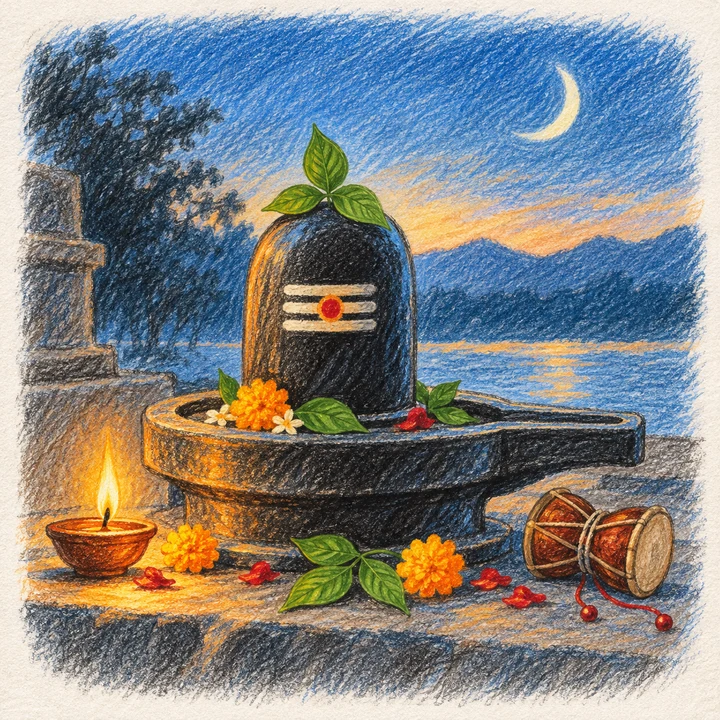
Pradosh Vrat honours Shiva during the pradosha period around sunset on Trayodashi, the thirteenth lunar tithi. Devotees prepare a simple worship space, remember Shiva and follow their household's fasting and puja practice. Check the city's tithi and evening window rather than treating every calendar date as equivalent, and keep fasting within your health and capacity.
Why is this observance important?
Pradosh Vrat is kept to worship Lord Shiva in the twilight hour, said to be when he is in a particularly gracious, dancing form (Nataraja). It is observed for relief from difficulties, for children's wellbeing, and for general prosperity and peace.
Which story is remembered?
One well-known account, tied to the Samudra Manthan (the churning of the cosmic ocean), holds that Shiva drank the deadly poison (halahala) that rose from the churning to protect the universe, holding it in his throat rather than swallowing it — earning him the name Neelakantha. A related legend has the Moon god Chandra, cursed by his father-in-law Daksha to wane away entirely, restored to his cycle of waxing and waning after worshipping Shiva at twilight — the origin devotees cite for observing Pradosh at that hour.
When is it observed?
Trayodashi, the thirteenth tithi, of both fortnights of the lunar month, observed in the pradosh kaal — the twilight window roughly ninety minutes on either side of sunset. Reckoned from the panchang each fortnight; a Trayodashi falling on a Monday (Som Pradosh) or Saturday (Shani Pradosh) is considered especially auspicious.
How is it observed in the tradition?
- A day-long fast, broken only after the evening Shiva puja
- Bathing the Shiva linga (abhishekam) with water, milk, and bael (bilva) leaves
- Worship performed specifically in the pradosh kaal twilight window, not at any other hour
- Chanting the Shiva Panchakshari mantra ('Om Namah Shivaya') and Shiva Chalisa
How do household and regional customs differ?
Widely observed as 'Pradosham' in Tamil Nadu and across South India, where temple Nataraja-form abhishekams draw large crowds on the evening of Trayodashi; in the North it is kept more often as a household vrat. Som Pradosh (on a Monday) and Shani Pradosh (on a Saturday) are considered the most powerful of the fortnightly occurrences.