 Healers World


































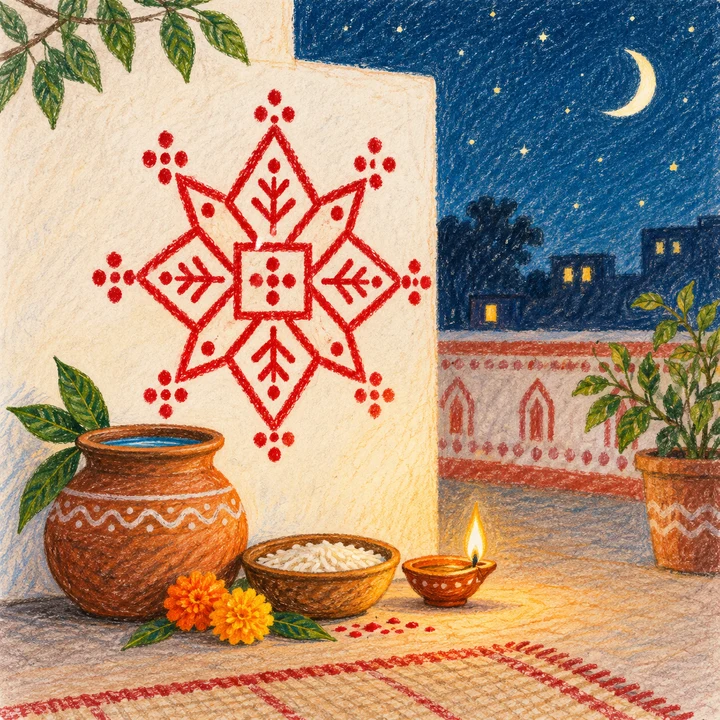
What does Ahoi Ashtami mean for your practice?
Ahoi Ashtami is a household vow to Ahoi Mata, traditionally observed by mothers in prayer for their children's wellbeing on Kartik Krishna Ashtami. The katha, image worship and closing practice belong to the family's regional tradition. Confirm the lunar date locally, prepare the offerings your household uses, and do not let fasting override health, pregnancy or medication needs.
Why is this observance important?
Ahoi Ashtami is kept by mothers for the health, long life, and wellbeing of their sons (and, in many households today, all their children). It is one of the principal maternal vrats of the North Indian festival calendar, observed with the same seriousness as Karva Chauth is for husbands.
Which story is remembered?
The vrat's own katha, recited each year during the puja, tells of a mother who accidentally harmed a young of the divine syaahu (a small forest creature, often depicted as a porcupine) while digging clay for her home, and whose children then began to fall gravely ill one after another. Guided to seek Ahoi Mata's forgiveness through fasting and worship, she was relieved of the misfortune and her children restored to health — establishing the vrat mothers keep to this day.
When is it observed?
Ashtami, the eighth tithi of the dark fortnight (Krishna Paksha) of Kartik, roughly a week before Diwali. Reckoned from the panchang each year.
How is it observed in the tradition?
- A day-long fast, broken only after sighting the stars in the evening sky
- Drawing or hanging an image of Ahoi Mata, with syaahu and her young depicted alongside her
- Puja with a silver or drawn image, offered rice grains, and a katha recitation
- Breaking the fast with water offered to the stars, followed by a meal with family
How do household and regional customs differ?
Kept predominantly across North India — Uttar Pradesh, Bihar, Delhi, Punjab, Rajasthan, Madhya Pradesh — usually eight days before Diwali; the syaahu motif and the exact katha wording vary somewhat by local tradition.